
HCLTech launches 20 industry AI solutions across six sectors
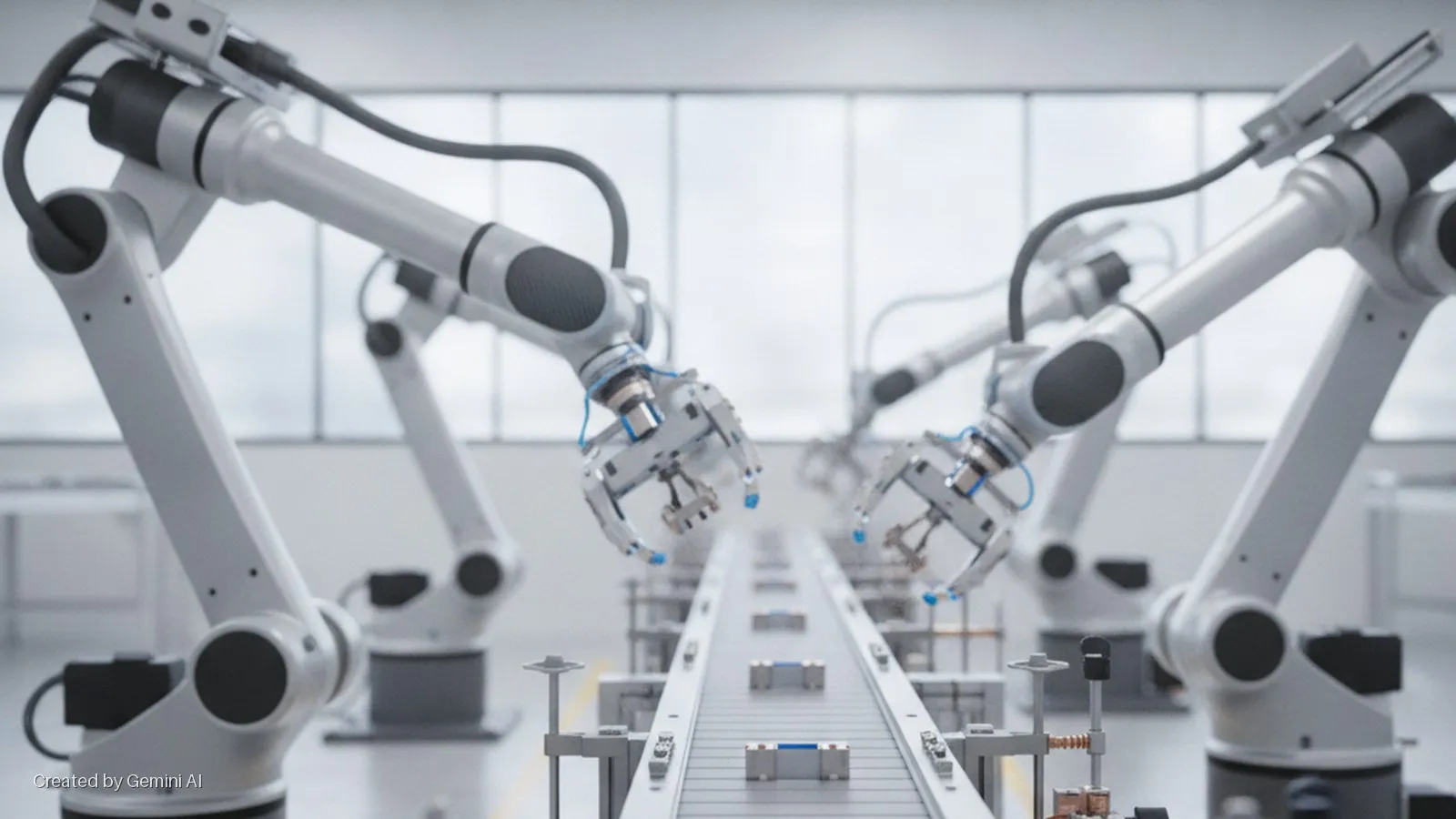
HCLTech, the $14.8bn Indian-headquartered technology services group, has released a suite of 20 purpose-built Industry AI Solutions (IAIS) targeting vertical value chains across banking, healthcare, life sciences, aerospace, retail, telecoms, mobility, energy and manufacturing. The announcement marks a deliberate push by one of the world's largest IT services firms to move its enterprise clients from AI experimentation into scaled, measurable deployment, a transition that industry analysts have widely flagged as the defining enterprise technology challenge of the late 2020s.
The solutions were developed entirely in-house by a dedicated global team of engineers and domain specialists, a point HCLTech is keen to stress as differentiation from competitors that assemble AI tooling primarily through third-party integrations. Several products are already live at client sites globally, with reported performance figures attached to each.
What the numbers say
The headline metrics are notable. VisionX, a computer-vision platform for factory and warehouse environments, is said to have cut operational costs by 70% and improved response times by more than 90% across deployed sites. SmartTwin, a digital-twin simulation tool for manufacturing, the company reports, delivers up to 44% faster time-to-market for new products by enabling virtual plant and product testing before physical build-out.
In life sciences, HCLTech's Intelligent Safety Platform targets pharmacovigilance, the post-market drug safety monitoring process that regulators require of pharmaceutical companies, and the firm says it has reduced case-processing time by 40 to 50%. Its Autonomous Accounts Payable platform, already live at an unnamed major global motorbike and tools manufacturer, is reported to cut invoice processing cycle time by 60%.
Dr Gaurav Dhakar, HCLTech's Global Head of Industry AI Solutions, framed the strategic rationale directly: "AI has the potential to transform the very heart of business value chains, but realising that potential requires deep domain specificity and the ability to scale. Our Industry AI solutions bridge this gap by translating domain expertise into scalable AI intelligence, accelerating value stream innovation and helping enterprises navigate rapid technological change with greater agility and measurable outcomes."
Convergence read-across: services firms as the real AI deployment layer
The broader significance of this announcement sits less in any individual product and more in what it signals about where the AI value chain is consolidating. Hyperscalers and foundation-model labs, Microsoft, Google, Anthropic, Mistral, supply the underlying model infrastructure. But the firms actually translating that infrastructure into sector-specific, compliance-aware, deployment-ready tooling are the large IT services houses: Accenture, Infosys, Wipro, TCS and, with this release, HCLTech.
This is a meaningful capital-allocation signal for cross-sector investors. The enterprise AI spend cycle, conservatively projected by multiple research houses to exceed $300bn annually by the end of the decade, is increasingly bifurcating between model-layer infrastructure (GPU clusters, frontier-model training) and application-layer services (domain-specific deployment, integration, change management). HCLTech's in-house IP strategy positions it to capture margin on the latter, potentially differentiating from peers who resell hyperscaler tooling at thinner rates.
For sectors such as life sciences and manufacturing, the implications extend further. Pharmacovigilance bottlenecks have long been a regulatory compliance cost centre rather than a value driver; if AI platforms can genuinely compress case-processing timelines by the rates HCLTech claims, drug safety functions become candidates for structural cost reallocation, freeing capital toward earlier-stage pipeline investment. Similarly, digital-twin adoption at scale in manufacturing has direct consequences for industrial energy consumption, as virtual testing reduces the need for costly and energy-intensive physical prototyping runs.
HCLTech has signalled it will continue expanding the IAIS portfolio as enterprise demand for repeatable, sector-specific AI products grows. The firm's ability to cross-sell these solutions across its existing client base of 223,000-person-strong global operations will be the real test of whether purpose-built vertical AI becomes a durable revenue line or a product-marketing exercise.