
Volatus Aerospace targets sovereign wildfire capability in FlyOx deal
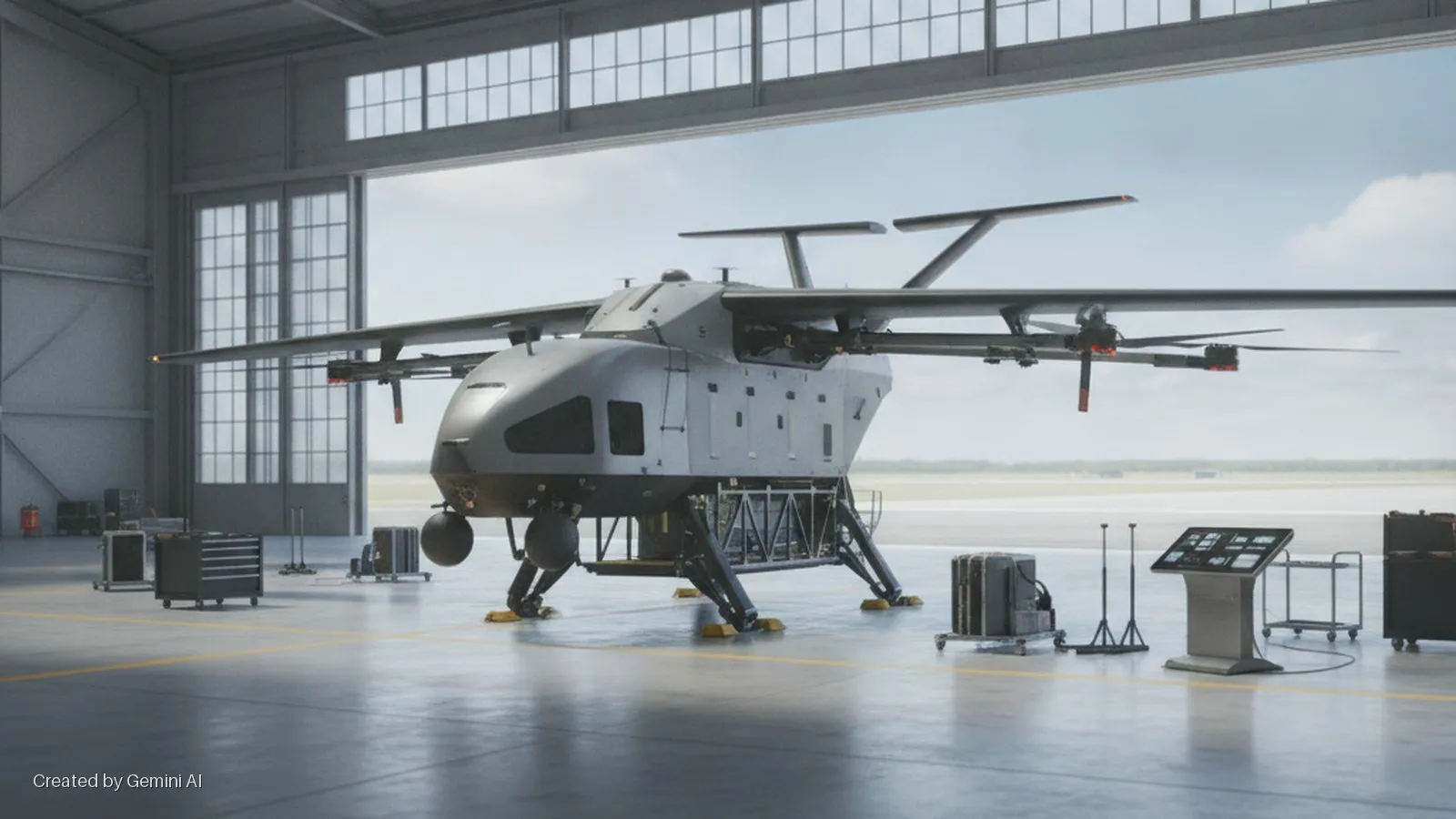
Volatus Aerospace, the TSX-listed Canadian uncrewed-systems company, has signed a strategic partnership with Spanish developer Singular Aircraft to introduce the FlyOx 1 heavy-lift autonomous aircraft into Canada. The agreement, announced on 4 August 2026, positions Volatus as Singular's exclusive Canadian partner and establishes a framework covering operational deployment, systems integration, and the prospect of in-country manufacturing. The immediate application is wildfire response, but the platform's stated multi-mission architecture points to a broader sovereign-capability play spanning emergency management, logistics, and public safety.
The FlyOx 1 sits in a different weight class from the commercial drones typically associated with public-safety operations. With a maximum takeoff weight of approximately 4,000 kilograms and a 1,560-litre payload capacity for water or fire retardant, the platform is closer in operational profile to a conventional aerial-firefighting aircraft than to a small uncrewed aerial system. Singular says the aircraft has completed documented flight operations under the oversight of five national civil and military aviation authorities across four continents, including aerial water-discharge demonstrations. Canadian deployment remains subject to Transport Canada certification and the outcome of technical and regulatory evaluations.
Sovereign autonomy as industrial policy
The language in Volatus chief executive Glen Lynch's statement is notably policy-oriented. "This is about establishing sovereign Canadian capability in advanced autonomous aerospace, bringing together Canadian manufacturing, Canadian operational expertise and next-generation technology to strengthen national resilience," Lynch said. That framing reflects a wider pattern among allied nations seeking to reduce dependence on foreign-manufactured uncrewed platforms, particularly for missions touching critical infrastructure and emergency response. Australia, the UK, and several Nordic states have made analogous sovereign-capability arguments when procuring or co-developing autonomous systems domestically.
Canada's wildfire crisis provides the operational urgency. The 2023 and 2024 fire seasons ranked among the most destructive in recorded history, and the 2025 season maintained that pressure. Federal and provincial governments have accelerated procurement conversations around aerial intelligence, early-detection assets, and rapid-response capacity. The Volatus-Singular partnership is positioned to enter that procurement pipeline, though no government contracts have been announced and any deployment timeline is contingent on regulatory clearance.
Cross-sector read-across: defence adjacency and capital signals
From a strategic investor perspective, this partnership sits at a revealing intersection. Autonomous aerospace platforms capable of operating from unprepared airstrips, carrying substantial payloads over long ranges, and integrating with mission-management software are inherently dual-use assets. The same flight envelope that supports wildfire retardant drops is relevant to logistics resupply, maritime surveillance, and border monitoring. Volatus already operates across civil and defence markets, and the FlyOx 1's technical profile would not require significant modification to support several defence-adjacent applications.
For capital allocators watching the autonomous-systems space, the partnership structure is worth noting. Rather than an acquisition or a direct manufacturing investment, Volatus has opted for a strategic-partnership model that defers capital outlay pending regulatory and operational validation. That is a capital-efficient approach for a mid-cap company on the TSX, but it also signals that the heavy lifting on certification risk sits ahead rather than behind. Transport Canada's approval pathway for a 4,000-kilogram autonomous aircraft with no certified Canadian type equivalent is an open question, and the timeline for any commercial or government deployment will be set largely by that regulatory process rather than by the industrial partnership itself.
The broader autonomous-aerospace investment landscape is active. Purpose-built heavy-lift autonomous platforms are attracting attention from defence procurement agencies, sovereign wealth vehicles, and climate-resilience funds simultaneously, precisely because the wildfire and disaster-response use case bridges the ESG mandate with a hard-capability requirement. Volatus and Singular are not alone in this space, but the explicit sovereign-manufacturing ambition differentiates their positioning from pure-import or lease-to-operate models that competitors have favoured.