
Kodiak AI and PrePass link autonomous trucks to US roadside systems
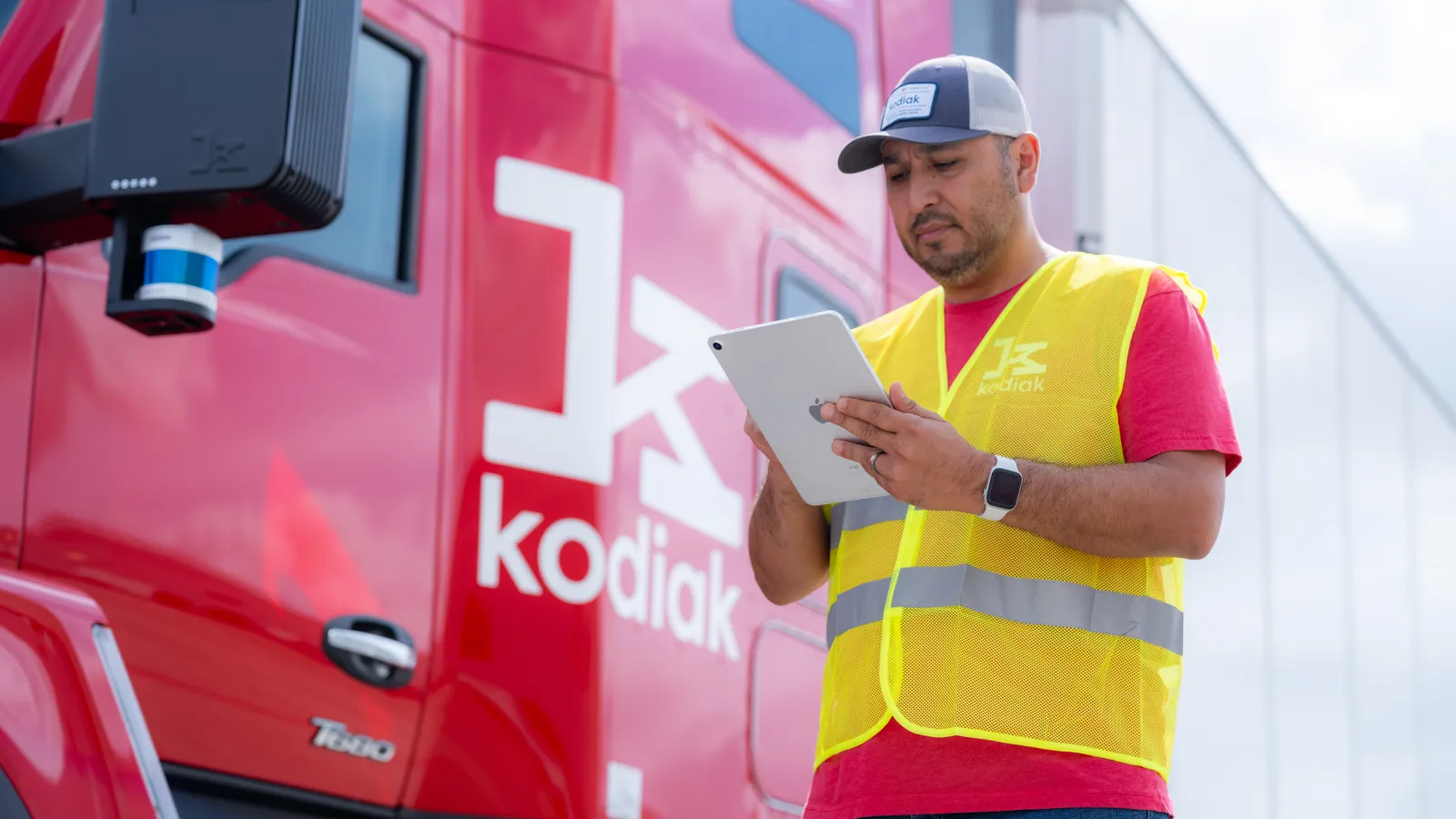
Kodiak AI (Nasdaq: KDK) and PrePass, the dominant weigh-station bypass and compliance network in North America, have announced a collaboration that routes Enhanced Inspection data from Kodiak's autonomous trucks directly into the roadside screening systems used by state enforcement agencies. The integration launches first in Texas and Louisiana, with a stated ambition to scale across the US ahead of Kodiak's planned driverless commercial highway debut before the end of 2026.
The move addresses what both companies describe as the defining bottleneck in autonomous trucking's path to commercial viability: not the vehicle technology itself, but the regulatory and infrastructure layer surrounding it. PrePass operates more than 580 inspection and screening locations nationwide and holds longstanding relationships with state enforcement bodies, making it a structural intermediary between autonomous fleets and a patchwork of state-level compliance requirements.
Closing the compliance gap
The Commercial Vehicle Safety Alliance (CVSA) developed its Enhanced Commercial Motor Vehicle Inspection Programme specifically to handle autonomous trucks operating without a human in the cab. Under the scheme, a CVSA-trained inspector certifies a vehicle is free of safety defects before it begins a driverless run; that clearance holds for up to 24 hours. What PrePass adds is a data pipeline: inspection results flow automatically into existing enforcement systems, giving agency personnel the ability to verify status, authorise bypass, or issue instructions without building a separate process for driverless vehicles.
"The next barrier to scaling driverless trucking isn't inside the truck. It's the infrastructure around it," said Chas Wurster, PrePass's Chief Technology Officer. Kodiak founder and CEO Don Burnette framed the partnership as evidence that deploying autonomous freight is as much an institutional problem as a technical one: "Launching driverless service is not just about building technology. It's about building a solution that works in the real world."
CVSA Executive Director Collin Mooney welcomed the collaboration, noting that "inspection and enforcement processes must evolve" alongside advancing vehicle technology while maintaining a focus on transportation safety.
The convergence read-across
For cross-sector strategists, the significance of this deal extends well beyond a single compliance workflow. Autonomous trucking sits at the intersection of physical AI, freight logistics, and the regulatory-infrastructure layer that determines whether either can scale commercially. Kodiak's existing customer roster, which includes IKEA, Bridgestone, Werner Enterprises and General Dynamics Land Systems, spans retail supply chains, defence logistics, and industrial freight. Each of those verticals carries distinct regulatory exposure across US state lines, making interoperable compliance infrastructure a prerequisite for any customer willing to commit capital to driverless fleet deployment at scale.
The capital implications are material. Long-haul trucking accounts for a substantial share of US freight spend, and the sector faces a structural driver shortage that has persisted for years. Investors pricing autonomous freight plays, whether at the OEM level, the software stack, or the logistics operator, have historically discounted regulatory friction as an intractable near-term risk. A working, state-agency-endorsed compliance bridge, built on infrastructure already trusted by enforcement bodies, narrows that discount.
The PrePass-Kodiak model also offers a template for other autonomous vehicle operators navigating multi-jurisdictional regulatory fragmentation: rather than lobbying for bespoke legislative frameworks state by state, embed compliance data into systems states already rely on. If that approach proves replicable, it could accelerate the broader autonomous commercial vehicle market, with downstream effects on freight insurance pricing, fleet electrification economics, and last-mile logistics infrastructure investment, all sectors where capital is actively seeking clearer line-of-sight to regulatory certainty before committing at scale.
The immediate test will be whether the Texas and Louisiana rollout generates the enforcement-agency endorsements needed to draw additional states into the framework before Kodiak's planned driverless launch date arrives.