
Firefly Aerospace lands $1.3bn engine deal with AST SpaceMobile
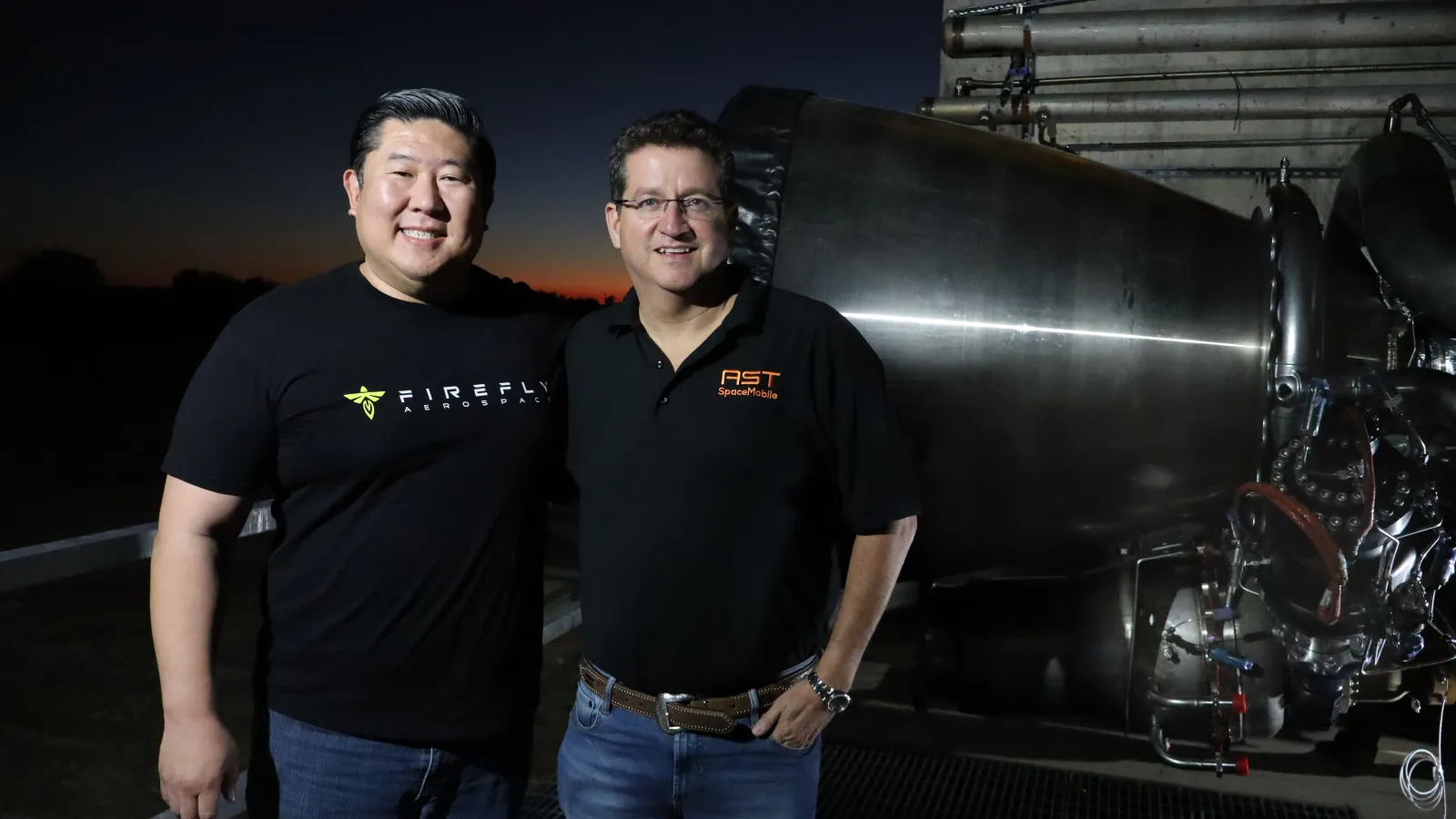
Firefly Aerospace and AST SpaceMobile have announced a three-year agreement worth more than $1.3 billion, under which the Texas-based launch company will supply 36 rocket engines, licence its propulsion intellectual property, and provide engineering support for AST's first proprietary heavy-lift rocket. The deal marks a significant inflection point for both Nasdaq-listed companies and for the broader commercial space economy: a satellite connectivity operator is building its own orbital launch stack, and it has just handed the engine contract to one of the few US firms that can deliver liquid propulsion at this scale.
Under the terms of the agreement, Firefly will deliver 27 Miranda engines and nine vacuum-optimised Vira engines for AST SpaceMobile's first three rockets. The licence allows AST to manufacture the engines independently over time, giving the connectivity company genuine control over its launch cadence rather than remaining dependent on third-party manifest slots. Payment is structured as a combination of cash and AST Class A Common Stock, with the equity portion subject to lock-up periods. For Firefly, the capital injection directly funds new test bays at its Rocket Ranch in Briggs, Texas, long-lead material procurement, and a significant engineering hiring push.
Vertical integration as a competitive moat
The Miranda engine has completed more than 175 hot-fire tests totalling over 4,200 seconds of run time, including a full-power test at 110% of its rated 230,000 pounds-force thrust that ran 20 seconds beyond the nominal flight profile. Both Miranda and Vira are built on technology lineage from Firefly's earlier Reaver and Lightning engines, using the company's patented tap-off combustion cycle and a fully in-house manufacturing approach. Abel Avellan, Founder, Chairman and CEO of AST SpaceMobile, described Firefly as "one of a few companies in the United States with a proven liquid engine of this scale, making it a scarcity in the industry."
That scarcity framing matters strategically. The number of domestic US suppliers capable of delivering flight-proven liquid engines at heavy-lift thrust levels remains very small. Firefly's list of proven credentials now includes the first commercial satellite placed into orbit on approximately 24-hour notice and the first successful commercial lunar landing. For AST, whose BlueBird satellite constellation is already in orbit and generating early commercial revenue, owning the engine IP, not just buying engines off a catalogue, transforms the company's capital story: it shifts from pure infrastructure customer to vertically integrated operator.
Convergence of connectivity and launch economics
The deeper strategic signal here is the accelerating consolidation between satellite broadband operators and launch infrastructure. AST SpaceMobile's core business is direct-to-device mobile connectivity, linking commercial smartphones to low Earth orbit satellites without specialist ground hardware. That proposition depends on deploying large, power-dense satellites at scale and speed. Controlling launch cadence is not an operational luxury; it is a competitive requirement in a market where rivals are iterating fast.
This move sits within a broader pattern of connectivity-layer companies internalising their supply chains. The capital flows underwriting that shift are increasingly cross-sectoral: sovereign wealth funds in the Gulf and Asia have been building positions across both satellite operators and launch-vehicle manufacturers, recognising that orbital access is becoming as strategically contested as undersea cable routes or terrestrial fibre. For investors allocating across deep-tech verticals, the Firefly-AST deal signals that the space economy is maturing past the pure-play launch phase: the next value-capture layer belongs to companies that own both the payload and the ride. Firefly's expanded production capacity, once it comes online, will also serve the broader government and commercial launch market, adding a supply-side buffer to an industry running at what CEO Jason Kim described as "record demand."