
SouqView launches Arabic-first simulated trading platform in UAE
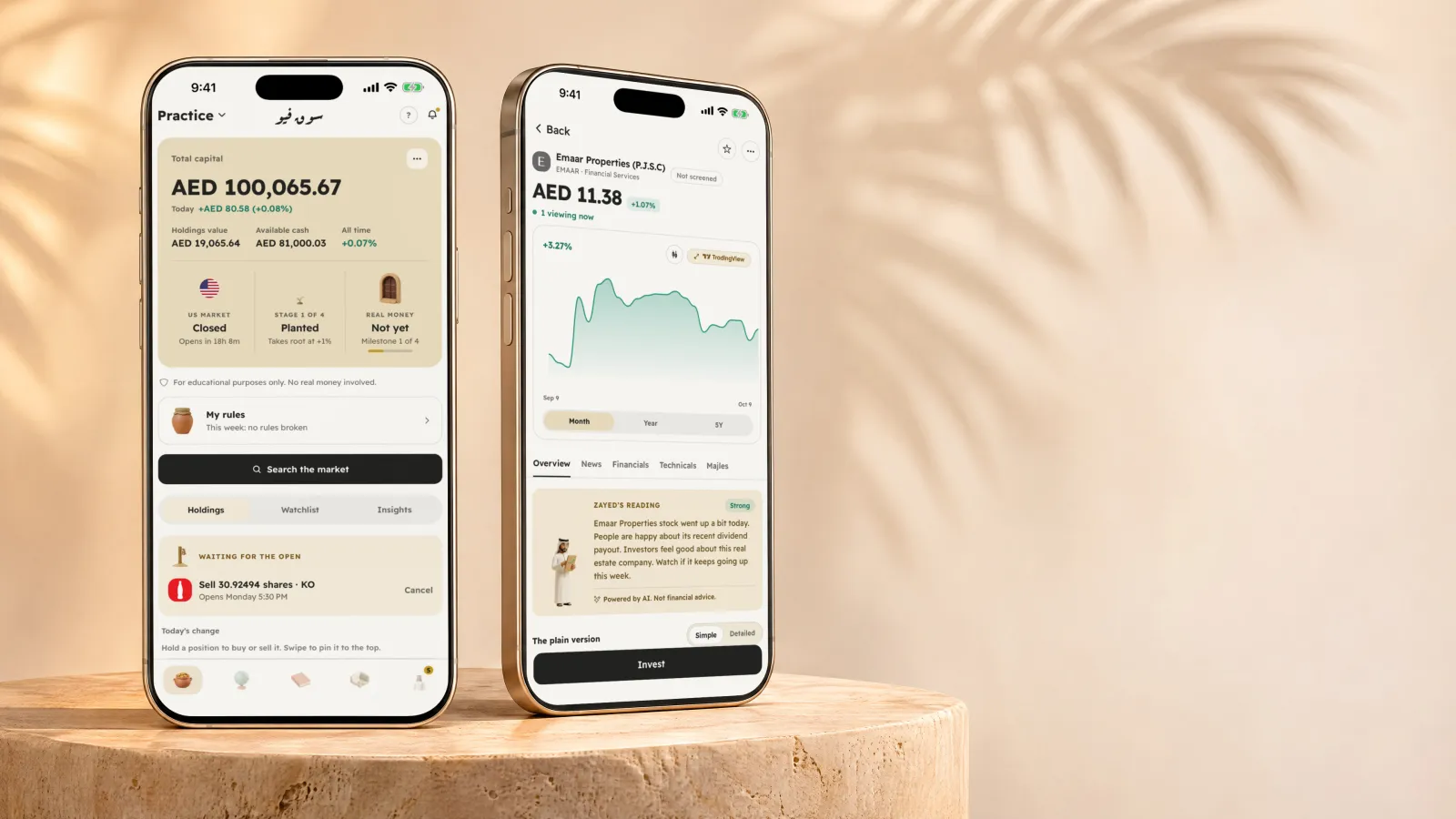
SouqView, an Abu Dhabi-based fintech edutainment startup founded by Mohammed Al Nasri, has launched a platform that combines gamified financial education, simulated trading at real market prices, and AI-powered learning guides. The Arabic-first app allows users to build virtual portfolios of UAE and US-listed stocks denominated in UAE dirhams, testing strategies without committing real capital. The launch arrives as GCC governments and development funds push financial inclusion and youth entrepreneurship to the top of the regional policy agenda.
The platform won the Fintech Sector Award at the second Khalifa Fund Entrepreneurship Competition, organised in collaboration with the Sheikh Khalifa Excellence Award, lending it institutional credibility at an early stage. It was developed under the Done by Youth initiative and its core features are offered free of charge, a deliberate choice the founder frames as an accessibility priority across a region where high-quality financial education has historically been delivered in English and at cost.
Closing a literacy gap the region's trading boom exposed
SouqView's timing is not incidental. Retail trading volumes across the UAE and wider MENA surged during the pandemic-era market volatility of 2020-2022, drawing in first-time investors with limited preparation. Al Nasri has spoken of witnessing that dynamic directly: "Financial markets can seem intimidating, particularly when information isn't accessible in your own language. We want to change that, starting with Arabic and making learning more engaging." The platform's 288 lessons across 49 learning units, covering share fundamentals through to portfolio construction, reflect a curriculum-grade ambition rather than a simple trading simulator.
The pedagogical architecture draws on game-based learning research, citing a 2015 study published in Educational Psychologist on how interactive challenge structures, feedback loops and low-stakes experimentation improve retention and engagement. That framework maps directly onto a GCC youth cohort that is among the most digitally engaged in the world by time-on-device metrics: gaming and interactive mobile experiences are already habitual, making the edutainment hook structurally sound. SouqView says collaborations with educational institutions are underway, though specific partners have not yet been named.
Convergence angle: fintech access meets sovereign human-capital strategy
For cross-sector strategists, the more interesting read-across from SouqView's launch is the convergence between retail fintech access and Gulf sovereign human-capital investment. The UAE, Saudi Arabia and Qatar are each running large-scale programmes to shift national workforces toward higher-value economic participation, and financial literacy sits near the base of that pyramid. A free, Arabic-first platform endorsed by the Khalifa Fund fits neatly into that policy infrastructure, giving it a distribution channel and credibility that most consumer fintech startups in the region must spend heavily to acquire.
There is also a capital-market development angle that matters beyond the UAE. Regional exchanges, including the Abu Dhabi Securities Exchange and Dubai Financial Market, have been actively courting retail investor participation to deepen liquidity ahead of continued privatisation pipelines. A generation of GCC retail investors who arrive at live markets with structured simulation experience behind them would materially change the composition and behaviour of that investor base. That is a second-order effect that brokerages, exchange operators, and the institutional funds that price regional liquidity risk should be watching.
SouqView remains early-stage: no funding amount has been disclosed, the institutional partnership pipeline is still forming, and expansion beyond the GCC to wider MENA markets is flagged as an aspiration rather than a committed roadmap. The company's immediate test is conversion from free educational users to a sustainable commercial model, a challenge every edutainment platform faces regardless of geography. Its regional policy tailwind is real, but the path from award-winning startup to infrastructure-scale financial education platform will require capital and distribution partnerships that are not yet confirmed.