
Light Frame raises $5.1m to rebuild private banking's aging core
Light Frame, a Lausanne-based financial technology company, has closed an oversubscribed $5.1 million Seed round led by Fortino Ventures, with participation from Sidekick Partners, Tenity, Chamaeleon, AltaIR Capital, and several existing backers. The company's target is the core banking infrastructure underpinning private banks, wealth managers, family offices, and asset managers across EMEA, a layer of technology the founding team describes as fundamentally unfit for an AI-first era.
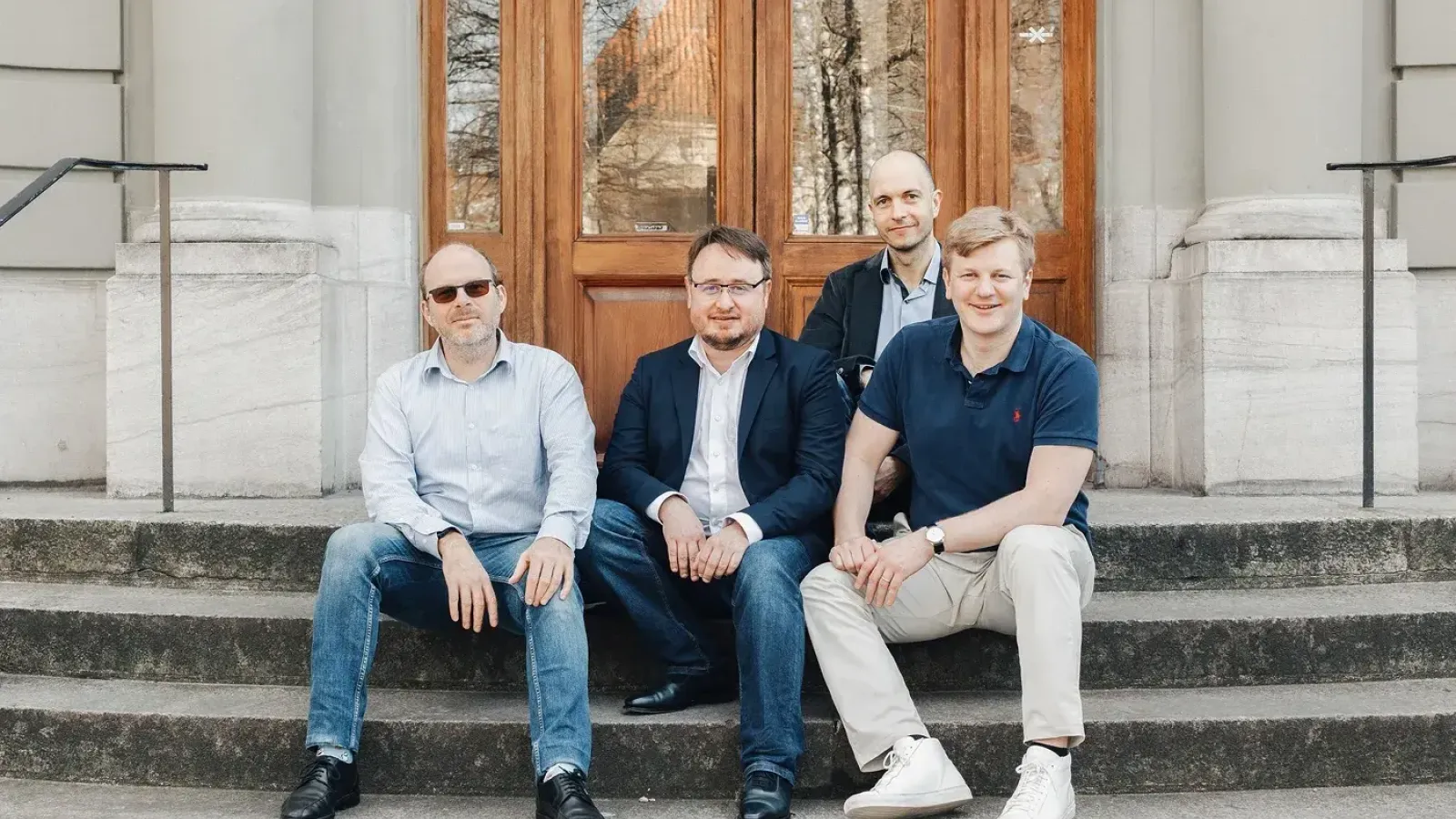
The raise is small by fintech standards, but the ambition is not. Light Frame was founded in 2024 by Schuyler Weiss, previously founder and CEO of Alpian, described as Switzerland's first cloud-native private bank, alongside Alpian's former COO and CIO Mathieu Clément and two technologists. The founding quartet's argument is straightforward: private banking technology has not been rearchitected at the core layer for three decades. The result, they contend, is an industry running sensitive client operations on systems that are slow to change, expensive to maintain, and structurally incapable of embedding modern AI tooling.
Infrastructure as the AI bottleneck
This framing matters well beyond the wealth management vertical. The private banking sector's reluctance to migrate core systems is not unique, it mirrors the predicament facing retail banks, insurance carriers, and capital markets firms globally. What Light Frame is positioning as a wealthtech-specific problem is, structurally, a broader financial-services challenge: AI capabilities are advancing faster than the legacy infrastructure designed to carry them.
Light Frame's platform is built on a cloud-native, API-first architecture and ships with what it calls an embedded AI layer and a secure interoperability layer, allowing institutions to replace individual components of their existing stack rather than undertaking a full rip-and-replace. That modularity is strategically significant. For regulated entities handling high-net-worth client data, the barrier to wholesale infrastructure migration is as much regulatory and reputational as it is technical.
"AI is redefining what technology can deliver, but the realisation of its potential in the wealth industry is dependent on the underlying infrastructure," said Weiss. "The architecture must be designed around this future, without compromising the security, resilience and trust fundamental to banking."
Capital flowing into the infrastructure layer
Investor appetite for the financial infrastructure layer has been building quietly alongside the more visible generative AI wave. Where earlier wealthtech cycles backed client-facing robo-advisers and digital onboarding tools, the current cohort of infrastructure plays, including core banking, portfolio accounting, and regulatory reporting engines, reflects a recognition that the AI value chain in financial services bottlenecks at the data and compute layer, not the front end.
Fortino Ventures, the Belgian growth-equity firm that led this round, has built a track record in B2B software with a focus on markets where incumbent technology is entrenched and switching costs are high. That profile fits the private banking core precisely: implementation is an act of institutional trust, as Fortino's Hugh Phelan acknowledged, noting that the Light Frame team's credibility derives from having actually operated a regulated Swiss bank on the kind of infrastructure they are now replacing.
For cross-sector investors watching capital flows into financial infrastructure, the Light Frame raise sits at an instructive intersection. Sovereign and institutional wealth management clients are themselves among the largest allocators into AI infrastructure, data centres, and deep-tech funds globally. The irony is that the internal technology powering those same wealth managers often predates the internet era. Modernising that layer is both a fintech story and an AI-readiness story, with regulatory complexity, Swiss data sovereignty, FINMA oversight, GDPR, adding a geopolitical dimension that makes European-engineered solutions a credible differentiator.
Light Frame says it is already supporting live client operations across EMEA. The $5.1 million will fund platform development, implementation capacity, and commercial expansion, with the EMEA region as the initial focus. A Series A and further geographic expansion would be the logical next data points to watch.