
Rocket Lab wins $397m Space Force deal for orbital targeting layer
Rocket Lab (Nasdaq: RKLB) has secured a $397 million contract from the United States Space Force to develop, launch, and operate a fleet of next-generation "Flatellite" spacecraft under the Space-Based Airborne Moving Target Indicator (SB-AMTI) programme. The award puts the Long Beach-based end-to-end space company at the heart of a fast-expanding Pentagon effort to move battlefield surveillance from vulnerable airborne platforms into resilient, proliferated low-Earth orbit constellations, a shift that cuts across defence doctrine, commercial launch economics, and geopolitical risk calculus simultaneously.
The SB-AMTI programme exists because traditional airborne surveillance aircraft are increasingly exposed to sophisticated anti-access and area-denial (A2/AD) systems. By relocating persistent tracking capability to orbit, the Space Force aims to give joint-force commanders continuous oversight of contested airspace without risking crewed or high-value airborne assets. Rocket Lab's Flatellites, a flat-panel satellite form factor optimised for mass constellation deployment, will carry space-based sensors and low-latency, high-bandwidth communications links, feeding track data directly to secure ground processing facilities. The architecture also integrates AI-driven signal processing to filter clutter and isolate relevant targets within large data streams.
Vertical integration as strategic differentiator
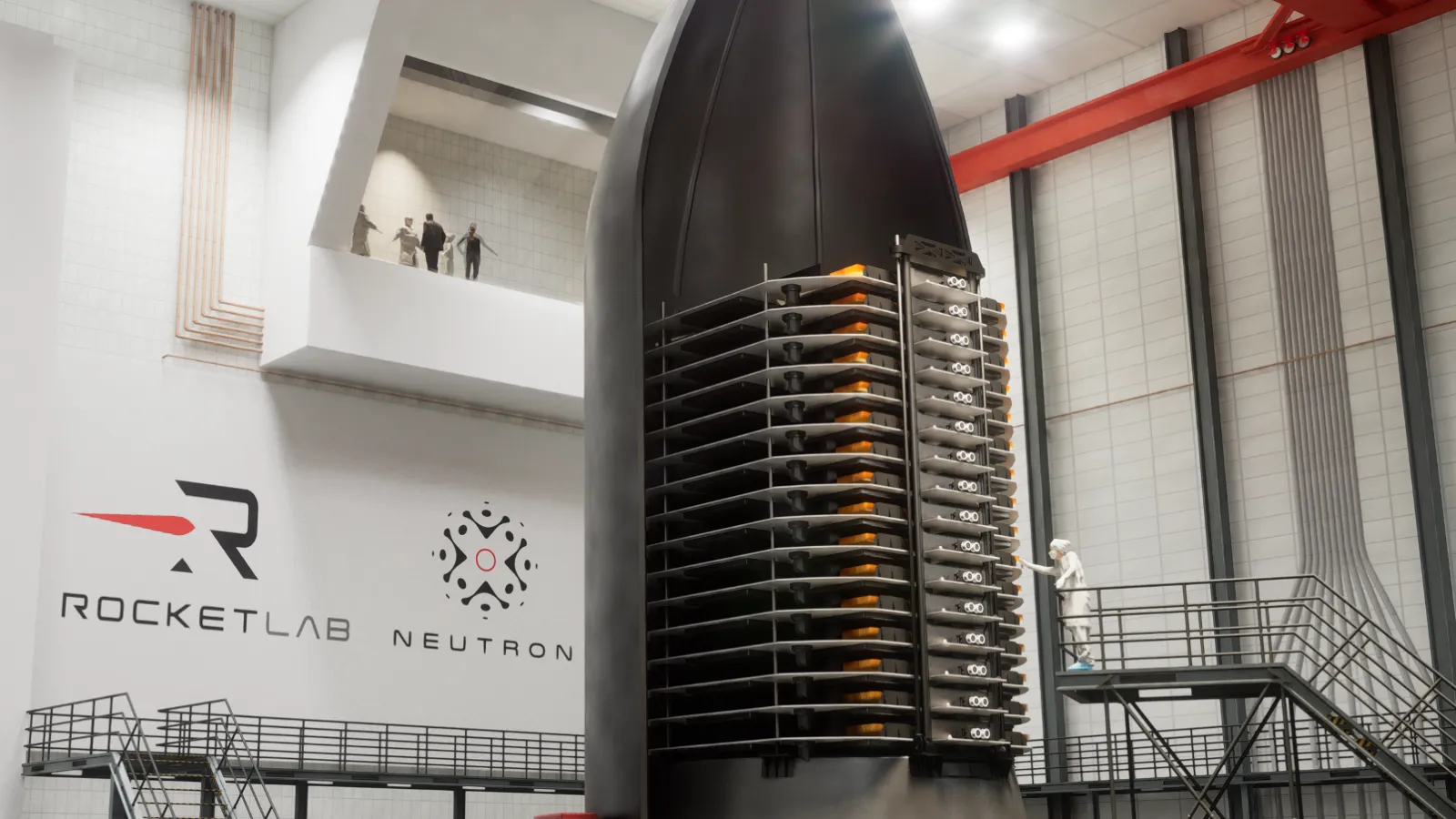
The contract structure is notable beyond its headline value. Rocket Lab will design and manufacture the Flatellites, launch them aboard its upcoming Neutron medium-lift rocket, and then operate them on orbit, a cradle-to-operations chain that few commercial space firms can currently offer. Founder and CEO Sir Peter Beck framed the award explicitly around that model: "Our vertically integrated, constellation-class satellite capabilities, mission operations, and launch services uniquely position us to deliver innovative solutions that meet the urgent needs of the Space Force."
The selection adds Rocket Lab to a growing list of dual-use commercial operators, alongside Palantir, L3Harris, and Millennium Space Systems, that the Pentagon is leaning on to accelerate capability deployment and introduce vendor diversity into programmes previously dominated by prime contractors. The SB-AMTI award follows existing Rocket Lab work for the National Reconnaissance Office, DARPA, and NASA, but the scale and operational breadth of this contract represent a meaningful step-up in the company's defence revenue profile.
The broader convergence: commercial space meets defence procurement reform
The macro context here extends well beyond a single launch contract. The award reflects a structural shift in how Western defence establishments are sourcing space capability. For years, the Pentagon's satellite programmes were the exclusive preserve of large prime contractors with decade-long delivery timelines. The Space Force's willingness to route a near-$400 million programme through a vertically integrated commercial operator signals that the "commercial-off-the-shelf plus government requirements" model is now mature enough for front-line sensing and targeting missions.
For investors tracking the space-defence convergence, Rocket Lab's Neutron rocket is the pivotal variable. Neutron is positioned as the launch vehicle for this contract, but it has not yet flown. Delivery credibility, and the full contract value, depends on Neutron reaching operational status on schedule. That dependency introduces programme risk that the $397 million figure alone does not fully convey.
The geopolitical read-across is equally significant. As adversary A2/AD systems grow more capable across the Indo-Pacific and Eastern Europe, demand for resilient space-based sensing will intensify among US allies. NATO partners and Five Eyes nations are already co-investing in allied space-domain-awareness architecture; Rocket Lab's emerging role as a sovereign-friendly commercial integrator positions it as a potential supply node for that allied demand, not just a US government contractor. Capital allocators weighing the defence-space convergence should watch whether this contract generates follow-on international interest in Flatellite-class constellations, and whether Neutron's development timeline holds.