
Intuitive Machines buys Goonhilly and COMSAT to build lunar data network
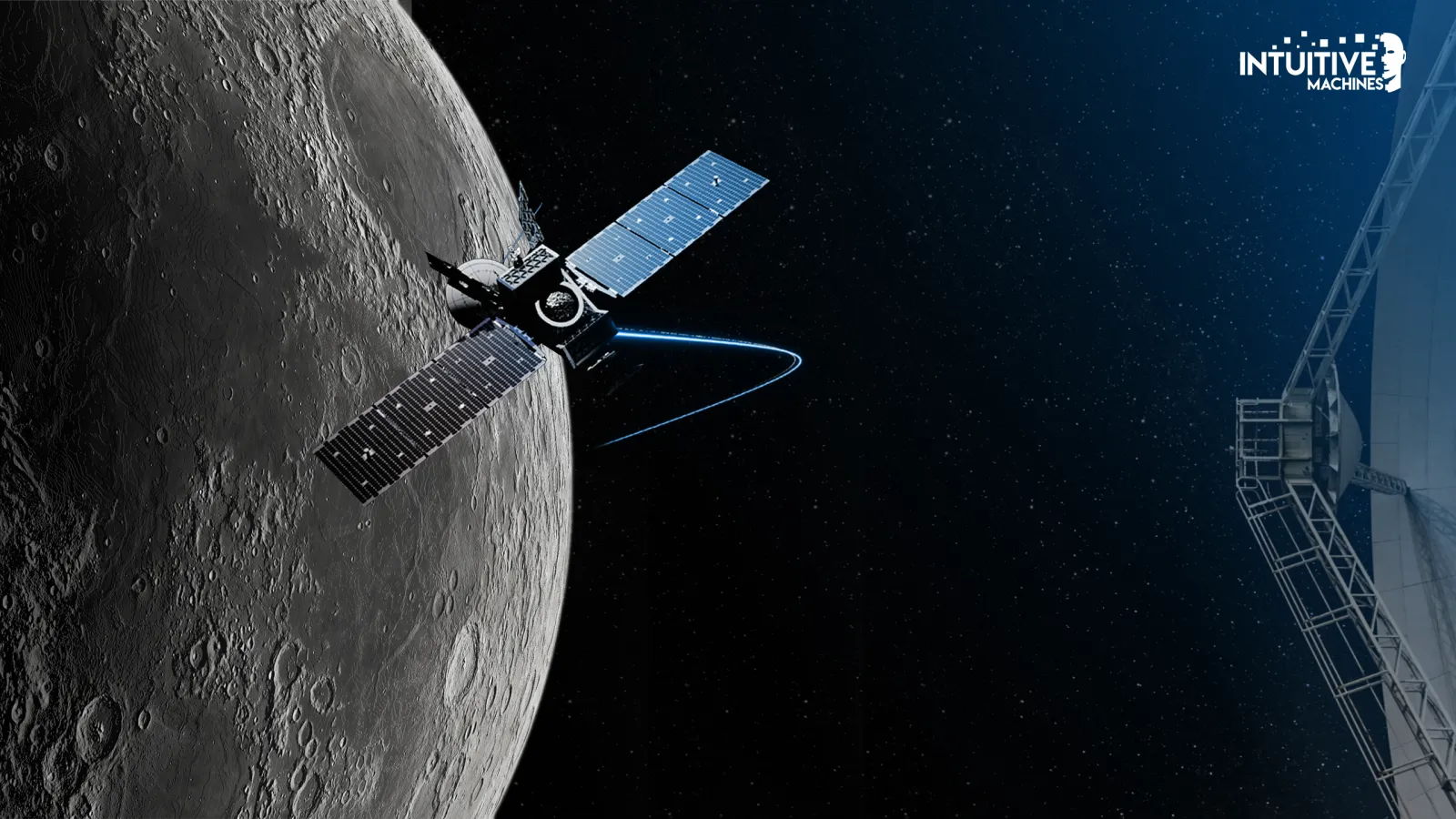
Intuitive Machines (Nasdaq: LUNR) has completed the acquisition of both Goonhilly Earth Station Limited and COMSAT LLC, folding two of the most established commercial deep-space ground-station networks into its expanding infrastructure stack. The move cements the Houston-based company's position not merely as a lunar lander operator but as the prospective owner of the communications rails that will carry data, navigation signals, and command traffic for an entire generation of Moon-bound missions.
The two acquisitions are strategically interlocked. Goonhilly, based in Cornwall, UK, is described by the company as the world's most advanced commercial lunar and deep-space communications provider, with clients including the European Space Agency. COMSAT, operating from the United States, brings a portfolio of more than 90 hosted and leased antennas and more than five decades of secure satellite ground-station operations for government and commercial customers. Together, they extend Intuitive Machines' ground coverage across multiple Earth-viewing arcs, critical for maintaining continuous contact with spacecraft operating at and beyond lunar distance.
Closing the infrastructure loop
Intuitive Machines had already integrated Goonhilly's tracking and telemetry capabilities into its IM-1 and IM-2 lunar lander missions, so the acquisition formalises an operational dependency that was already embedded. The expanded network will next be deployed for IM-3, the company's third NASA Commercial Lunar Payload Services (CLPS) mission returning payloads to the Moon, and for Altus-1, the company's first lunar data-relay satellite operating under a NASA Near Space Network Services contract. The Altus-1 mission is particularly significant: a purpose-built relay satellite in lunar orbit would allow surface assets and rovers to maintain communications with Earth even when positioned on the far side of the Moon, a problem that has constrained all previous lunar surface operations.
"By increasing capacity for communications, data transport, and PNT services, we're enabling customers to execute more complex operations with greater confidence and at a faster cadence for Moon Base and for commercial, civil, and international lunar activities," said Steve Altemus, CEO of Intuitive Machines.
The infrastructure layer play and its cross-sector implications
The strategic logic here extends well beyond lunar exploration. Ground-station infrastructure underpins position, navigation, and timing (PNT) services, a capability with direct relevance to defence and national security customers who need assured, sovereign alternatives to GPS-dependent architectures. Goonhilly already delivers Space Domain Awareness data and assured satellite communications to national security clients. The combined entity therefore operates across civil, commercial, and defence verticals simultaneously, a profile that should attract attention from defence procurement offices in both the US and UK, particularly as NATO members accelerate investment in resilient space-based communications following years of concern over GPS jamming and spoofing in contested theatres.
From a capital-allocation perspective, the space infrastructure layer is attracting a distinct class of investor interest that differs from the launch-vehicle bets of the early 2020s. Where the prior cycle rewarded point-to-point rocket operators, the emerging cycle rewards companies that own persistent, networked infrastructure, ground stations, relay satellites, and orbital data pipelines, that generate recurring revenue regardless of which spacecraft operator wins any given mission contract. Intuitive Machines' Build-Connect-Operate service model is explicitly structured around this logic, positioning the company as an infrastructure-as-a-service provider for the cislunar economy rather than a pure mission-execution contractor.
The competitive read-across is significant. As commercial lunar activity scales, driven by NASA's Artemis programme, ESA's lunar ambitions, and a growing roster of private operators, the ground-station and relay-communications layer becomes a structural bottleneck. Whoever controls that bottleneck, as Intuitive Machines is now positioned to do, sits at the convergence of space, defence, and the sovereign digital infrastructure debate that is reshaping capital flows across the transatlantic technology corridor.