
Model ML lands UAE sovereign wealth client in GCC AI push
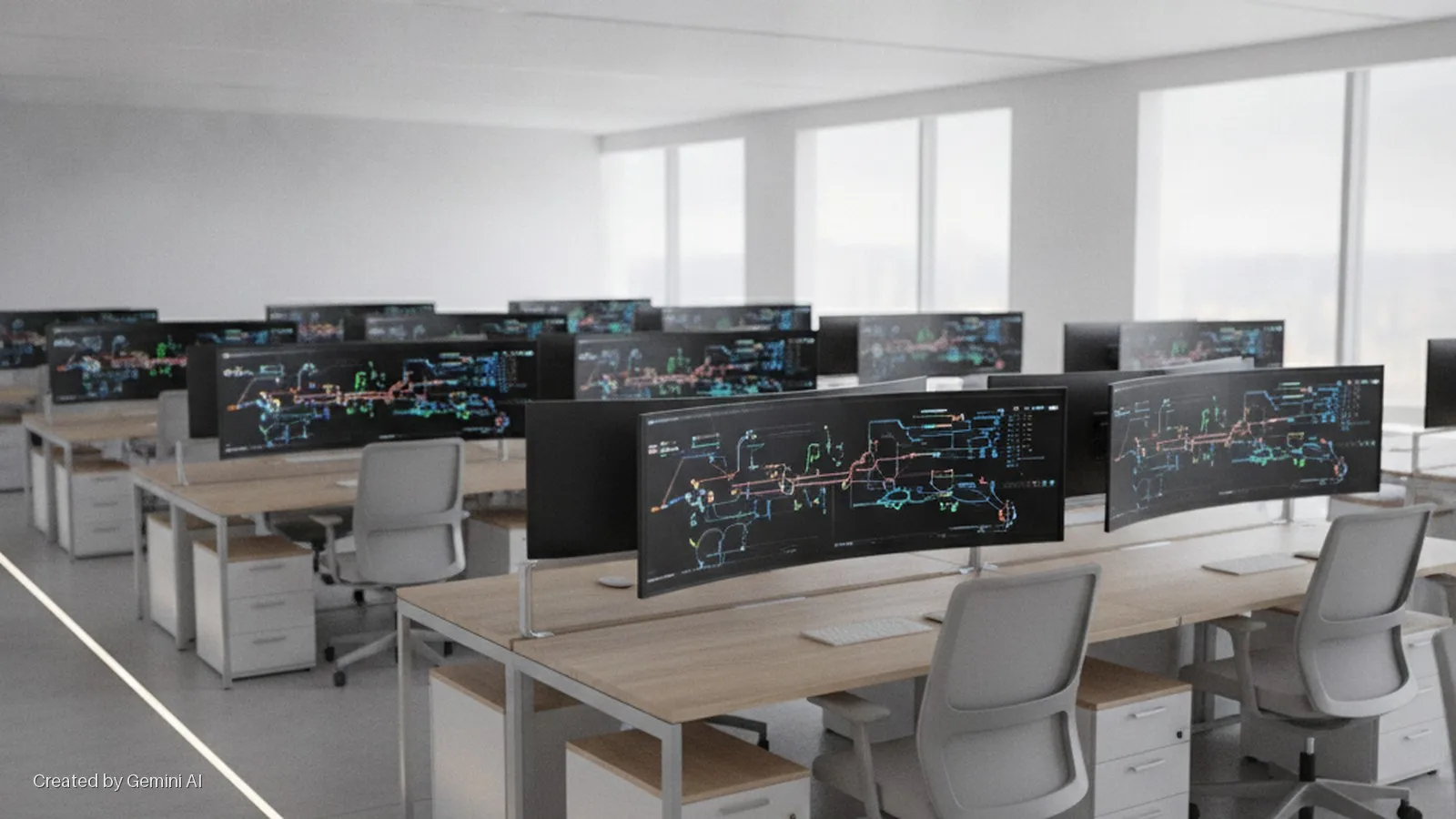
Model ML, the London-founded agentic AI platform built for financial and professional services, has opened a Dubai office and appointed Raghav Sehgal as General Manager for the Middle East, confirming that at least one of the UAE's leading sovereign wealth funds is already live on the platform. The move marks a significant step in the company's international build-out, following offices in Tokyo and Singapore opened earlier this year, and comes just two years after Model ML's founding in 2024.
The company, valued at over $1 billion after a $75 million Series A led by fintech-focused growth investor FT Partners, positions itself as a model-agnostic orchestration layer: rather than locking clients into a single AI lab's output, it dynamically routes tasks across frontier and open-source models, then delivers results inside Excel, PowerPoint, and institutional templates. Clients include HSBC, PwC's UK Deals business, Deloitte, and TresVista.
Gulf institutions accelerate past the education phase
Chaz Englander, co-founder and CEO, said: "A year ago we were explaining why model orchestration mattered. Today banks and sovereign investors are coming to us already knowing they need a specialist AI layer built for financial services."
That shift in buyer sophistication matters for the broader GCC technology landscape. Gulf sovereign wealth funds, which collectively manage several trillion dollars in assets, have historically been among the earliest institutional adopters of new financial infrastructure. Their move from pilot to production on a model-agnostic AI platform suggests that the GCC is not simply importing Western AI tooling but actively shaping procurement standards around security, cost efficiency, and vendor independence. For AI vendors chasing enterprise financial services contracts globally, the ability to cite a Gulf sovereign fund as a live reference client carries material commercial weight.
Sehgal, who spent four years in Bain's private equity practice before joining Model ML as one of its earliest hires, has spent the past six months building what the company describes as depth-over-breadth relationships with a small number of leading regional institutions. Named among them is Awad Capital, a DFSA-regulated investment bank in Dubai, whose CEO credits the platform with enabling his team to process large data rooms and produce documentation drafts at roughly ten times previous speed.
Model-agnostic infrastructure as the GCC's AI preference
The model-agnostic procurement preference emerging across the GCC has wider strategic implications. It reflects a broader pattern of digital sovereignty thinking: Gulf institutions are wary of dependency on any single hyperscaler or foundation-model lab, a caution also visible in sovereign AI infrastructure investments across Saudi Arabia and the UAE more broadly. For AI developers competing in this market, proprietary lock-in is increasingly a commercial liability rather than an asset.
For cross-sector investors watching capital flows into financial AI, Model ML's trajectory illustrates a structural dynamic: the first wave of enterprise AI adoption in financial services is consolidating around orchestration and workflow infrastructure rather than raw model capability. The competitive landscape in this layer, which includes specialist financial AI firms as well as broader enterprise AI platforms, is still forming. Model ML's Series A backing from FT Partners, a specialist fintech growth investor, signals that dedicated financial services infrastructure is attracting category-specific capital rather than general-purpose AI funding.
The Dubai office joins eight global locations. With Singapore and Tokyo also added in 2026, Model ML is building a footprint that spans the three principal time zones of global capital markets. The next question for investors and competitors alike is whether the company's model-agnostic positioning holds as the frontier model providers themselves move deeper into enterprise workflow tooling.