
MAHE Dubai and SpacePoint build satellite lab for UAE space talent
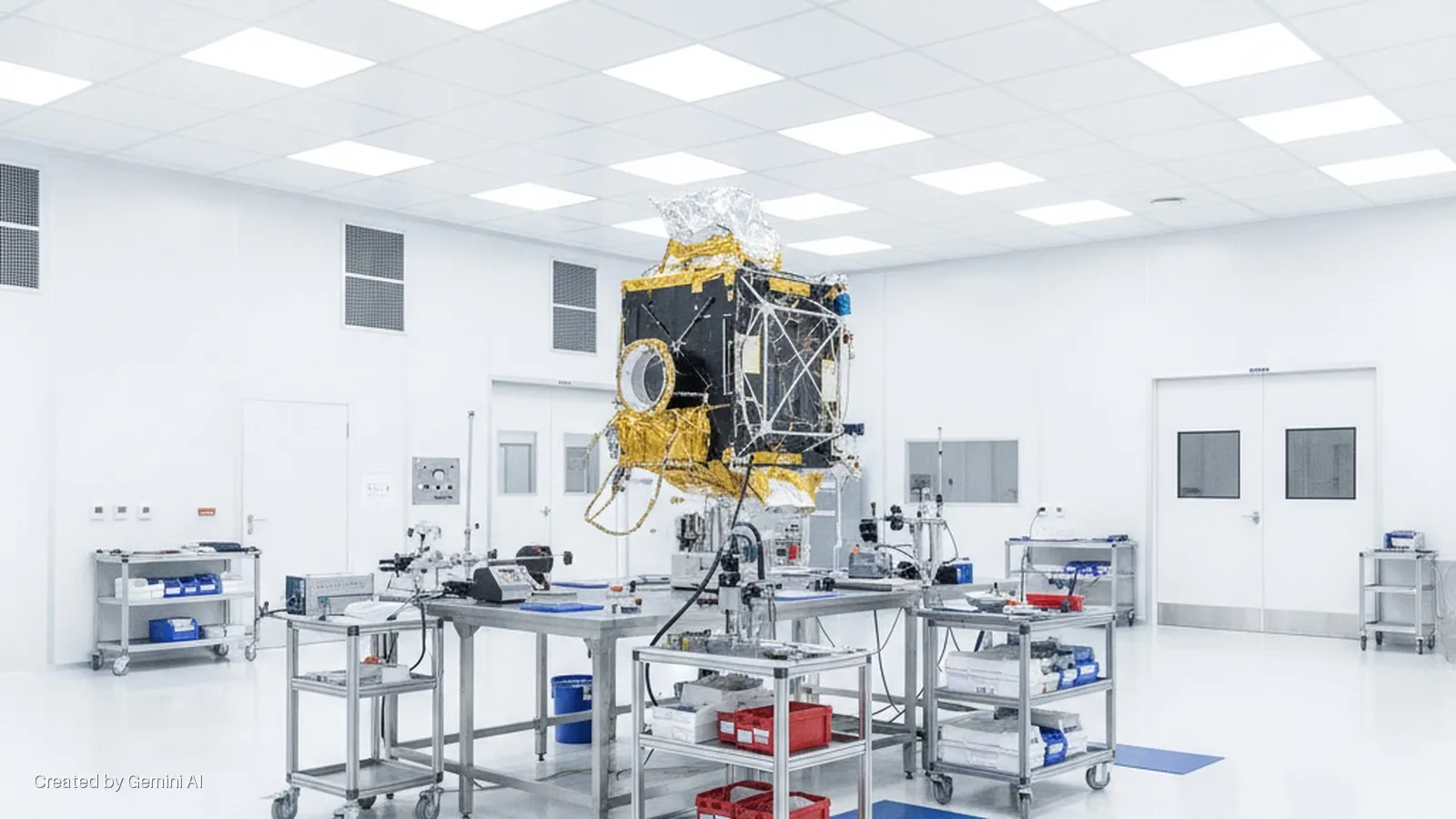
Manipal Academy of Higher Education (MAHE) Dubai and UAE-based space education company SpacePoint have signed a three-year agreement to develop a Satellite Development Lab on the MAHE Dubai campus, offering engineering students hands-on experience in satellite design, integration and testing. The facility, expected to be operational within six months, sits at the intersection of Gulf sovereign ambition, a rapidly maturing commercial space sector, and a structural shortage of specialist engineering talent.
The lab will deploy SpacePoint's SatKit platform, which covers the core disciplines of satellite development: command and data handling, power systems, attitude control, communications, mechanical integration and software. A Quick Flight workshop for roughly 30 students is slated as the opening activity, with MAHE Dubai aiming to scale throughput to 200 students per year across its engineering programmes over the longer term.
UAE space economy: the macro backdrop
The timing is not incidental. The UAE Space Agency's 2025 Space Economic Survey recorded a 27.1% rise in sector spending to AED 5.52 billion in 2024, with commercial activity now accounting for 48% of total expenditure. Employment of 15-to-35-year-olds in the sector grew 29.5% in the same period, reaching 1,333, a figure that underscores both the momentum and the scale of the gap that university programmes like this one are being asked to fill.
SpacePoint's CEO Abdullah AlSalmani pointed to the workforce dimension directly: "As the UAE's commercial space sector develops, building technical capability across the workforce will become increasingly important. Satellite development requires engineers who understand the complete process, from translating mission requirements into a working design to integrating and validating complex systems."
SpacePoint has prior form. It previously delivered satellite development programmes with the Higher Colleges of Technology, where 50 students across ten teams worked on payload development and materials testing using SatKit. The company reports having trained more than 3,500 students and certified over 100 instructors across the UAE and internationally.
Convergence read-across: talent as the bottleneck
The MAHE Dubai partnership is a small institutional deal, but it reflects a broader pattern that cross-sector capital allocators should track. Gulf sovereign wealth vehicles and national space agencies are committing significant sums to build indigenous space capability, from the Mohammed Bin Rashid Space Centre's satellite programmes to Abu Dhabi's growing role in downstream applications. The constraint is not capital. It is engineers who can operate end-to-end satellite development workflows.
That talent gap has direct implications beyond the space sector itself. Satellite communications infrastructure underpins connectivity for energy-grid monitoring, autonomous logistics networks and remote agricultural sensing across the wider GCC. A shortage of satellite engineers is therefore a latent risk for digitisation programmes in transport, energy and precision agriculture that policymakers and investors in those sectors rarely price in explicitly.
SpacePoint's connection to the UAE Space Agency's National Space Academy, cited in the partnership announcement as a pathway for students into national space initiatives, also signals that this is partly a sovereign workforce-development play, not merely a university curriculum upgrade. For geopolitical risk analysts, the pattern is consistent with a Gulf-wide strategy of reducing dependence on imported engineering talent in critical technology sectors, a trend already visible in defence-tech procurement and semiconductor design.
The immediate next milestone is the lab's commissioning, expected by spring 2027. Whether MAHE Dubai can hit the 200-students-per-year target will depend on faculty capacity and whether SpacePoint's SatKit curriculum can be embedded broadly enough across existing engineering degree structures to attract students beyond a self-selecting cohort.