
Nautilus Solar closes $600m facility for US community solar build-out
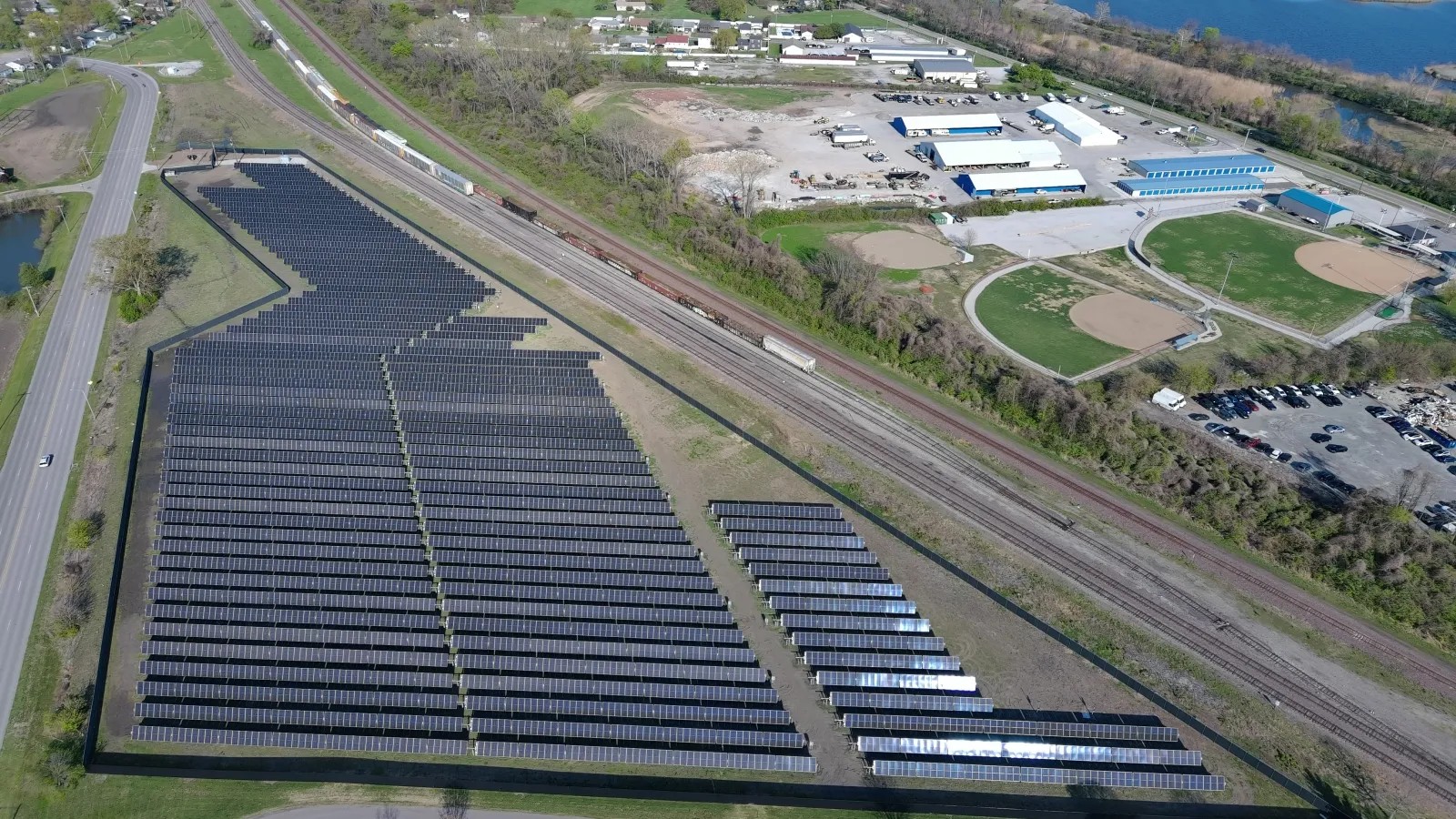
Nautilus Solar Energy, one of the largest community solar operators in the United States, has renewed a $600 million construction debt facility to fund approximately 200MW of new projects across its portfolio. The deal was co-led by National Bank of Canada Capital Markets, Royal Bank of Canada, and Export Development Canada, with a further four institutional lenders participating. For a company backed by Power Corporation of Canada and its alternative-asset arm Power Sustainable, the transaction is a straightforward balance-sheet move, but the broader context in which it lands deserves a closer look.
Nautilus now operates 167 community solar farms across 12 states, serving more than 55,000 subscribers, and says it is approaching 600MW of operating capacity. The company's stated target is approximately 750MW by the end of 2027. Community solar, projects that allow households and small businesses to subscribe to a share of a local solar farm without installing rooftop panels, has grown steadily as a retail electricity-cost hedge, but it remains a relatively fragmented market. Few operators have reached the scale Nautilus is approaching.
Canadian capital, American electrons
The lender roster is notable for its Canadian weight. National Bank of Canada served as sole bookrunner and administrative agent, Export Development Canada provided sovereign-backed capacity, and the Quebec cooperative Fédération des Caisses Desjardins also participated. That three Canadian institutions anchored a US renewable-energy construction facility is not accidental. Canadian pension and development-finance capital has quietly become a structural pillar of the US clean-energy transition, partly because domestic US bank appetite for construction-phase renewable risk remains constrained by higher-for-longer interest rates and Basel III capital treatment.
Camelia Miu, Nautilus's CFO, described the facility as reflecting "deep relationships and trust" with the institutional lending community, and pointed to rising electricity costs as a tailwind: "In a time of rising electricity costs, this capital accelerates our ability to deliver affordable energy to a wider breadth of customers living in the communities that we serve."
The macro read-across
The facility lands at an inflection point for US distributed energy. Average retail electricity prices in the United States have risen materially over the past three years, driven by grid-infrastructure underinvestment, the re-industrialisation of domestic manufacturing, and, more recently, surging data-centre load growth tied to AI compute buildout. That last factor is increasingly significant. Hyperscaler and colocation operators are competing for the same grid-interconnection queues as community solar developers, creating both a constraint and, paradoxically, a policy incentive: regulators in several states are actively fast-tracking distributed solar to relieve pressure on centralised generation.
For cross-sector investors, community solar sits at the intersection of three converging pressures. First, the AI-driven data-centre boom is tightening grid capacity in states where Nautilus operates, making localised generation commercially more attractive. Second, the political appetite in Washington for large-scale federal clean-energy subsidy remains uncertain, which pushes developers towards project-finance structures that stand independently of tax-credit continuity. Third, Canadian institutional capital, from development banks to pension funds, is actively seeking dollar-denominated infrastructure yield as domestic Canadian deal flow tightens.
None of that makes this facility a technology-convergence story in the semiconductor or AI-platform sense. But it is a clean example of how capital-markets architecture, grid-load dynamics, and geopolitical capital flows are increasingly dictating the pace and geography of the energy transition. The question for Nautilus, and for the community solar sector broadly, is whether the 750MW target can be hit before interconnection queues and rising construction costs erode the margin that makes the subscriber-model economics work.