
Volatus Aerospace opens 53,000 sq ft Mirabel plant for drone systems
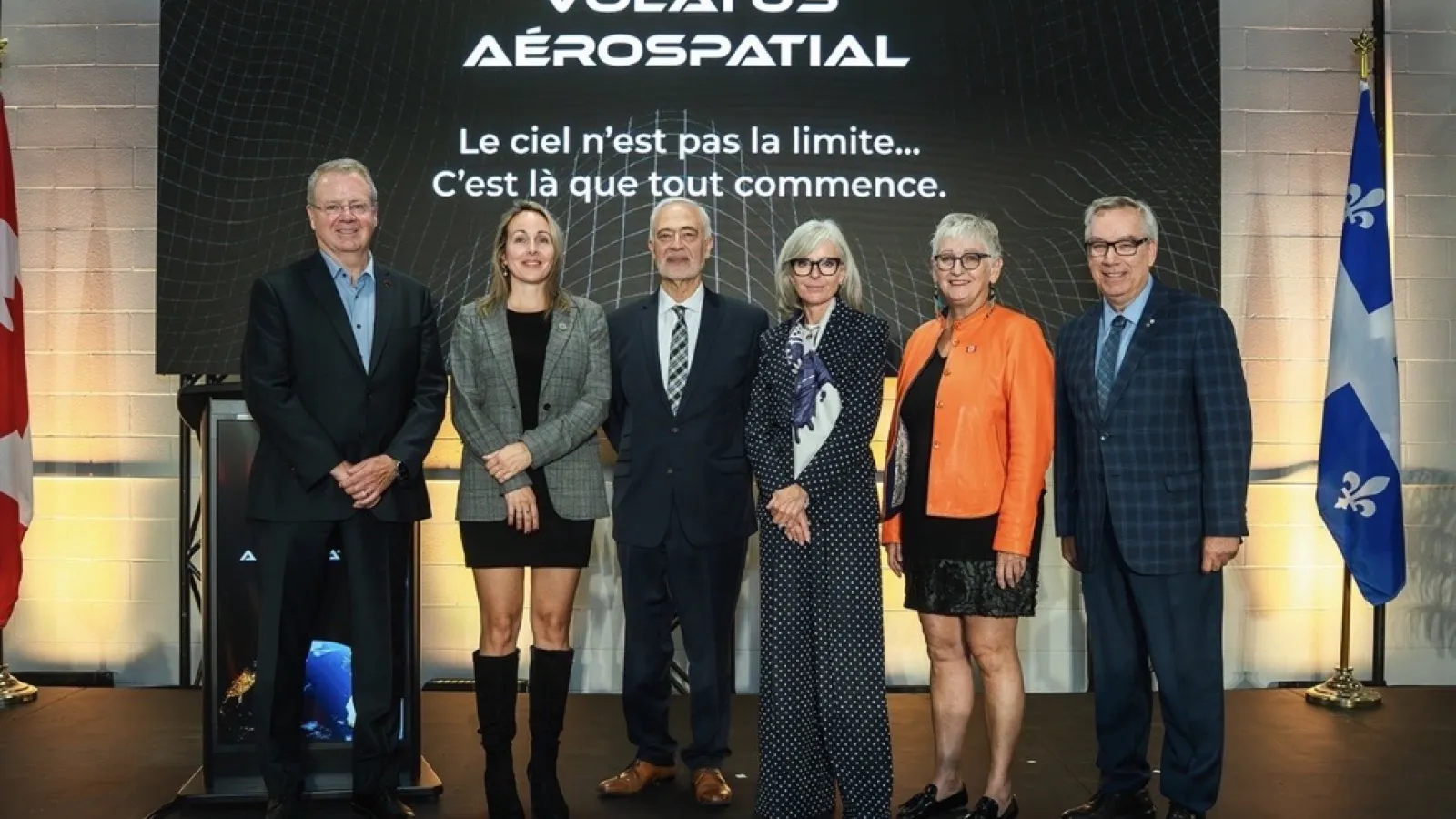
Volatus Aerospace has formally opened a 53,000-square-foot manufacturing and systems integration facility in Mirabel, Québec, positioning the TSX-listed company to scale production of uncrewed and autonomous systems for defence, public safety and commercial customers across Canada and allied nations.
The site, located within the established aerospace cluster around Montréal-Mirabel International Airport, has been operational since earlier in 2026. It is already producing drone docking stations and supporting integration of the company's V-Series aircraft. The official ceremony drew federal parliamentarians, BDC president Isabelle Hudon, the mayor of Mirabel and the head of Aéroports de Montréal, signalling the degree to which Canadian industrial policy has aligned behind sovereign uncrewed-systems capability.
Sovereign capability as industrial strategy
CEO Glen Lynch framed the investment explicitly in terms of sovereignty, not just commercial expansion. "Building sovereign capability requires more than developing great technology," he said. "It requires the ability to manufacture, integrate, test and support that technology here in Canada. Mirabel strengthens that capability and provides a platform from which we can continue to scale production and pursue opportunities across Canada, NATO and allied markets."
That framing reflects a wider shift in how Western governments are approaching defence procurement. Following supply-chain disruptions exposed during recent conflicts and the accelerating adoption of uncrewed systems by NATO members, allied governments have moved to prioritise domestic or allied-nation production over the lowest-cost foreign supplier. Canada's BDC involvement in the ceremony suggests institutional capital is backing that industrial thesis domestically.
Cross-sector read-across: UAS manufacturing meets defence procurement cycles
For investors tracking the autonomous-systems space, the Mirabel facility represents a concrete step in the maturation of the uncrewed aerial systems (UAS) sector from technology development to scaled manufacturing. The shift matters because the bottleneck for most UAS companies is no longer whether the technology works, but whether it can be produced reliably at volumes that meet government contract requirements.
That dynamic has direct implications for defence procurement timelines and capital allocation across the broader sector. NATO members are under political pressure to increase defence spending towards and beyond the two-percent-of-GDP threshold, and a significant share of that incremental spend is expected to flow into autonomous and remotely piloted systems rather than legacy crewed platforms. Canadian companies with certified domestic manufacturing capacity are therefore well placed to capture allied procurement that explicitly requires non-Chinese supply chains.
The Mirabel cluster is also worth watching from a regional-industrial-policy perspective. Québec has long hosted Bombardier, Pratt and Whitney Canada, and Bell Textron operations, giving Volatus access to deep aerospace supply-chain relationships and a pool of skilled aviation-sector labour that most UAS startups elsewhere lack. That embedded cluster advantage is harder to replicate than the underlying drone technology itself, and it may prove to be a more durable competitive moat as the sector consolidates.
Volatus describes its ambitions in terms of NATO and allied markets broadly, suggesting it is positioning for export as much as domestic sales. Whether the company can convert that manufacturing infrastructure into contracted revenue at a pace that satisfies TSX investors remains the central execution question heading into 2027.