
HII's VR Welding Lab hits 1,000 trainees in defence workforce push
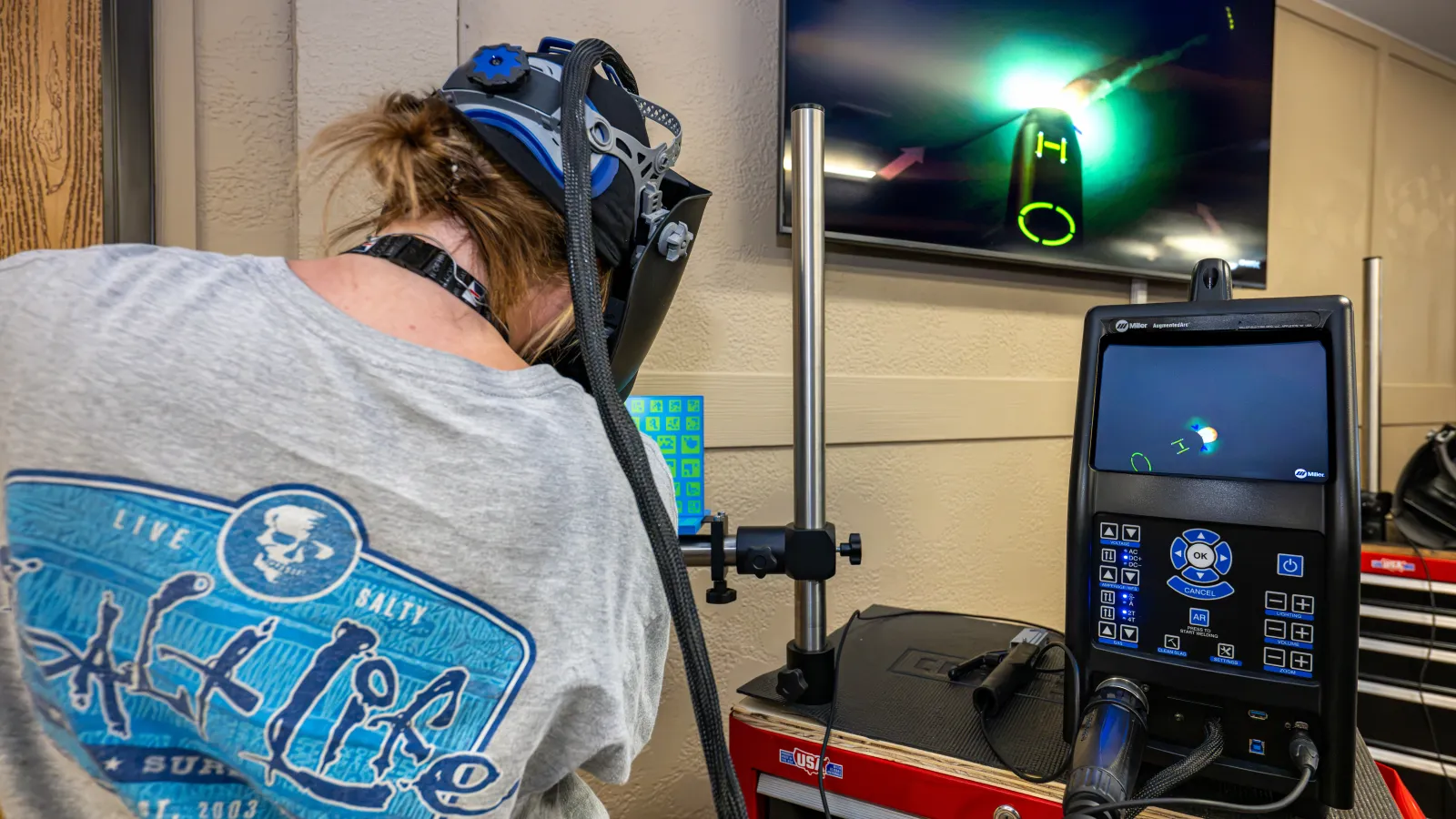
HII's Ingalls Shipbuilding division has passed a milestone in its effort to modernise the US naval-industrial workforce: the VR Welding Lab at its Pascagoula, Mississippi facility has now trained more than 1,000 shipbuilders since opening in January 2025. Backed by the US Navy, state workforce programme AccelerateMS and Mississippi Gulf Coast Community College, the initiative is less a novelty and more a structural bet on whether immersive simulation can plug the skilled-trades gap at the heart of American defence readiness.
The lab integrates virtual reality simulations into Ingalls' standard welding certification pathway. The company says trainees receive up to ten times more hands-on practice time compared with conventional instruction, with the controlled virtual environment allowing repetition and error analysis that a physical welding bay cannot economically provide at scale. Apprentices who complete the VR module report faster progression through certification stages, a meaningful efficiency gain for a shipyard that builds some of the US Navy's most complex surface combatants.
Rewriting the defence talent pipeline
"By leveraging immersive technology, we're ensuring our shipbuilders enter the workforce with stronger, more consistent welding fundamentals," said Anna Bourdais, director of the Maritime Training Centre of Excellence at Ingalls. "Our collaboration with the U.S. Navy and regional workforce partners is key to making these investments successful and we're already seeing improvements in our Ingalls-trained shipbuilders."
The convergence at work here is not simply VR meeting vocational training. It is the moment when defence procurement constraints, a chronic shortage of certified welders capable of working to naval specification, force one of America's largest defence primes to become, in effect, an immersive-technology deployer. HII, with 45,000 employees and a portfolio spanning unmanned underwater vehicles to C6ISR integration, is now channelling simulation technology originally developed for gaming and surgical training into the production lines that underwrite US naval supremacy. That reallocation of immersive tech from consumer to defence-industrial application is a pattern visible across the sector: the tools migrate upstream.
Cross-sector read-across: workforce as a strategic chokepoint
The broader strategic significance extends well beyond Mississippi. The US Navy's shipbuilding capacity is an acknowledged vulnerability in any extended great-power competition scenario. Congressional auditors and the Congressional Budget Office have repeatedly flagged workforce availability, not budget or design, as the primary constraint on accelerating frigate, destroyer and submarine delivery schedules. If VR-accelerated certification can materially compress the time from apprentice to qualified welder, the downstream effect on hull production rates is potentially significant, even if HII has not yet published data linking trainee throughput to delivery timelines.
There are capital and policy implications too. The AccelerateMS partnership illustrates a funding model that cross-cuts federal defence procurement, state economic development and community-college infrastructure, a tripartite structure that other states with defence-industrial clusters (Virginia, Connecticut, Washington) are watching closely. As the Pentagon and its allies reassess naval force structure in the Indo-Pacific, the constraint on fleet expansion is increasingly human rather than financial. That makes workforce-tech plays in the defence-industrial base a quietly strategic area for institutional capital, even if the investment ticket sizes are modest compared with platform programmes. The broader question for investors and policymakers alike is whether VR-led upskilling, applied systematically across shipbuilding, aerospace manufacturing and defence electronics, can close enough of the skilled-trades deficit to actually move the needle on delivery risk, or whether it remains a well-intentioned but insufficient response to a structurally tightening labour market.