
HII secures Lionfish UUV option year in $347m Navy programme
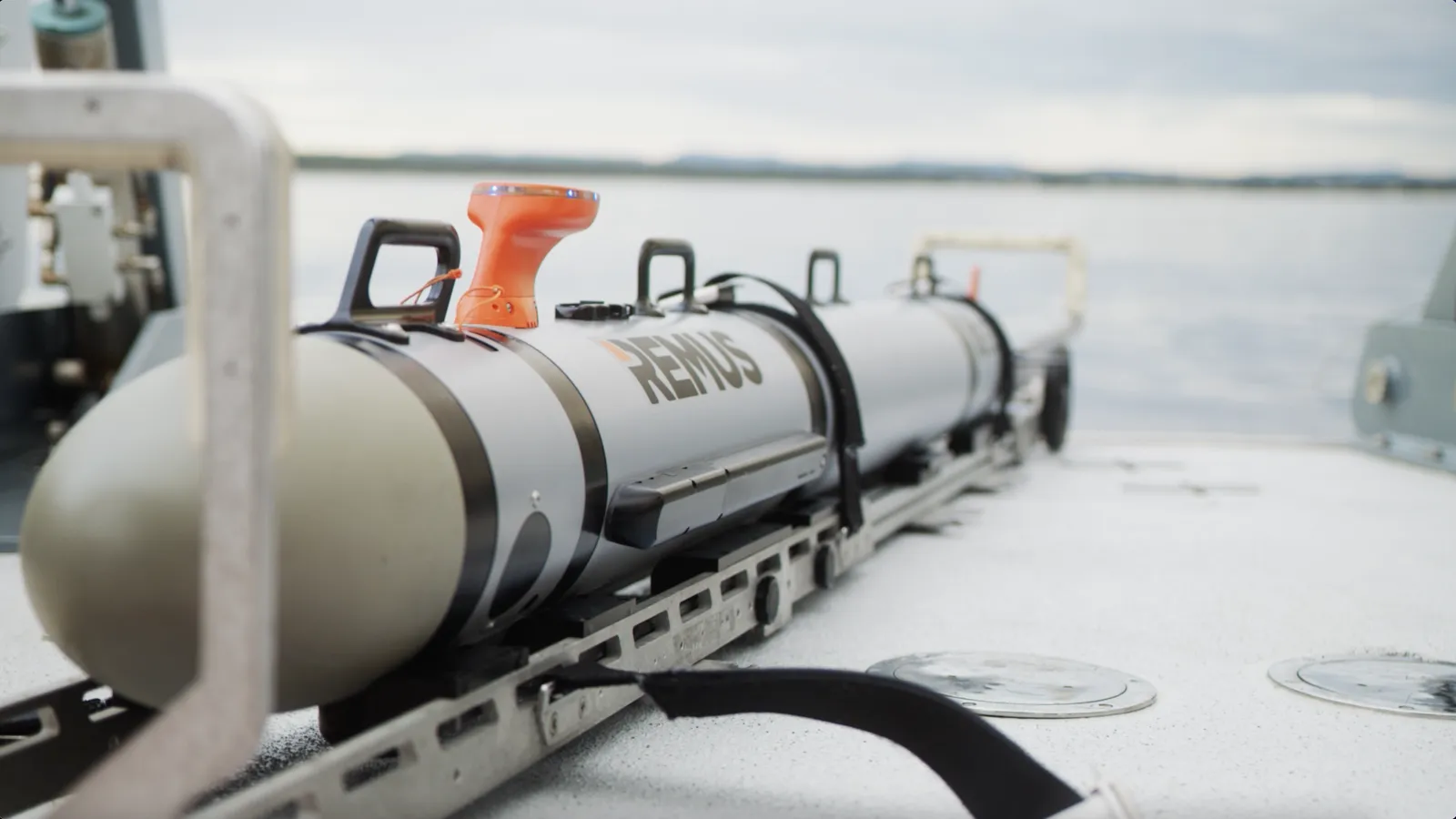
HII, America's largest shipbuilder, has been awarded an option year production contract for the Lionfish small unmanned undersea vehicle (SUUV), the US Navy's next-generation programme of record in autonomous undersea warfare. The deal continues a five-year production run that could deliver up to 200 vehicles and carries a total contract ceiling exceeding $347 million, cementing Lionfish as one of the highest-profile unmanned maritime programmes currently in full-scale production for the Department of Defense.
The Lionfish platform is derived from HII's commercial REMUS 300 vehicle, developed in a rapid prototyping collaboration with the Navy and the Defense Innovation Unit (DIU). The programme has been formally recognised as the first successful transition from an Other Transaction Authority prototype directly into full-scale production, a procurement pathway that bypasses conventional acquisition timelines and is now being watched as a template across the broader defence-industrial base. By the close of 2025, HII had completed the 42nd Lionfish vehicle at its Pocasset, Massachusetts facility, marking a significant manufacturing milestone ahead of the option-year exercise.
From prototype to programme of record
The OTA-to-production transition matters beyond the vehicle itself. Other Transaction Authority agreements were designed to pull commercial and dual-use technologies into defence programmes at speed, but critics long argued they rarely survived the jump to full acquisition. Lionfish's progression to a formal programme of record addresses that scepticism directly, and the model is attracting attention from both Pentagon procurement offices and allied navies evaluating their own undersea capability gaps.
Lionfish is also notable as the first and only cyber-compliant unmanned underwater vehicle currently in production for the US Navy, a designation that reflects the growing integration of cybersecurity standards into physical defence platforms, not merely their software layers. The platform's open-architecture design, which enables modular payload swaps and rapid technology upgrades, further reduces lifecycle costs and shortens the integration cycle for future sensor or electronic warfare payloads.
"The decision to exercise this option year production of the Lionfish programme reflects the US Navy's confidence in the platform's operational performance, reliability and adaptability," said Duane Fotheringham, president of HII's Unmanned Systems group. The programme supports mine countermeasures, intelligence, surveillance and reconnaissance, anti-submarine warfare, and electronic warfare, a breadth of mission sets that underlines the Navy's intent to treat small UUVs as core fleet assets rather than experimental adjuncts.
Undersea autonomy and the allied procurement landscape
HII's position in this space is substantial. The company has delivered more than 700 REMUS-family vehicles to over 30 countries, including 14 NATO members, with more than 90% of delivered systems reported to remain in active service. That installed base matters strategically: as NATO members accelerate undersea capability investment in response to sustained Russian submarine activity in the North Atlantic and Baltic, HII's existing relationships and proven logistics network give Lionfish a distinct competitive starting position against rival European programmes.
The broader capital picture is also shifting. Allied governments, particularly in the Nordic states, the UK, and Australia under AUKUS, are accelerating undersea-autonomy budgets, and defence primes with proven dual-use commercial platforms are increasingly well-placed to absorb that demand. The OTA pathway Lionfish pioneered also has direct relevance for the AUKUS Pillar II technology-sharing agenda, where accelerated acquisition of autonomous systems is an explicit priority. For investors tracking defence-autonomy allocations, the move from prototype to multi-year production contract is the inflection point that converts a programme from an R&D line item into a durable revenue stream, and HII's $347 million ceiling on Lionfish is a signal of where that stream sits in the current naval budget cycle.