
HII and HD HHI Deploy Welding Robots Across US Navy Shipyards
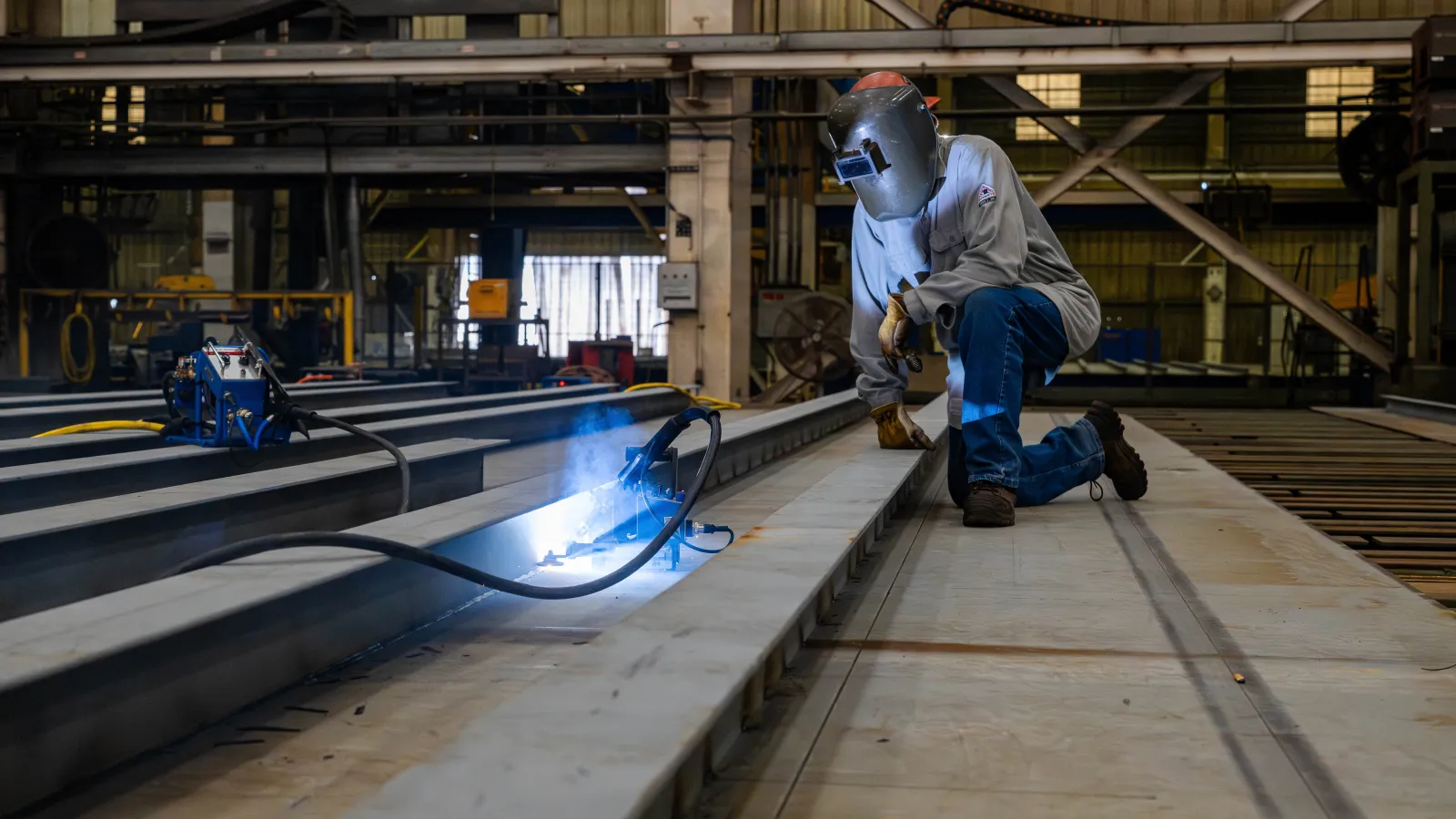
HII, America's largest shipbuilder, and South Korea's HD Hyundai Heavy Industries (HHI) are moving their 2025 strategic partnership from paper to production floor, deploying intelligent mechanised welding systems across unit-fabrication areas at HII's Ingalls Shipbuilding division in Pascagoula, Mississippi. The pilot targets manual welding operations, historically among the most labour-intensive and hazardous stages of naval construction, and represents a concrete step in the broader US-Korea shipbuilding cooperation framework.
The welding systems are designed to automatically recognise workpieces and live welding conditions, self-correct positioning in real time, and capture granular process data to support quality control and traceability. Ingalls says all equipment has been verified against existing US Navy fabrication standards before integration into the production line.
From Single Pilot to Systemic Transformation
The mechanised welding programme is one strand of a much wider automation push across HII's two major shipyard campuses, Ingalls in Mississippi and Newport News Shipbuilding in Virginia. HII says it is evaluating or actively implementing robotic and cobot fabrication cells, additive manufacturing processes, automated steel processing systems, and upgraded automated panel and bulkhead lines. Its recently announced High-Yield Production Robotics initiative, known as HYPR, goes further still, partnering with what the company describes as emerging physical AI technology companies to deploy AI-enabled tools designed to augment, rather than replace, its 45,000-strong workforce.
Ingalls Shipbuilding President Brian Blanchette framed the programme as an extension of infrastructure already in place: "Investments in technology and automation range from large-scale automated panel lines and material handling, to robotic bulkhead fabrication, to numerous other digital and advanced manufacturing tools. This pilot extends that automation footprint further into the production process, and to a greater share of the workforce."
The Geopolitical Read-Across
The HII-HHI partnership sits inside a wider strategic logic that extends well beyond Mississippi. South Korea's shipbuilding capacity has become a live geopolitical asset for Washington: as the US Navy faces a documented shortfall in domestic shipyard throughput, the Congressional Budget Office and successive Navy shipbuilding plans have flagged the industrial base's inability to build and maintain the fleet at the required tempo, Korean yards and their technology suppliers have emerged as a preferred partner for capability transfer.
The arrangement mirrors parallel moves across the defence manufacturing landscape, where allied industrial bases are being knitted together less through formal treaty structures and more through commercial partnerships, technology-exchange MOUs, and co-production arrangements. Japan's Kawasaki Heavy Industries has pursued comparable dialogues with US primes; Australia's AUKUS commitments have drawn both UK and US shipbuilding know-how into a new trilateral industrial framework. The HII-HHI MOU, signed in 2025, fits this pattern: sovereignty-sensitive enough to involve the US Navy directly in setting fabrication standards, but structured as a commercial partnership to preserve operational flexibility.
For investors tracking defence-industrial capital flows, the story is notable for what it signals about the durability of automation spend in naval construction. Unlike commercial shipbuilding, where order cycles are sensitive to freight rates and commodity prices, naval procurement operates on multi-decade budget lines. That structural demand backstop makes automation investment in naval yards comparatively low-risk, and positions HII's HYPR initiative, and its unnamed physical-AI partners, as recipients of predictable, long-duration capital. Smaller robotics and industrial-AI companies entering the defence supply chain through programmes like this often carry faster qualification pathways than those attempting to enter through prime contractor channels directly, making the HII partnership model one to watch for venture-backed robotics and AI firms seeking government-adjacent revenue.
The next test will be whether the Ingalls pilot generates the efficiency and quality data needed to justify full-scale rollout across both campuses, and whether the US-Korea framework deepens into joint manufacturing rather than remaining a technology-transfer arrangement.