
Aikido deploys 200+ AI agents inside Belfius data centre
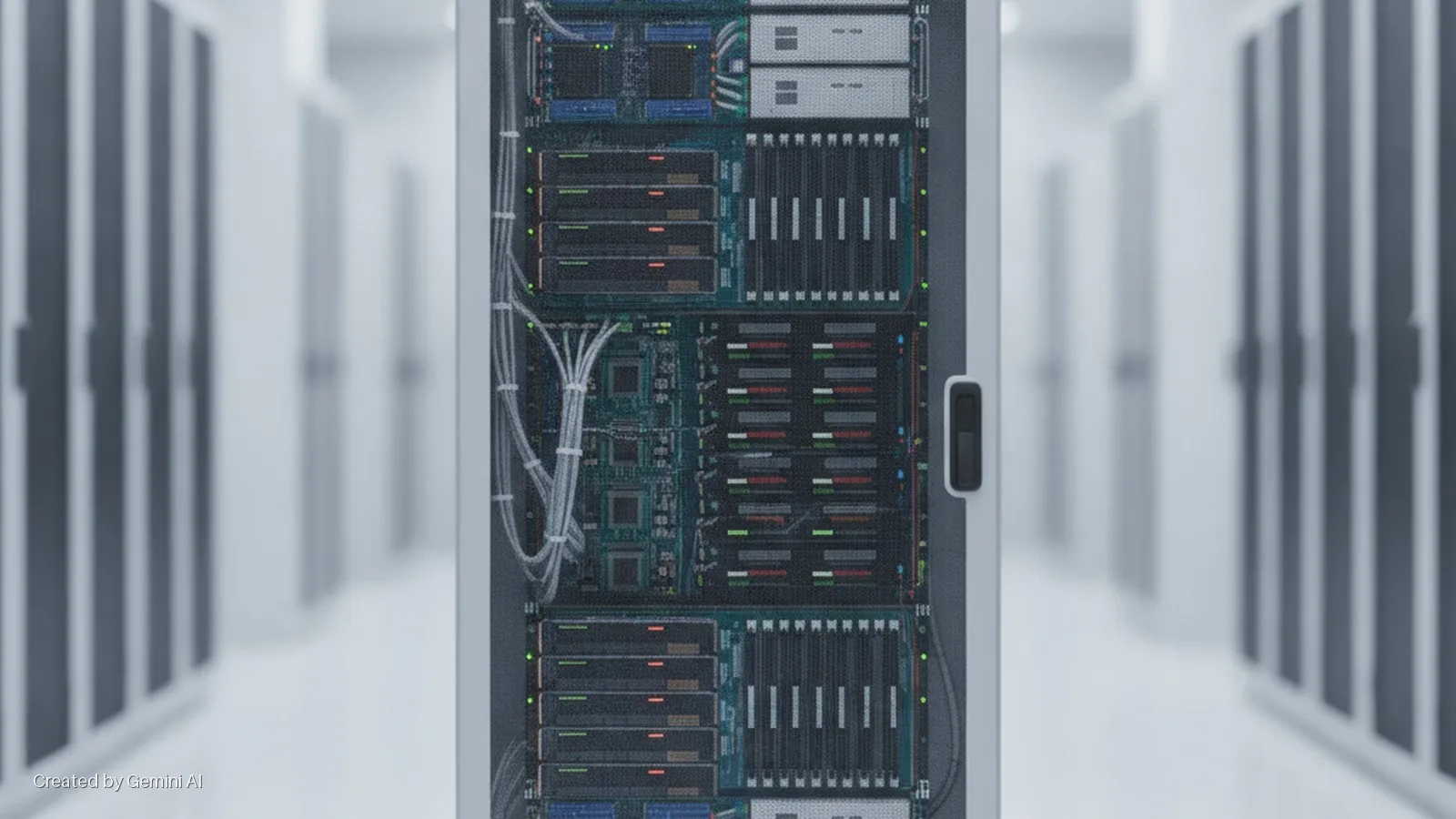
Aikido Security and Belfius Bank and Insurance have announced a deployment of Aikido Machine, a physical on-premises server housing more than 200 autonomous AI agents that probe the Belgian state-owned bank's systems for vulnerabilities around the clock. The product, built on Aikido's acquisition of Belgian startup Milou, marks a notable departure from the traditional annual penetration test and represents the first live deployment of its kind inside a systemically important financial institution.
Ghent-based Aikido, which the company says became the fastest European cybersecurity firm to reach unicorn status earlier this year, pitches Aikido Machine as a direct answer to the industrialisation of cyber attacks. Conventional penetration testing produces a point-in-time report; modern adversaries operate AI-driven attack pipelines continuously. "Attackers move at machine speed. Companies cannot keep responding at human speed," said Roeland Delrue, co-founder of Aikido.
The regulatory unlock hiding inside the hardware
The more structurally significant detail here is not the AI itself but where it runs. Banks, insurers, and government agencies have been broadly excluded from cloud-based AI security tooling because regulation in most jurisdictions prohibits source code and sensitive data leaving the institution's network perimeter. Hosting the model on dedicated Nvidia GPU hardware inside the bank's own data centre dissolves that constraint without requiring a regulatory carve-out. The architecture is also described as model-agnostic, meaning Belfius can swap or layer in alternative large language models, including those from partners such as Mistral AI, with which Belfius has a prior strategic relationship.
That flexibility matters: it insulates the bank from single-vendor LLM dependency at a moment when the European AI model landscape is still consolidating. For regulators watching the European AI Act's provisions on high-risk AI systems take effect, an on-premises deployment controlled entirely within national borders also simplifies the compliance narrative considerably.
Digital sovereignty as a go-to-market wedge
The partnership is being framed, deliberately, as a European sovereignty story: Belgian technology, Belgian capital, Belgian soil. Aikido's Ghent origins, Belfius's federal-government ownership, and the prior Mistral AI alignment (a French foundation-model champion) together sketch a supply-chain logic that mirrors moves seen in semiconductor policy and cloud infrastructure: bring critical capability onshore before dependence becomes a geopolitical liability.
This framing has real commercial implications beyond Belgium. Regulated institutions across the EU face structurally identical constraints on externalising security tooling, and the on-prem AI pentesting category is, at this point, almost empty of mature competitors. If Aikido and Belfius co-develop the product to a standard that satisfies European Banking Authority expectations and passes scrutiny from Belgian financial regulators, they arrive at subsequent sales conversations with a reference deployment that is hard to replicate quickly. The target markets named in the release, financial services and "other highly regulated industries," extend naturally to healthcare, defence contractors, and critical national infrastructure operators, each of which faces equivalent data-residency obligations.
The broader capital landscape reinforces the opportunity. European sovereign wealth vehicles and government-backed innovation funds have been explicitly reorienting towards domestic deep-tech and cybersecurity since the 2022-2024 wave of state-level digital-sovereignty strategies. An AI security firm that can credibly claim to operate entirely within national data borders is a more fundable proposition than one dependent on US hyperscaler infrastructure, and the Belfius reference case materially de-risks any follow-on raise.
The next test for the partnership is whether the vulnerability findings produced by the 200-plus AI agents prove actionable at the pace promised. Real-world efficacy at a systemically important bank, rather than a controlled red-team exercise, will determine whether Aikido Machine becomes a replicable template or a bespoke integration.