
Ontario Shipyards and Hanwha Ocean forge Canada-Korea naval tech pact
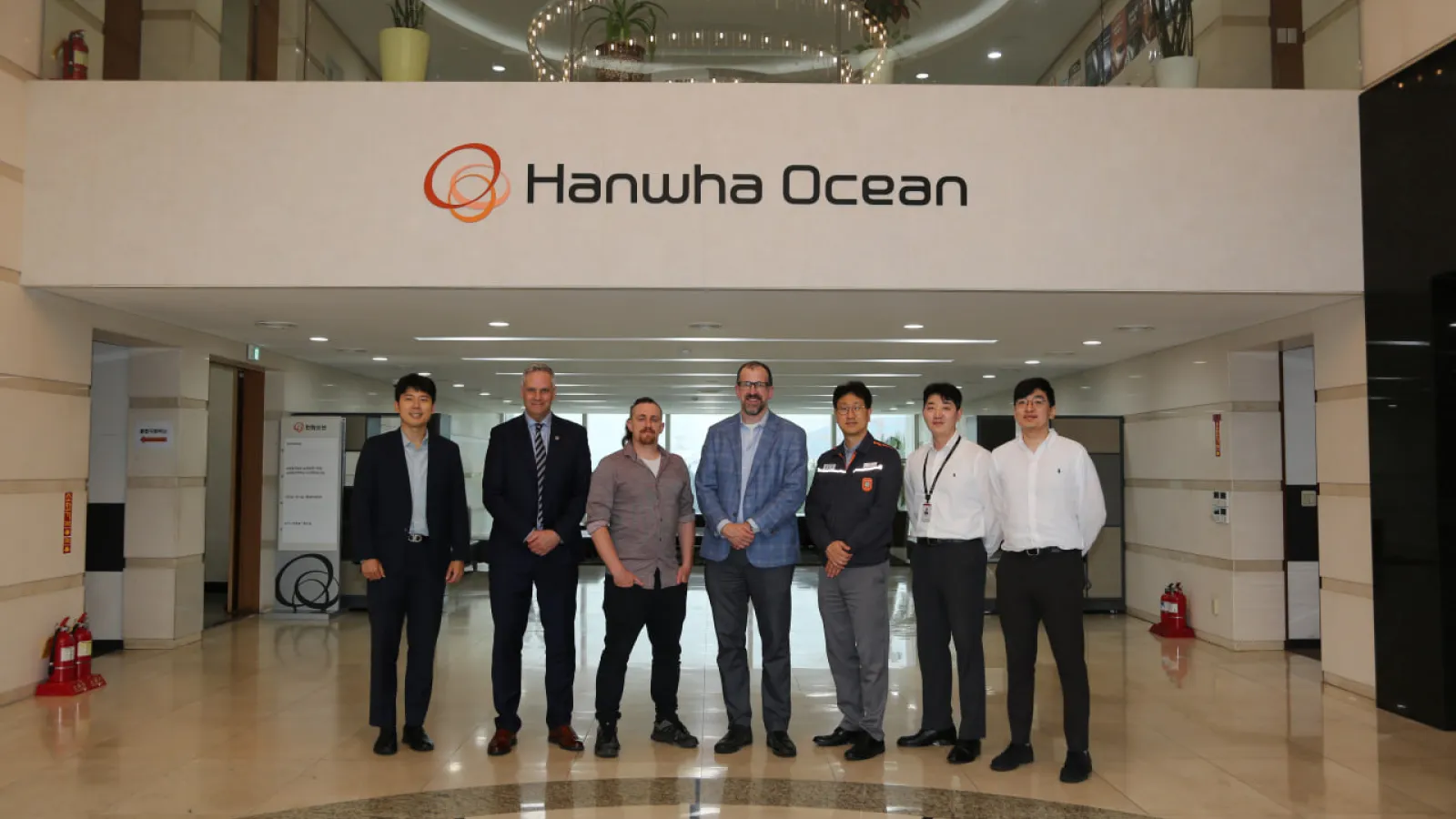
Ontario Shipyards, Canada's largest Great Lakes ship repair and shipbuilding company, has deepened its strategic partnership with South Korean defence and naval shipbuilder Hanwha Ocean following a delegation visit to Hanwha's Geoje facility on the Korean peninsula. The meeting between senior technical leaders from both organisations marks a concrete step in Canada's effort to reconstruct domestic shipbuilding capacity, a sector that has atrophied over decades, by importing South Korean industrial know-how at scale.
The Geoje shipyard is not a modest reference point. Spanning five square kilometres and employing more than 31,000 people, it delivers approximately 45 commercial and naval vessels annually and has produced submarines and surface combatants for the Republic of Korea Navy since 1973. Ontario Shipyards, by contrast, is rebuilding from a lower base: the company is modernising facilities in Hamilton, Port Weller and Thunder Bay and positioning itself to support Canada's National Shipbuilding Strategy and the Royal Canadian Navy's future fleet requirements.
Technology transfer and the workforce gap
The working sessions in Geoje covered shipbuilding capability development, automation technologies, production planning, quality management and smart shipyard operations. Crucially, workforce development featured as a central theme. Following tours of Hanwha Ocean's welding training facilities and virtual reality simulation programmes, both parties agreed to pursue collaboration with Mohawk College in Ontario, with a view to introducing advanced trades training and VR-based instruction to build what the release describes as "Canada's next generation marine workforce."
The skills gap is not incidental. Advanced naval construction demands a specialised labour pool, welders, systems integrators, quality engineers with submarine clearance, that takes years to accumulate. Canada's existing Victoria-class submarine fleet, now ageing, illustrates the cost of that gap: the release notes that earlier retirement of the Victoria class would yield approximately $1 billion in estimated savings on maintenance and support, a figure that underscores just how expensive it becomes to sustain vessels beyond their designed service life.
The submarine procurement angle
The visit sits within a broader and commercially significant backdrop. Hanwha Ocean is actively bidding on Canada's Canadian Patrol Submarine Project (CPSP), proposing its in-service KSS-III submarine design. The company says the company can deliver four submarines to replace the Victoria class before 2035 if a contract is signed in 2026, with a full fleet of twelve delivered by 2043 at a rate of one per year thereafter. Whether or not Ontario Shipyards ultimately becomes the domestic build or sustainment partner in that programme is not confirmed, but the technology-transfer and workforce-alignment framing of this partnership is clearly designed to reinforce that industrial case.
For cross-sector strategists, the macro read here goes beyond shipbuilding. This is a visible example of the post-globalisation capital and capability reallocation that is reshaping allied defence procurement. NATO-adjacent nations, Canada included, are confronting the uncomfortable arithmetic that decades of defence-industrial consolidation and offshoring have left them dependent on a small number of trusted foreign partners for sovereign military hardware. South Korea, with its combination of large-scale integrated shipyards, competitive cost structures and alliance credibility, has emerged as a preferred transfer partner for countries seeking to re-shore capability quickly. Australia's AUKUS submarine programme, Poland's frigate acquisitions and now Canada's CPSP shortlisting process all reflect the same structural dynamic: Western governments willing to accept industrial dependency on a trusted Asian partner as the price of procurement speed.
The robotics and automation dimension is also worth tracking. Hanwha Ocean's Geoje shipyard operates advanced production automation and VR-based training systems that Ontario Shipyards intends to adopt. As AI-driven manufacturing and robotic welding systems mature, the competitive gap between legacy Western yards and South Korean facilities will be determined less by labour cost and more by how quickly the technology transfer compounds. Ontario Shipyards' bet is that a structured partnership accelerates that curve faster than organic investment alone.