
Airbus, Safran and Technip form SAF joint venture at Dunkirk
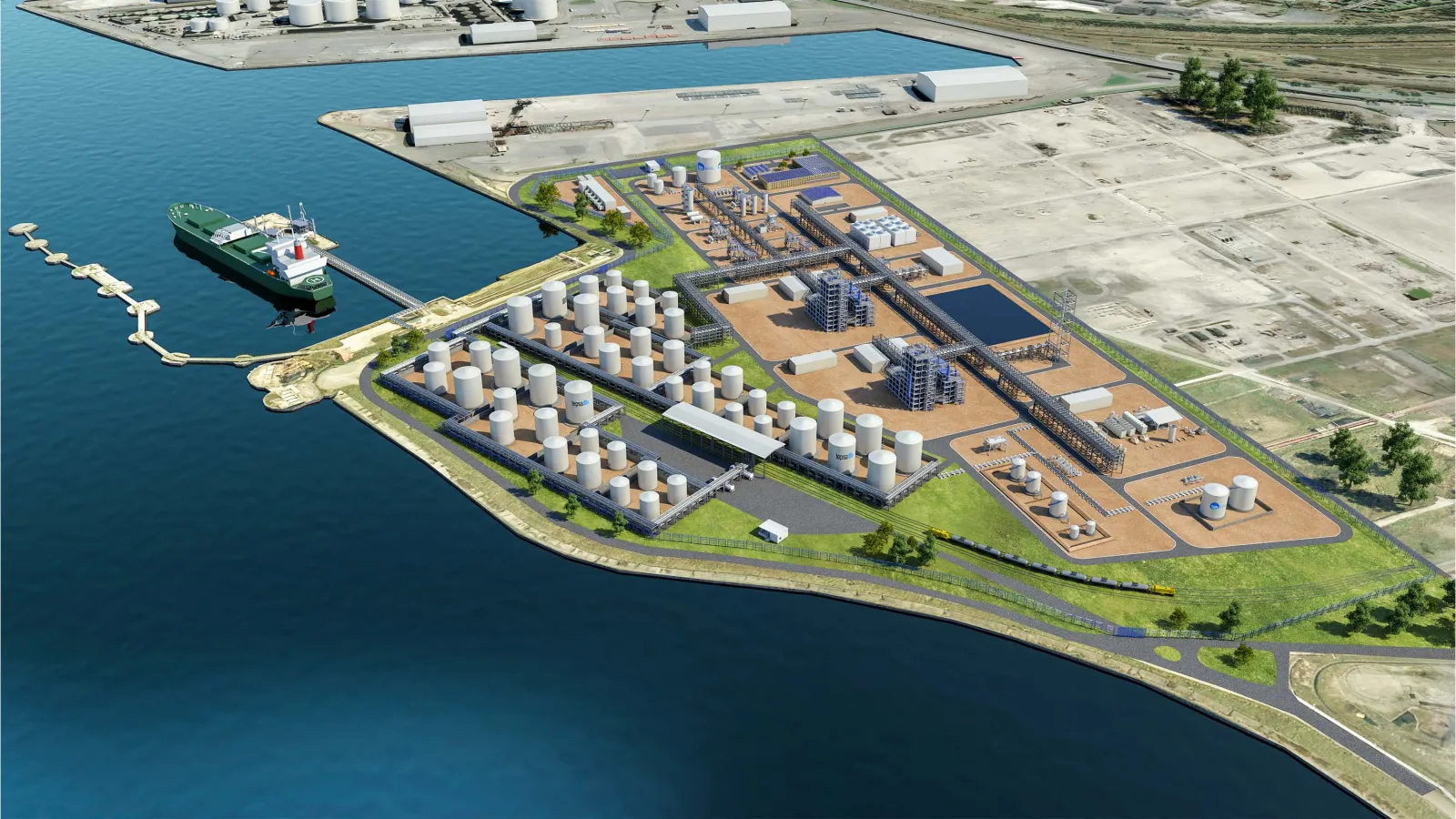
Airbus, Safran, Technip Energies and agricultural cooperative Tereos have signed an agreement to create Rebound, a joint venture targeting 160,000 tonnes of Sustainable Aviation Fuel (SAF) per year at the Port of Dunkirk in northern France. The project will use the Alcohol-to-Jet (AtJ) pathway, converting advanced ethanol derived from agricultural and forestry residues into drop-in jet fuel compatible with existing engines. If it reaches a Final Investment Decision, the consortium says Rebound would rank among the largest SAF facilities in Europe.
The four partners collectively span the full production chain. Technip Energies, the Paris-listed engineering group that generated €7.2 billion in revenue in 2025, will lead development and provide engineering services. Airbus and Safran will act as industrial partners and potential offtakers, giving the project a direct demand anchor from two of Europe's largest aerospace manufacturers. Tereos, one of Europe's leading ethanol producers, will supply and source the agricultural feedstock. The Port of Dunkirk has already awarded Technip Energies an industrial site, providing logistical access for both feedstock inbound and product outbound, alongside a streamlined permitting pathway.
A mandate written in Brussels
The commercial case behind Rebound sits squarely in EU regulation. The RefuelEU Aviation framework mandates progressive SAF blending requirements, rising from 2% now to 6% by 2030 and 70% by 2050. That trajectory implies roughly an eightfold increase in demand between 2030 and 2050, according to the partners. Airlines and aircraft manufacturers face binding compliance costs if European SAF supply does not scale commensurately. By locking in offtake relationships at the project-development stage, Airbus and Safran are effectively hedging against a supply squeeze their own customers will face within a decade.
The Alcohol-to-Jet route is gaining ground over alternatives such as Hydroprocessed Esters and Fatty Acids (HEFA), which is currently the dominant SAF pathway but faces feedstock constraints as demand scales. AtJ's reliance on agricultural and forestry residues broadens the available feedstock base, though it introduces its own supply-chain dependencies on agricultural commodity prices and land-use policy, risks the release does not address.
Cross-sector capital and sovereignty logic
Rebound is as much a geopolitical statement as a decarbonisation play. European energy sovereignty has been a live policy theme since Russia's 2022 gas curtailments reshaped the continent's strategic calculus. Applying that sovereign-energy logic to aviation fuel is a meaningful extension: Europe currently imports the majority of the fossil jet fuel it burns, and SAF supply chains anchored in French agricultural production could reduce that dependence over time.
For capital allocators watching European industrial policy, the project illustrates a specific deal architecture that is becoming a template across the energy transition: an engineering contractor originates the project, major industrial incumbents provide demand certainty via offtake commitments, and an agricultural or resource cooperative anchors the feedstock leg. This structure allows each partner to deploy capital within its core competence while sharing development-phase risk. It also de-risks the financing conversation for banks and infrastructure investors by aggregating balance-sheet credibility from four large corporates before a single shovel breaks ground.
The next sequence of milestones is well-defined but lengthy. The partners must select a technology licensor, complete pre-FEED and FEED engineering studies, finalise feedstock supply and offtake agreements, and secure construction financing before any Final Investment Decision can be taken. The joint venture itself is not expected to be legally constituted until the second half of 2026. Investors pricing in European SAF supply growth should treat Rebound as a development-stage asset: the regulatory tailwind is unambiguous, but the capital stack, timeline, and ultimately the cost per tonne of fuel produced remain to be demonstrated at scale.