
Salesloft bets on agentic AI to unite forecast and action
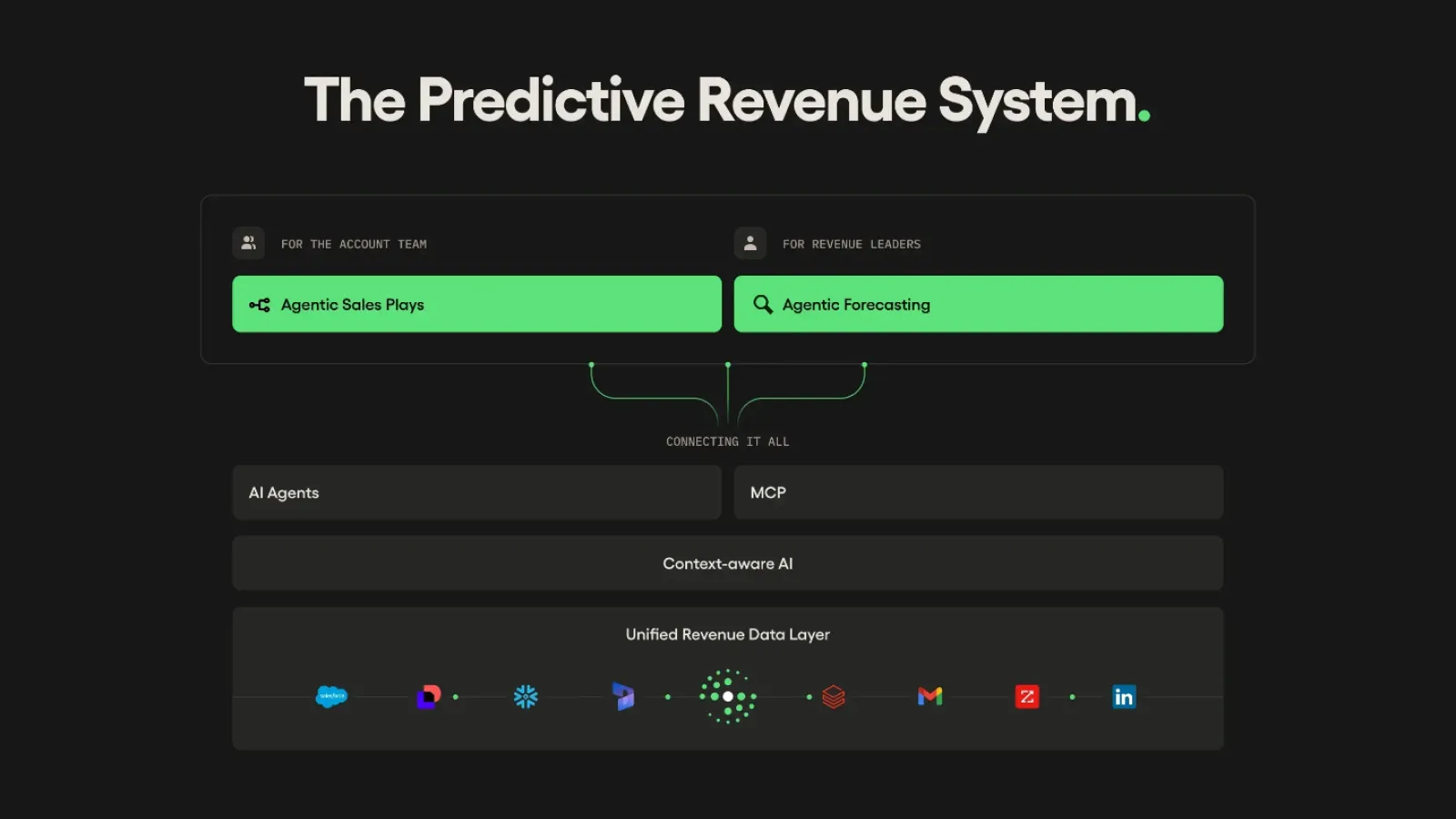
Salesloft, the Atlanta-based revenue orchestration platform, has set out a strategic vision to collapse the traditional boundary between sales forecasting and seller execution, positioning agentic AI as the mechanism that will make that convergence operational. The announcement, made at the company's virtual summit preview, signals a broader shift in how enterprise software vendors are rethinking the role of AI: not as a task accelerator bolted onto existing workflows, but as the connective tissue between prediction and action.
From automation to orchestration
The company's Predictive Revenue System already connects conversation intelligence, deal data, and forecast signals across a unified platform. What Salesloft is now adding is the agentic layer: a set of capabilities it calls Agentic Forecasting and the Agentic Playbook, which are designed to let the system not just surface a revenue number but actively coordinate the human and AI work required to change it. The distinction matters. Most enterprise AI deployments in sales today automate discrete steps, leaving humans to manage the workflow around them. Salesloft's roadmap attempts to make the workflow itself adaptive.
The company's own 2026 Revenue Benchmark supplies a telling data point: every US revenue leader surveyed was using AI somewhere in the sales process, yet only 20.6% reported production-ready deployments delivering measurable outcomes. That gap between widespread adoption and actual transformation is precisely the commercial problem Salesloft is positioning itself to solve.
Customer results cited by the company suggest early traction. Heaviest adopters of its existing AI sales agents reported more than 40% more meetings compared with lighter users, and greater than 2x faster opportunity growth. One deployment, the company says, delivered greater than 15x ROI. These figures are company-reported and unaudited, but they frame the ambition: AI measured by business outcome, not by tasks completed.
"The next era of AI in revenue won't be defined by how many tasks an agent can complete," said Steve Cox, Salesloft's CEO. "It will be defined by whether AI fundamentally changes how the business operates."
The convergence angle: agentic AI hits the enterprise stack
The Salesloft announcement is a useful marker for a broader convergence that cross-sector strategists should track. Agentic AI, which until recently was a concept discussed largely in the context of foundation-model labs and autonomous research tools, is now being embedded into the operational core of revenue organisations. The implications extend well beyond the CRM software category.
For investors watching enterprise software multiples, the shift from point-solution AI to system-level agentic orchestration is where the next valuation argument is being constructed. Vendors that can demonstrate a closed feedback loop, from activity to outcome to forecast to action, are building a structural moat that pure-play AI task automators cannot easily replicate. Salesloft's integration of conversation intelligence, deal execution, and forecasting into a single learning system is the architecture that argument requires.
The macro backdrop matters too. As AI investment continues to concentrate in infrastructure and foundation models, enterprise software companies face a strategic question: do they build AI on top of existing products, or do they rebuild the product around AI? Salesloft's Predictive Revenue System is an explicit answer in the second direction, and it is arriving at a moment when large enterprises, including Adobe, IBM, and 3M among Salesloft's cited clients, are under pressure from boards and investors to demonstrate that AI spend is translating into measurable revenue impact.
The next test will be whether the agentic layer delivers at scale across diverse go-to-market models, and whether Salesloft's services capability can bridge the gap between deployment and transformation that its own benchmark data shows most organisations have not yet crossed.