
EssilorLuxottica and Applied Materials forge AR optics alliance
EssilorLuxottica, the Paris-headquartered eyewear group behind Ray-Ban and Oakley, and Applied Materials, the Silicon Valley materials-engineering firm whose deposition and etch tools sit at the heart of the global semiconductor supply chain, have signed a long-term joint development agreement to commercialise optical systems for augmented reality smart glasses. The deal fuses two distinct technology stacks that have, until now, evolved largely in parallel: precision optics and wearable lens design on one side, advanced thin-film and photonic materials engineering on the other.
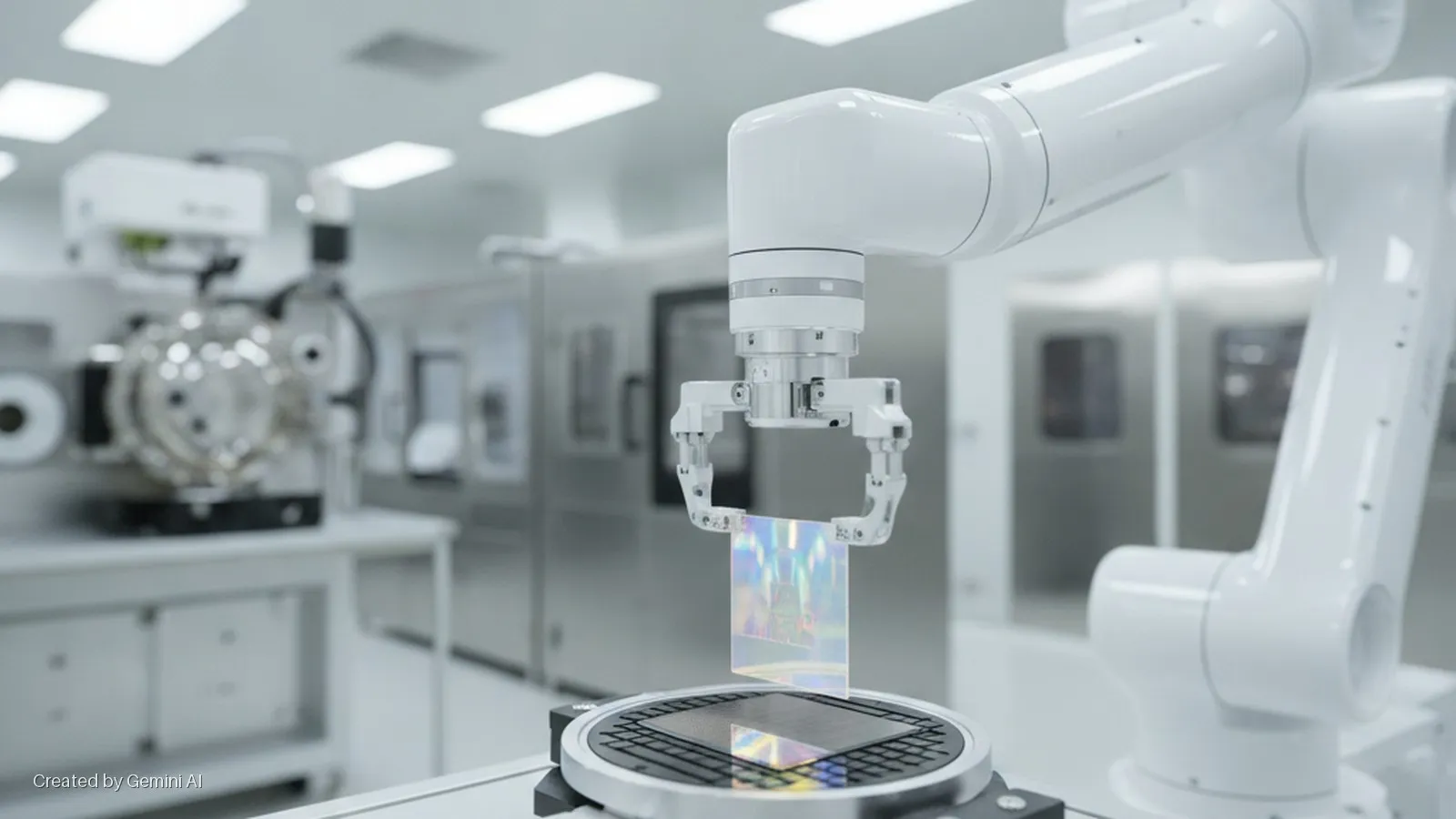
The partnership centres on waveguide technology, the optical layer that allows projected digital images to travel through a transparent lens while leaving the wearer's view of the physical world intact. Beyond waveguides, the companies say they will co-develop adaptive lens systems whose tint adjusts dynamically to ambient light, and advanced lens encapsulation methods designed to preserve display performance over the lifetime of a wearable device. Research will run out of a dedicated lab on Applied Materials' Santa Clara campus.
From laboratory to factory floor
The strategic logic here is as much about manufacturability as it is about invention. A persistent bottleneck in consumer AR has been the gap between optical prototypes that work in a lab and lenses that can be produced at the volumes and price points mass-market eyewear demands. EssilorLuxottica ships hundreds of millions of lens pairs annually and operates one of the world's most sophisticated optical manufacturing networks. Applied Materials, whose equipment underpins chipmaking for TSMC, Samsung and Intel, brings deep expertise in scaling thin-film processes from pilot lines to high-volume fabs. The combination is a direct attempt to close that manufacturability gap before competitors do.
Gary Dickerson, President and CEO of Applied Materials, framed the challenge in supply-chain terms: "Designing, building and scaling next-generation smart glasses will require deep collaboration across the technology ecosystem."
The announcement arrives as the AR wearables space is attracting renewed capital after several years of false starts. Meta's Ray-Ban smart glasses, co-developed with EssilorLuxottica, have demonstrated that consumers will adopt connected eyewear when the form factor is familiar. The industry consensus, however, is that true AR, where digital overlays sit convincingly in the field of vision, requires waveguide optics at a quality and cost that no manufacturer has yet cracked for mainstream retail.
Convergence implications across semiconductors and spatial computing
For cross-sector investors, the significance of this deal extends well beyond the eyewear aisle. Applied Materials sits upstream of nearly every advanced display and photonics manufacturing process globally. Its involvement signals that the waveguide challenge is now being approached with semiconductor-grade process engineering rather than bespoke optical craft. That framing pulls AR hardware into the orbit of the broader semiconductor capital expenditure cycle, meaning the fortunes of consumer AR could increasingly track wafer-fabrication equipment spend and materials innovation timelines.
The deal also has implications for the competitive geography of spatial computing. Apple's Vision Pro established a high-end reference point, but the wearable form factor, lightweight glasses rather than a headset, is widely regarded as the longer-term consumer battleground. If EssilorLuxottica and Applied Materials can deliver a manufacturable waveguide lens stack, the resulting platform becomes a potential supply-chain asset for any device maker, from consumer-electronics giants to enterprise mobility vendors building heads-up display tools for field workers and surgeons.
From a capital-allocation perspective, the announcement reinforces a pattern visible across sovereign-wealth and deep-tech venture portfolios: backing the infrastructure layer of a nascent computing platform, rather than any single device brand, as the lower-risk, higher-optionality position. The companies say they also plan to explore additional commercialisation opportunities beyond the initial research remit, suggesting licensing or platform supply arrangements could follow once the core technology matures.