
CSG Group's Trident air defence system targets $2.5bn SE Asia deals
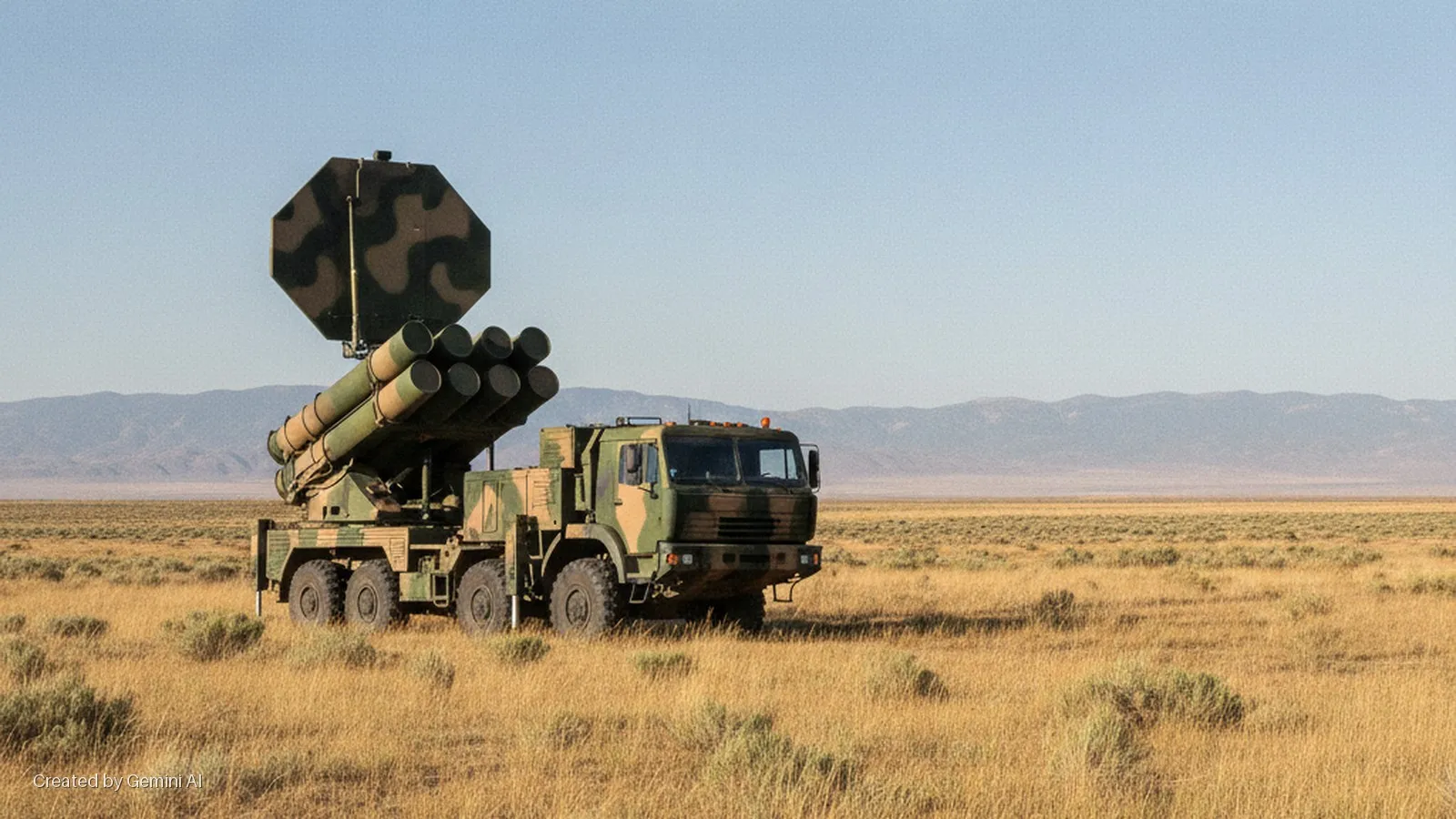
Czech industrial and technology group CSG has unveiled the Trident multi-layered air defence system at Eurosatory 2026 in Paris, backed by a consortium spanning Czech radar and vehicle manufacturers and Turkish missile supplier Roketsan. The reveal comes weeks after Excalibur International, CSG's lead integrator on the project, announced contracts in Southeast Asia reportedly worth nearly USD 2.5 billion, one of the largest air defence export deals in Central European defence history.
The Trident system is designed to intercept aircraft, helicopters, guided missiles and unmanned aerial vehicles across short, medium and long ranges, with surface-to-air missiles covering distances up to 100 km. In an expanded configuration, it can absorb counter-drone (C-UAS) elements, electronic warfare and gun-based weapon systems, giving customers a modular threat response that can be tuned to operational requirements. The system's backbone is Retia's ReCUBE mobile command and control platform, which coordinates sensors and effectors in real time via optical, radio and ground data links. Radar coverage extends to 470 km through Retia's AESA RSB41 unit, while Tatra Trucks supplies the rugged cross-country chassis platforms on which every element is mounted.
Czech-Turkish supply chain as a defence export model
The Trident programme is structurally notable for how it packages national industrial assets. Czech firms contribute radar technology, vehicle platforms, system integration and command and control architecture; Roketsan of Türkiye supplies the missile inventory and launch structures. Viktor Loužil, Chief Sales Officer at Excalibur International, said the project demonstrates CSG's ability to "integrate cutting-edge technologies from its own companies and foreign partners, and offer customers tailor-made solutions including financing, logistics and long-term support."
The financing dimension is significant. The Southeast Asia contracts announced in April 2026 include not only hardware but export financing arrangements, logistics infrastructure, spare parts supply chains and personnel training programmes. Bundling sovereign export credit into a defence hardware sale is a model that larger US and European primes have long deployed; that a mid-tier Central European consortium is now executing at this scale signals how the competitive landscape for allied-nation defence exports is broadening.
Convergence angle: autonomy, AI and the evolving C-UAS market
The Trident system's C-UAS layer points toward a wider convergence dynamic reshaping the global air defence market. The proliferation of low-cost commercial drones as battlefield weapons, illustrated repeatedly in Ukraine and the Middle East, has forced procurement officers to rethink the economics of kinetic interception. Trident's answer is a tiered response: miniature surface-to-air interceptors engage drones cheaply, preserving expensive long-range missiles for high-value threats. This logic mirrors software-defined prioritisation frameworks from the datatech world applied to physical kinetic systems.
The AI and machine-learning question is not far behind. Modern AESA radars generate volumes of sensor data that exceed human operator capacity in contested environments; the ReCUBE platform's integration architecture suggests it is designed to absorb AI-assisted threat classification at a future software layer. Competitors including Rheinmetall, Rafael and MBDA are already investing in autonomous target engagement protocols. Procurement buyers in Southeast Asia, the Gulf and Central-Eastern Europe will increasingly evaluate C-UAS and layered air defence systems not just on hardware specification but on their openness to AI-augmented decision loops, an evaluation criterion that blurs the boundary between defence procurement and enterprise software procurement.
Capital and geopolitical context
The USD 2.5 billion Southeast Asia figure, the company says, reflects contracts for several batteries rather than a single system sale, and includes the full lifecycle support package. Whether this signals a durable demand cycle or a one-time procurement window matters for investors tracking European defence primes and their supply chains. The broader post-2022 NATO rearmament cycle has lifted order books across the sector, and secondary suppliers with modular, exportable systems are capturing orders that historically went to larger US or Franco-German primes. For cross-sector investors allocating capital to European defence, the Trident programme is a case study in how vertically integrated, multi-nation consortia can compete at tier-one contract values without the overhead of a Thales or BAE Systems balance sheet.