
Afon Engineering solar install signals Wales green-loan push
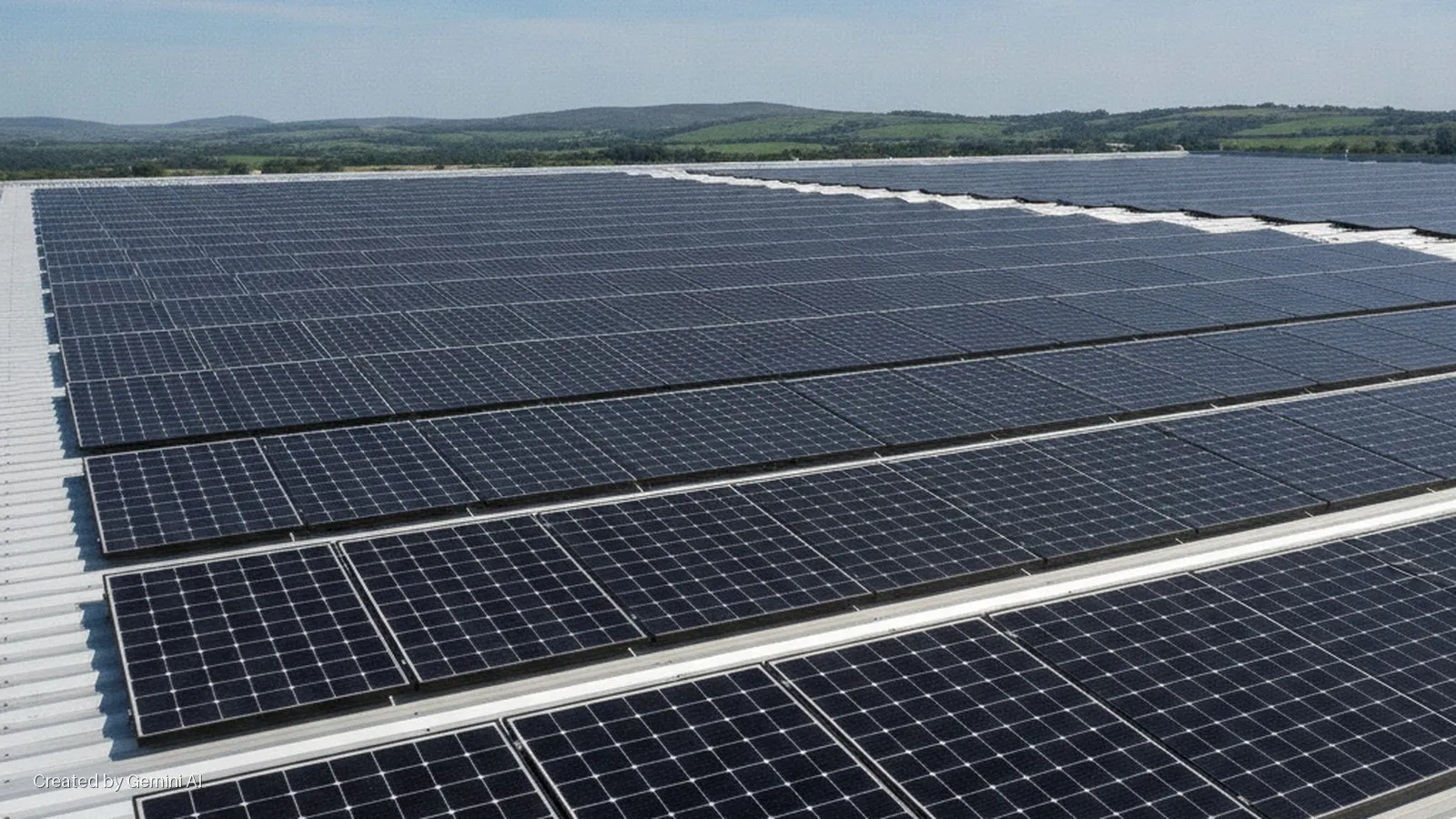
A Swansea-based precision engineering firm has secured state-backed green finance to install a rooftop solar array, in a move that illustrates how regional development banks are bridging the gap between industrial decarbonisation targets and the balance-sheet reality of smaller manufacturers.
Afon Engineering, based in Llansamlet, has committed £250,000 to a 329kW, 699-panel solar installation at its manufacturing facility. The project is partly funded by a £200,000 loan through the Development Bank of Wales' Green Business Loan Scheme. The company says the system is forecast to cut annual carbon emissions by around 60 tonnes and to pay for itself within four years through reduced energy costs.
A manufacturer at the convergence of industrial sectors
Afon Engineering is not a single-sector player. The business manufactures complex fabricated and precision-engineered components for customers across nuclear, defence, renewables, power generation, construction and oil and gas. That breadth matters: energy cost is a systemic vulnerability shared across all of those supply chains, and a manufacturer serving both the renewables and the defence sectors sits at an unusually sensitive intersection of two of the UK's most capital-intensive industrial programmes.
Jason Thomas, Managing Director of Afon Engineering, positioned the investment in operational terms: "As an energy-intensive manufacturer, reducing our carbon emissions makes environmental sense, but it also helps us become more efficient and competitive. It's an investment that will benefit the business for many years to come while supporting our wider sustainability ambitions."
The company has been on a growth trajectory since a late-2024 acquisition, also backed by the Development Bank of Wales, which brought Afon under new ownership and preserved more than 60 jobs, many held by people from the local Swansea area.
The macro signal: patient public capital unlocking industrial decarbonisation
The more significant story here is structural. The Development Bank of Wales, a Welsh Government-owned public finance institution, manages £2 billion in funds and has deployed over £1 billion across more than 5,000 Welsh businesses. Its Green Business Loan Scheme offers discounted rates and patient capital on loans from £1,000 to £1.5 million, with access to subsidised energy audits, specifically to make decarbonisation commercially viable for firms that cannot easily access mainstream debt markets for green projects.
This model reflects a broader pattern across the UK's devolved development finance landscape: regional institutions stepping in where commercial banks remain cautious about smaller industrial borrowers. The Welsh scheme sits alongside comparable instruments in Scotland and Northern Ireland, all operating under the thesis that public capital can derisk the first wave of industrial energy transition, pulling private co-investment behind it. The Development Bank notes it has unlocked over £680 million in private sector co-finance to date across its wider portfolio.
For the cross-sector investor watching UK industrial policy, the relevant question is whether this model scales. The Afon case involves a £250,000 project at a 60-person manufacturer, but the underlying supply chains it serves, particularly nuclear and defence, are themselves subject to multi-billion-pound public procurement commitments. If the component suppliers feeding those programmes cannot afford to decarbonise, the Scope 3 emissions exposure of prime contractors becomes a material ESG risk. Development bank schemes like this one are, in effect, an attempt to address that upstream vulnerability before it crystallises.
Whether Wales' approach can be replicated at sufficient scale to move the needle on industrial carbon across the UK's SME manufacturing base remains an open question. The Afon project is a proof of concept; the policy architecture it sits within is the more consequential experiment.