
Nammo UK clears key engine test for ESA's Argonaut lunar lander
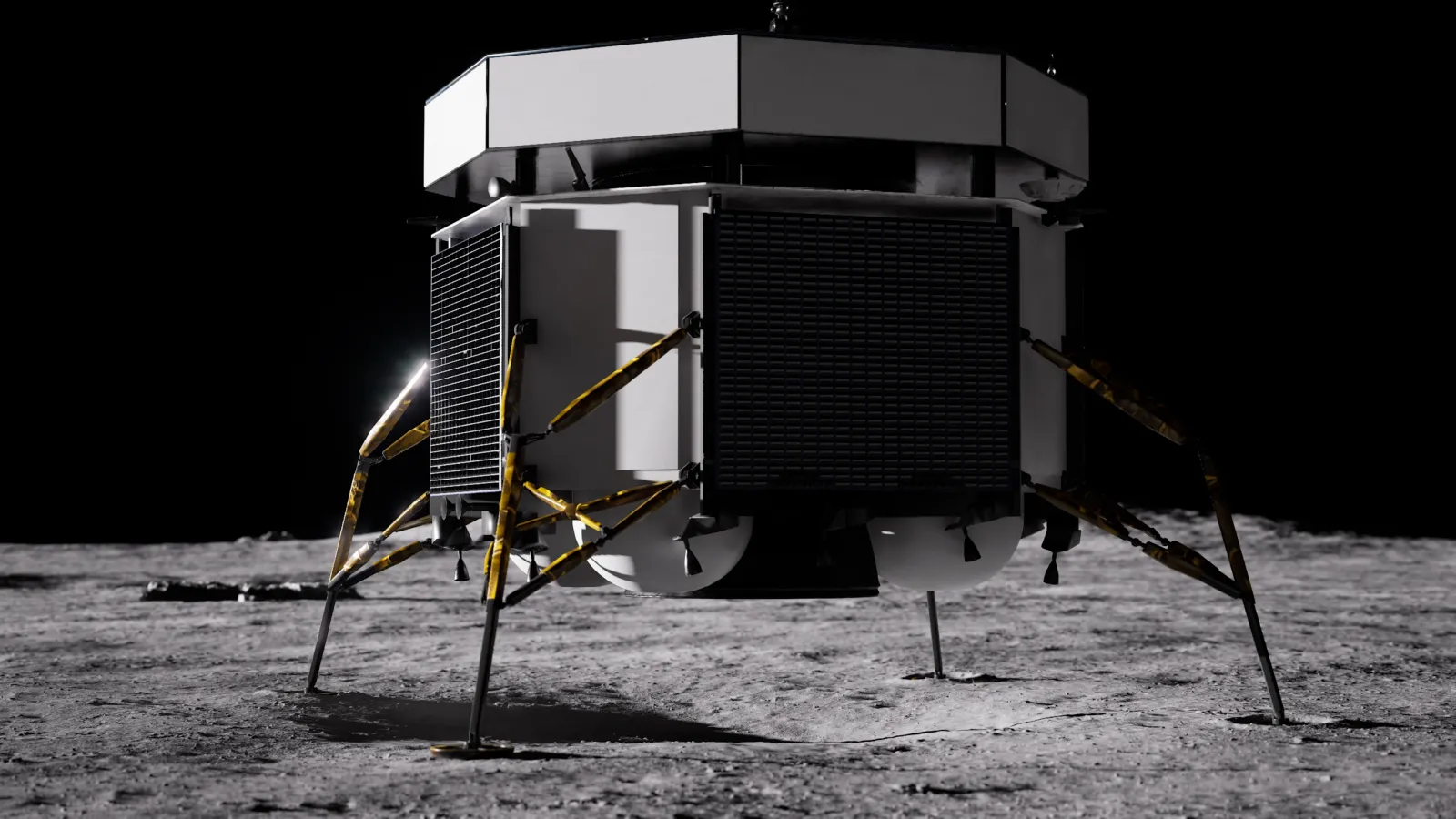
Nammo UK, the spacecraft propulsion specialist based at Westcott Venture Park in Buckinghamshire, has completed hot-fire testing of the first prototype of its RELIANCE lunar landing engine, a key development milestone for the European Space Agency's Argonaut programme. The announcement, made at Space Tech Expo Europe in Bremen, signals a meaningful step in Europe's ambition to reach the Moon independently rather than through exclusively US-led platforms.
RELIANCE is designed as the main descent engine for Argonaut, ESA's first dedicated lunar lander mission. The engine delivers 6 kilonewtons of thrust and demonstrated the ability to throttle between 50% and 100% across its operating range during testing, an essential characteristic for the precise, controlled descent required to land safely on the lunar surface. Nammo says the breadboard prototype also met critical combustion efficiency and stability requirements. The programme has simultaneously cleared its Preliminary Design Review, confirming design maturity ahead of the engineering model phase scheduled for 2027.
Europe's sovereign propulsion push
The technical framing matters less than the strategic one. Argonaut is explicitly positioned as Europe's answer to lunar-access dependency. While the mission is designed to support NASA's Artemis programme by delivering cargo and scientific payloads to the lunar surface, its deeper purpose is to give the continent an end-to-end sovereign capability for precision lunar landing. That distinction carries weight in a geopolitical environment where space access is increasingly read as a proxy for broader technological and economic autonomy.
Ludovic Duvet, ESA's Argonaut Team Leader, was direct about the wider implications: "RELIANCE also opens the door to wider applications, including future lunar return missions and other exploration scenarios. It is a strong example of European investment creating strategic technology with value well beyond a single mission."
Nammo UK's heritage underpins the credibility of that claim. The company's LEROS 4 engine powered Firefly Aerospace's Blue Ghost spacecraft, which became the first commercial vehicle to achieve a successful lunar landing in March 2025. The LEROS 1b engine provided main propulsion for NASA's Juno mission to Jupiter. In 2024, Nammo UK delivered the propulsion system for Astroscale's ADRAS-J, which conducted the world's first close-proximity imaging of orbital debris. RELIANCE itself is described as the first electrically pump-fed, dual-propellant, regeneratively cooled engine of its type to demonstrate deep throttling through hot-fire testing.
Capital, competition and the convergence layer
The broader investment landscape around lunar infrastructure is worth situating this milestone within. The commercial and sovereign lunar economy is attracting capital from multiple directions: NASA's Commercial Lunar Payload Services (CLPS) contracts have seeded a cohort of US commercial landers, while ESA and national agencies across Europe, Japan and the Gulf are increasing direct and partnered spending on deep-space capability. Argonaut sits at the intersection of government-funded sovereign ambition and a growing commercial propulsion supply chain, with Nammo UK acting as a prime contractor drawing on a pan-European industrial base.
For cross-sector investors, the second-order read is about which adjacent markets lunar propulsion unlocks. Deep-throttling bi-propellant engines of the RELIANCE class have direct application in orbital transfer vehicles, in-space servicing platforms and, further out, human return missions. The same propulsion architecture that lands a cargo lander on the Moon is a building block for the cislunar logistics infrastructure that underpins future resource extraction and permanent surface presence. Those scenarios are attracting early-stage capital from both space-focused venture funds and sovereign investors in Europe and the Gulf who see the Moon as the next axis of geopolitical positioning.
Robert Selby, Vice President of Nammo Space, confirmed the near-term roadmap: the team will now mature the design and complete qualification activities, with RELIANCE targeted for operational service within three years. The engineering model build and test campaign begins in 2027, supported by ongoing hot-fire testing and manufacturing process maturation at Westcott. Europe's lunar ambitions are moving from paper architecture to fired hardware.