
Impulse Space closes $808m Series D to build in-space mobility fleet
Impulse Space, the Redondo Beach-based in-space mobility company, has closed a $308 million extension to its Series D funding round, bringing the total raised in that round to $808 million. Existing backers including Lux Capital, DFJ Growth, Valor Equity Partners, and Linse Capital all participated, signalling sustained institutional confidence in a company positioning itself as the routing infrastructure of the emerging space economy.
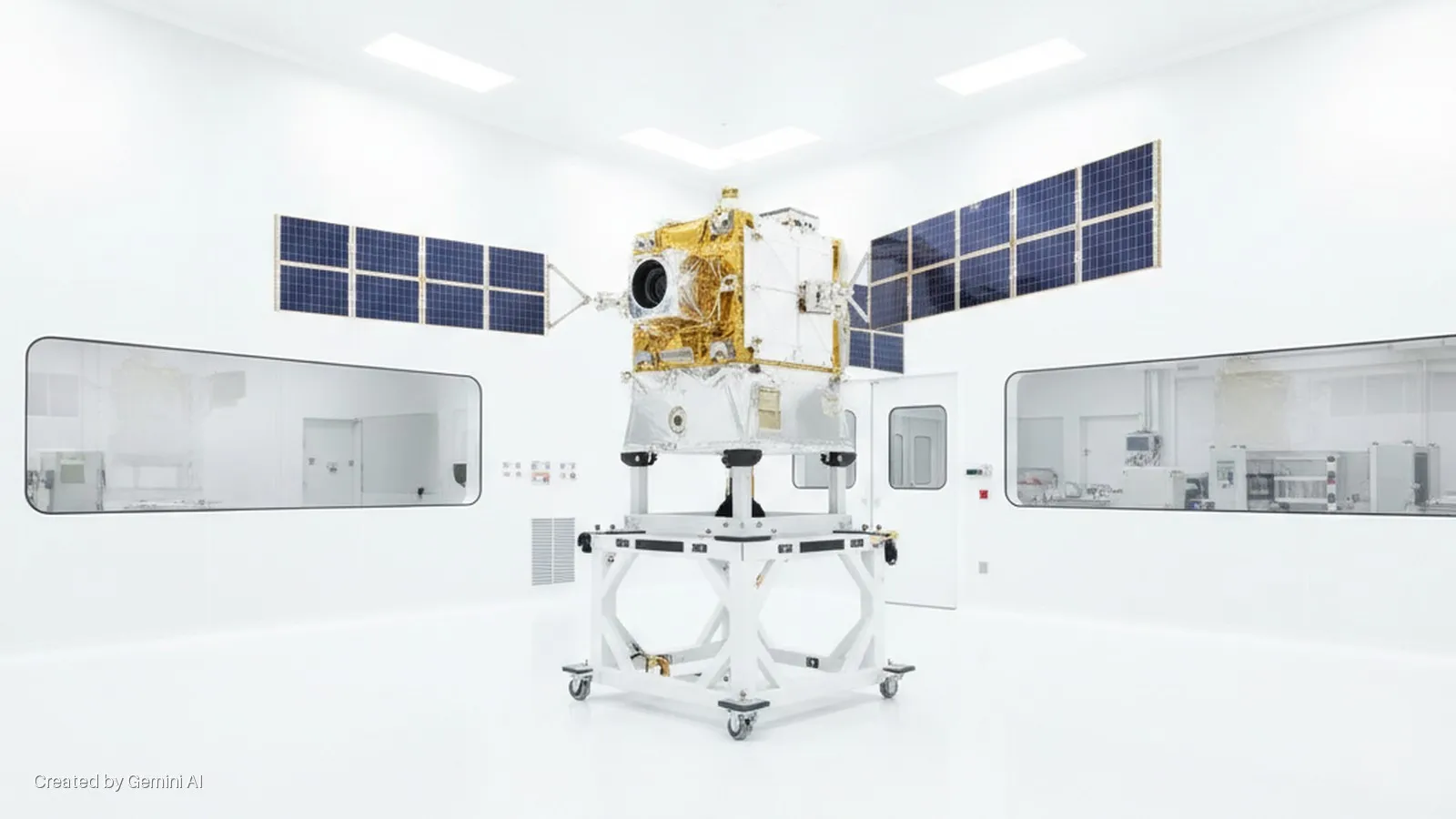
The raise is the latest indicator that investor appetite for post-launch mobility, the capability to reposition spacecraft after they leave the rocket, is maturing beyond early-stage speculation into a capital-intensive infrastructure build. Impulse's product portfolio spans chemical propulsion with its flight-proven Mira manoeuvring vehicle, high-energy orbit insertion via the Helios kick stage, a rideshare programme called Caravan, and the newly unveiled Electra electric propulsion system. Together, these represent a full spectrum of orbital movement: getting payloads from one orbit to another quickly, precisely, and on demand.
Defence contracts validate the commercial thesis
Recent government awards underline why investors are following through at scale. Impulse's Helios spacecraft was selected for the US Space Force's National Security Space Launch Phase 3 Lane 1 contract, reportedly the first upper stage prime to secure a position in the programme. The company also received a $28 million contract extension from Space Systems Command's Space Safari Office for the VICTUS SALO 2 and VICTUS SALO 3 missions. These awards are not decorative: NSSL is one of the most strategically guarded procurement programmes in US defence, and a slot in it provides a durable government revenue baseline that de-risks the commercial growth story for private investors.
The dual-stream revenue model, blending defence contracts with commercial and civil customers, is now a structural feature of the most-funded space infrastructure players. It mirrors the playbook executed by launch incumbents such as SpaceX and, increasingly, by satellite communications players seeking to lock in anchor government contracts before scaling commercial capacity.
Capital, talent, and the infrastructure layer
Tom Mueller, Impulse's founder and CEO, framed the funding in infrastructural terms: "We're proud to be defining the infrastructure that powers our future beyond Earth." That language matters for cross-sector investors reading the space economy as a long-duration infrastructure asset class, analogous to fibre networks in the 1990s or cloud data centres in the 2010s.
The company has more than doubled its headcount over the past year and has appointed its first Chief Financial Officer, Adam Townsend, who previously steered VIZIO through its IPO and subsequent sale to Walmart and held senior finance roles at CBS Corp., Showtime Networks, and E*TRADE Financial. Hiring a CFO with capital markets experience at this stage is a credible signal that an IPO pathway is being prepared, even if no timeline has been stated publicly.
Convergence implications for defence and beyond
For capital allocators across sectors, Impulse's raise sits within a broader structural shift: in-space mobility is becoming as foundational to the space economy as semiconductor fabs are to the digital economy. Just as chip shortages between 2020 and 2023 exposed how dependent every industry from automotive to healthcare had become on a single manufacturing layer, a bottleneck in orbital logistics, the ability to move payloads efficiently once launched, would constrain every downstream application built on satellite infrastructure: precision agriculture, financial market data feeds, GPS-dependent supply chains, remote sensing for climate monitoring, and military communications alike.
Sovereign wealth funds and defence-adjacent investors are already positioning. The participation of specialist venture firms such as Lux Capital alongside growth-stage vehicles like DFJ Growth suggests the round bridges both the deep-tech VC community and the more patient, infrastructure-oriented capital that typically enters later. As launch costs continue to fall, driven by reusable rockets, the marginal value in the space stack will migrate upward toward the orbital logistics and manoeuvring layer where Impulse operates.
The next inflection point to watch is Helios's operational performance under the NSSL Lane 1 contract: a successful high-energy mission on that programme would accelerate both further government contract flow and the conditions for a public listing.