
Quantinuum maps fault-tolerant quantum path to Apollo by 2029
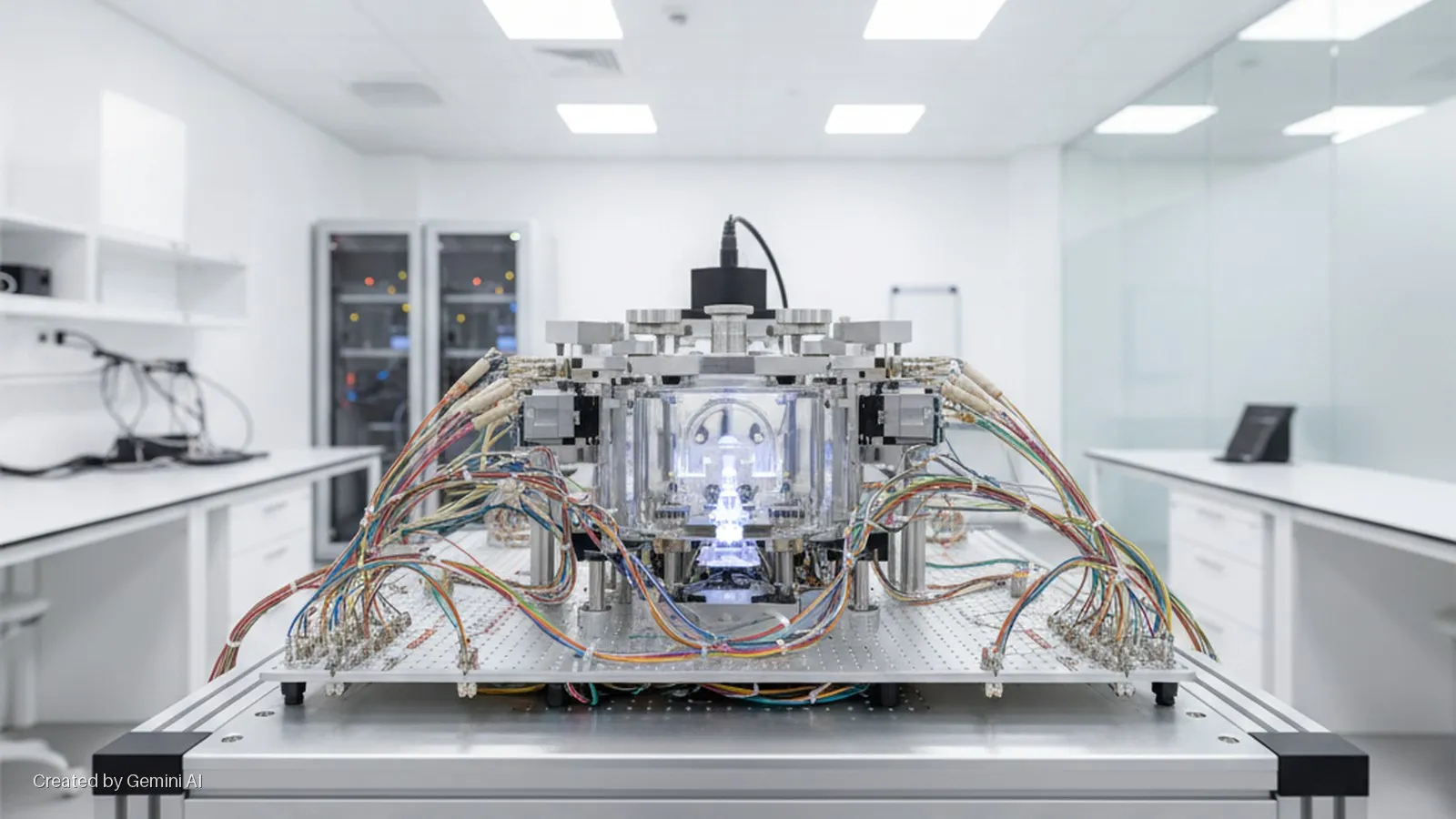
Quantinuum, the NASDAQ-listed full-stack quantum computing company, has unveiled a detailed product roadmap for its Nexus developer platform, charting a course through successive hardware generations to Apollo, its planned universal fault-tolerant quantum computer, targeted for 2029. The announcement signals a deliberate pivot in the quantum industry's commercial strategy: rather than waiting for hardware to mature before building a developer ecosystem, Quantinuum is betting that locking in enterprise workflows now will compound in value as qubit quality improves.
Nexus, launched in 2024 as a cloud-based quantum workflow manager, has since grown into an end-to-end environment encompassing programming, compilation, validation, and execution across both cloud and on-premises deployments. The platform now supports more than 200 organisations, a figure the company says rose 45% during 2026, while total job submissions increased tenfold in the twelve months through August 2026 compared with the preceding year. Those adoption metrics matter commercially: they represent the sticky developer base that will determine whether Quantinuum's hardware roadmap translates into durable enterprise revenue.
From NISQ to fault tolerance, without breaking the developer stack
The roadmap organises development around three lifecycle stages: build, optimise, and deploy. The build layer will progressively automate error-correction encoding and resource management so that developers can operate at the logical-circuit level, abstracting away hardware complexity. The optimise layer introduces real-time diagnostics and automated error recovery. The deploy layer is designed to coordinate Quantinuum processors with high-performance computing infrastructure, cloud services, and third-party tooling, an architecture that reflects the reality that quantum workloads in enterprise settings will be hybrid for the foreseeable future.
A December 2026 release is expected to expand hybrid workflows and add new error-correction codes. Each subsequent release is intended to track hardware generations, from the current Helios system through Sol and onward to Apollo.
CEO Dr Rajeeb Hazra framed the strategy around investment continuity: "As our systems become more capable, our aim is for the applications, workflows, and expertise customers develop in Nexus to become more valuable, giving them a compelling reason to build with Quantinuum and making Nexus an enduring part of their computing environment."
Cross-sector capital and the enterprise integration race
The industries being targeted by Nexus early adopters reveal the genuine convergence stakes. Qubit Pharmaceuticals and Singapore's Centre for Quantum Technologies have used the platform for quantum Monte Carlo experiments relevant to drug discovery. Researchers at RIKEN and the University of Tokyo have run hybrid quantum-HPC workflows to calculate excited-state energies in biomolecular systems. University of Cambridge groups are using Nexus compilation tools for quantum chemistry circuit preparation. These are not proof-of-concept curiosities: they represent the leading edge of what pharmaceutical, materials, and life-sciences R&D pipelines will look like when fault-tolerant hardware arrives.
The Oracle Cloud Infrastructure integration is the most strategically significant enterprise move in the announcement. By embedding Nexus into OCI's on-premises offering, Quantinuum is pursuing the same distribution logic that made cloud-native software dominant in the classical computing era: reach the enterprise through infrastructure the enterprise already trusts. It also signals that hyperscalers are treating quantum-hybrid compute as a near-term procurement category, not a distant research bet.
For cross-sector investors, the broader context is a sharpening race among a small number of full-stack quantum vendors, including IBM, IonQ, and PsiQuantum, to establish developer-platform lock-in before fault-tolerant hardware commoditises the underlying qubit layer. Quantinuum's trapped-ion architecture claims the highest two-qubit gate fidelity in the industry, but platform stickiness, not hardware specs alone, is likely to determine which vendor captures the enterprise relationships that will define the market through the 2030s. Sovereign and institutional capital flowing into quantum across the US, UK, Singapore, and the Gulf states is increasingly calibrated to that platform question, making the Nexus roadmap as much a capital-allocation signal as a product announcement.