
Turbo Energy's 15-project storage push targets industrial resilience
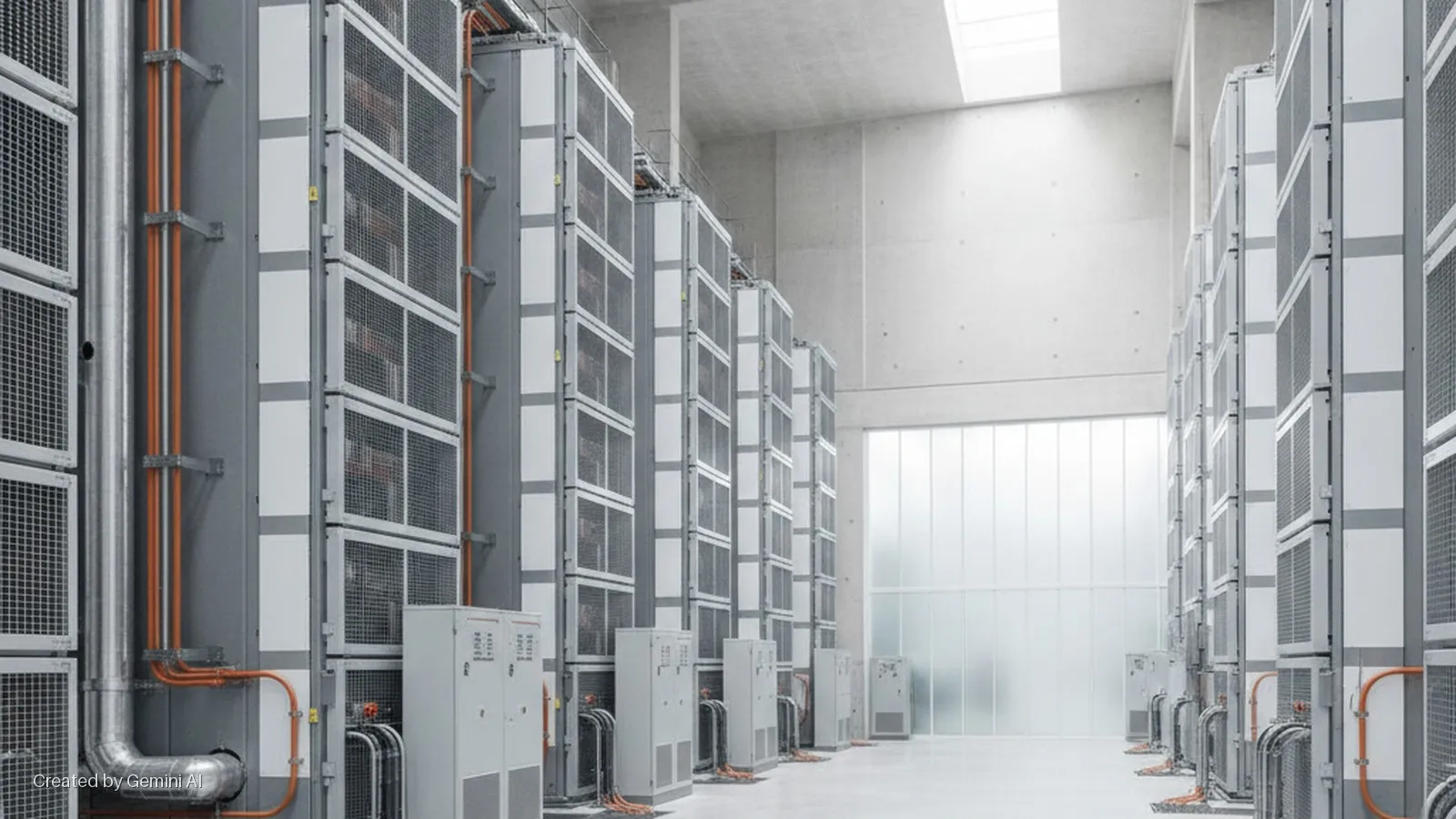
Turbo Energy, the Valencia-based Nasdaq-listed energy storage integrator, has announced a portfolio of 15 commercial and industrial battery storage projects across Spain and Chile, with a combined order value of approximately €3 million (around $3.5m). The portfolio totals 15.6 MWh of storage capacity and 5.95 MW of power output, each site paired with the company's AI-driven energy management software. Two systems are already live, three are under installation, and nine are in manufacturing, with full commissioning expected between Q4 2026 and the first half of 2027.
The announcement is deliberately positioned as separate from Turbo Energy's previously disclosed 366 MWh Pamesa Net Zero deployment under a $53 million contract. Where Pamesa demonstrated the company's capacity at major industrial scale, this new portfolio is intended to illustrate something arguably more commercially significant: the repeatability of its modular platform across heterogeneous applications, from solar time-shifting and EV charging to off-grid power supply and grid-interruption mitigation.
Structural energy risk as a C&I sales driver
Turbo Energy is framing the timing of this portfolio announcement around a macroeconomic stress point that is hard to dismiss. Disruptions to energy flows in and around the Strait of Hormuz have amplified volatility across oil, refined products, freight and broader energy markets in 2026, compressing industrial margins and elevating the strategic priority of energy cost control. "Energy volatility is no longer a temporary operating issue. It is a structural risk for industrial competitiveness," said Mariano Soria, the company's chief executive. "Customers are not simply looking for more battery capacity. They need an intelligent energy layer capable of coordinating generation, storage and demand around the economics of their operations."
This framing matters beyond the company itself. The C&I energy storage market is increasingly positioned not as a sustainability investment but as an operational hedge, a shift that changes both the buyer and the budget line. When procurement decisions move from sustainability officers to CFOs and heads of operations, the sales cycle shortens and the addressable market widens substantially. Turbo Energy's platform, which automates charging and discharging decisions by analysing real-time generation, consumption and pricing signals, is designed precisely for this buyer.
Cross-sector read-across: energy storage meets industrial finance
The convergence angle here sits at the intersection of energy infrastructure, industrial finance and AI-driven automation. As battery storage transitions from a standalone capital purchase into a software-managed asset, it begins to resemble a category that financial markets already know how to value: managed infrastructure with recurring optimisation services layered on top. That reframing has implications for how C&I storage is financed, and for the kinds of investors and lenders who will fund the next wave of deployments.
For cross-sector strategists, the geography of this portfolio is also notable. Spain and Chile represent two distinct energy-transition regimes. Spain operates within the EU's increasingly interventionist energy regulatory framework, including its emergency price-cap mechanisms. Chile, by contrast, has one of the most liberalised electricity markets in Latin America, with high renewable penetration and significant price volatility. That Turbo Energy can deploy the same modular platform across both environments strengthens the case for a technology-agnostic, software-defined approach to industrial energy management.
The broader implication is directional: as geopolitical risk continues to structurally elevate energy price volatility, AI-coordinated storage assets are shifting from a niche cleantech product into mainstream industrial infrastructure. Capital allocators watching the energy-industrial convergence should note that the competitive dynamic in this space is moving faster than regulatory frameworks in most markets have yet acknowledged.