
Power Wood lands CA$84M to build coal-replacing black pellet plants
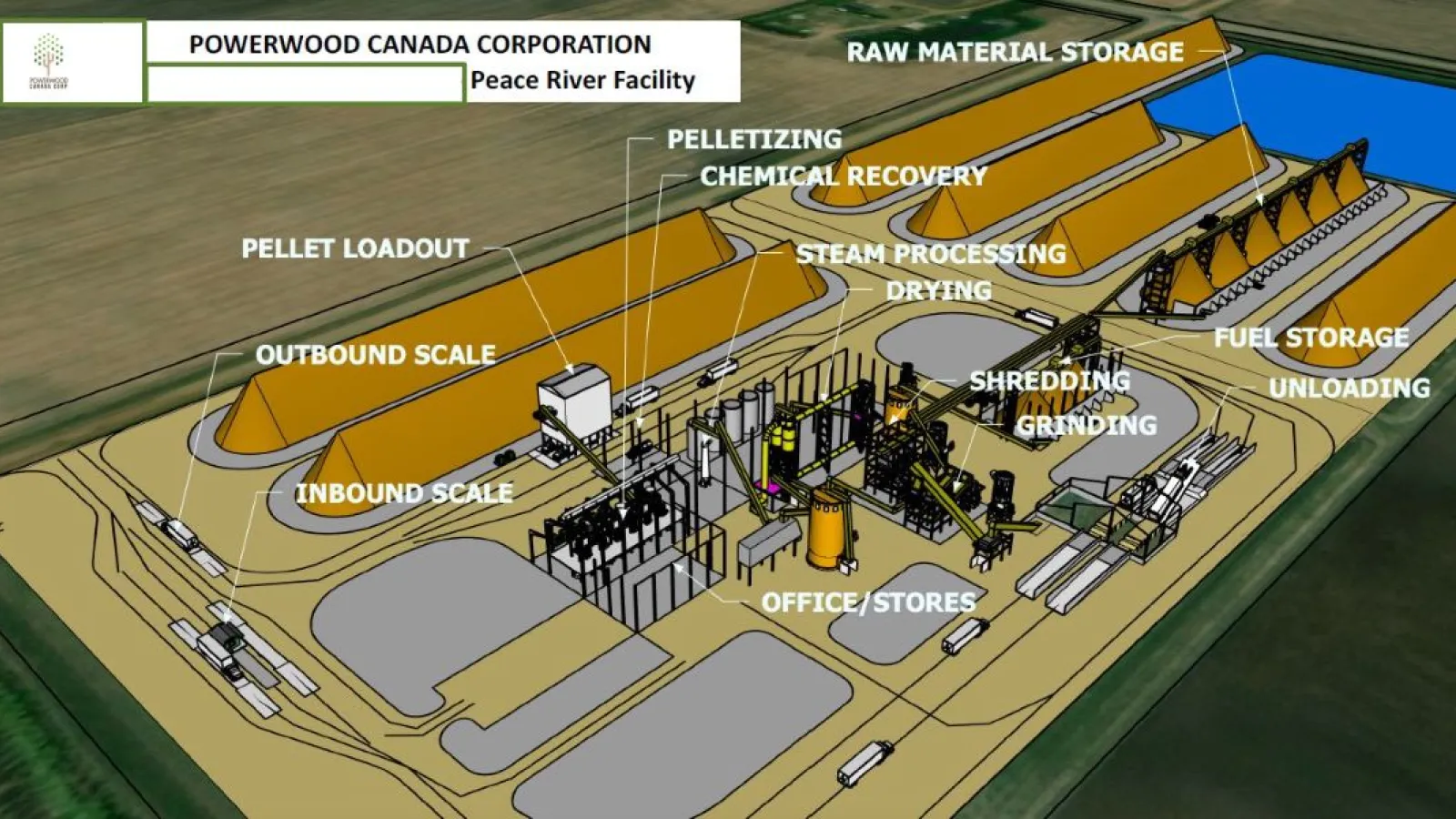
Power Wood Holdings, a Calgary-based biofuel producer, has agreed terms for up to CA$84 million in financing from London and Dubai-based private investment firm Chair Capital, to fund the construction of two steam-explosion black pellet facilities in Northern Alberta. The deal positions a niche Canadian forestry-waste stream at the intersection of three macro forces: Japan's accelerating coal-replacement programme, the global energy security premium, and the growing appetite of institutional capital for dispatchable low-carbon generation assets.
The funding will be released in two tranches. An initial CA$42 million supports Power Wood's first plant near La Crête in Mackenzie County, along with a rail spur to move product to export terminals. A further CA$42 million, contingent on verified construction milestones, backs the second facility near High Level on a 175-acre site secured in December 2025. Chair Capital's investment is structured against an implied equity valuation of CA$700 million for Power Wood Holdings, equivalent to CA$4.44 per share. The agreement remains subject to third-party construction financing and completion of definitive documentation.
Feedstock logic and the coal-plant calculus
The product at the centre of this deal is not a conventional wood pellet. Black pellets are steam-treated and densified, making them waterproof and energy-dense enough to function as a direct drop-in fuel in existing coal-fired thermal power stations without significant infrastructure modification. That is a commercially critical distinction: it removes the capital expenditure barrier that has slowed biomass conversion in markets such as Japan, South Korea and parts of Europe, where coal plant operators face political and regulatory pressure to decarbonise but cannot easily afford full repowering.
Power Wood's feedstock sourcing compounds the appeal. Both facilities will process wildfire-damaged deadwood, diseased trees and forest debris cleared from ranges across North West Alberta, material that is otherwise a forest management liability. The combined annual output capacity of the two plants is 700,000 tonnes. Offtake is already locked in: Power Wood holds 10-year, take-or-pay agreements with multiple Japanese energy companies, giving Chair Capital contracted revenue visibility that is rare at this stage of a project's development cycle.
Japan's biomass demand and the capital landscape
Japan is the world's second-largest importer of biofuel pellets. The country raised procurement by 35 percent year-on-year to a record 8.4 million tonnes in 2025, driven by its legally binding obligations under the Paris Agreement and the practical reality that its coal-fired baseload cannot be retired without a dispatchable substitute. That demand trajectory is one reason institutional capital is increasingly circling the biomass supply chain. The IEA forecasts global clean energy spend will reach US$2.2 trillion in 2026, a five percent increase on 2025 levels, and biofuel infrastructure is emerging as one of the more bankable sub-categories within that envelope.
Chair Capital's chief executive Darren Green framed the investment in explicitly macro terms: "Energy has moved from being a sector to being the constraint on everything else, and the last 18 months have made security of supply a board-level question rather than a policy one."
The broader black pellets market, valued at US$298.6 million in 2025, is forecast by Grand View Research to reach US$465.9 million this year and US$3.2 billion by 2040. Those numbers carry the usual caveats that attach to niche commodity market projections, but the directional signal is consistent with the structural demand pull from Japan and growing interest from South Korea and several European utilities exploring coal asset life-extension strategies.
For cross-sector investors, the Power Wood deal illustrates a capital allocation pattern worth watching: private firms with energy-transition mandates are increasingly targeting infrastructure that extends the productive life of existing fossil-fuel plant rather than replacing it entirely. That approach compresses the capital requirement and the regulatory risk simultaneously, making assets like black pellet supply chains attractive to a range of institutional co-investors who might otherwise find the returns in pure renewables insufficient to justify the construction risk.