
EVgo and Brixmor add 500 fast-charge stalls at US shopping centres
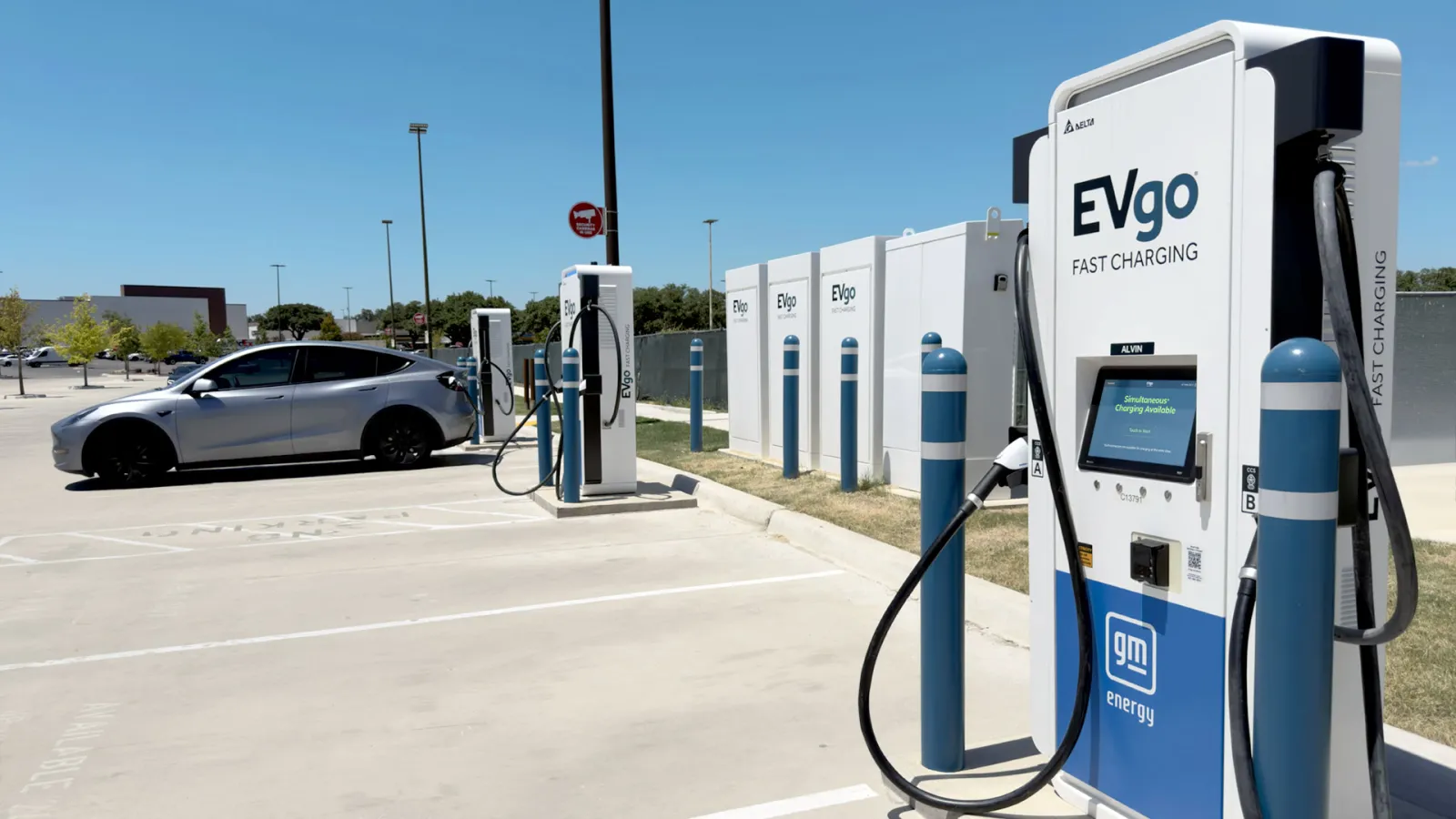
EVgo and Brixmor Property Group are scaling a decade-old partnership that bets on the neighbourhood shopping centre as the primary unit of American EV infrastructure. The two NYSE and NASDAQ-listed companies say the expanded agreement will add more than 500 fast-charging stalls across at least 90 Brixmor properties, covering more than a quarter of the real-estate group's US portfolio. Deployment begins later this year, with the first site of the expanded deal expected at Barn Plaza in the Philadelphia suburbs.
New locations span Florida, Illinois, Minnesota, New Jersey, Pennsylvania and Texas. Each site will carry up to 12 high-power chargers, a specification EVgo says is suited to grocery-anchored retail where the average American household visits two to three times per week. The partnership dates to 2016, when EVgo installed its first Brixmor charger at a shopping centre in Pleasanton, California.
Retail real estate as charging infrastructure
The strategic logic here runs in both directions. For EVgo, which operates more than 1,200 fast-charging stations across 47 states, embedding chargers inside established retail footprints reduces the site-acquisition and permitting friction that has historically slowed standalone charging network buildouts. For Brixmor, EV infrastructure functions as a footfall driver: a dwell-time advantage over competing retail formats that lack charging, as shoppers who charge tend to shop and dine during the session.
Scott Levitan, EVgo's Executive Vice President of Growth, said that "shopping centres are an ideal place to get groceries, grab a bite or shop while charging," framing the rollout as infrastructure that integrates into existing consumer routines rather than demanding new ones. That positioning matters competitively: the most persistent barrier to EV adoption in the US is not vehicle cost but charging anxiety rooted in range uncertainty and inconvenient top-up options.
Cross-sector read-across: real estate, energy and retail converge
The broader significance for Disrupts readers is what this deal represents at the intersection of real-estate capital, energy infrastructure and retail commerce. Open-air shopping centres, a property format that struggled through the e-commerce decade, are now repositioning as essential physical-world nodes. The ability to offer EV charging is becoming a leasing differentiator for retail landlords competing for anchor tenants and footfall, effectively turning electricity throughput into a property-value driver.
At the capital level, this dynamic is beginning to attract interest beyond traditional utility and charging-network balance sheets. Real-estate investment trusts that control large retail portfolios are increasingly being viewed by infrastructure investors as latent charging-network hosts, a convergence that blurs the line between property yield and energy yield. Brixmor's willingness to commit more than a quarter of its portfolio to EVgo infrastructure signals that this framing is moving from thesis to execution.
The US public fast-charging market remains fragmented. EVgo competes with ChargePoint, Electrify America and Tesla's now-open Supercharger network, each pursuing differentiated site strategies. The retail-anchor model EVgo is doubling down on with Brixmor contrasts with highway-corridor strategies and workplace-charging plays, and its success will partly depend on whether the Inflation Reduction Act's alternative fuel infrastructure tax credits survive ongoing Congressional budget negotiations in their current form.
For investors tracking the convergence of energy transition, property capital and consumer-retail resilience, the EVgo-Brixmor expansion is a concrete data point: the physical layer of EV adoption is being built not at purpose-built charging plazas alone, but inside the mundane geography of the weekly grocery run.