
CIP closes $510m Mexico solar-storage project via growth markets fund
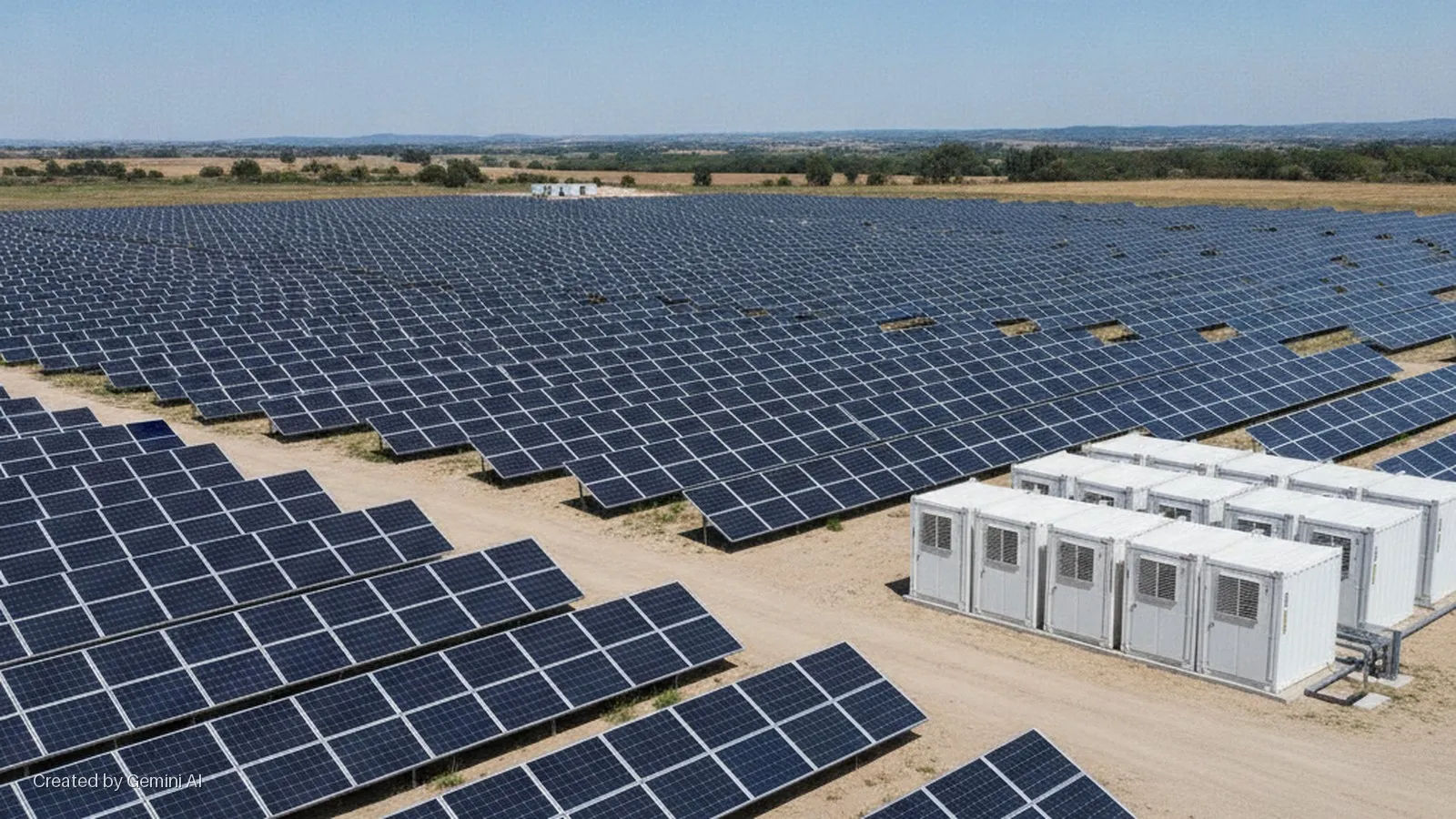
Copenhagen Infrastructure Partners (CIP) has reached financial close on La Esperanza Solar, a 420 MWdc solar photovoltaic project paired with a 150 MW, five-hour battery energy storage system (750 MWh total) in the state of Campeche on Mexico's Yucatán Peninsula. Construction has begun, with commercial operations targeted for 2028. The deal is CIP's first Mexican project to reach this stage and represents one of the larger renewable-plus-storage financings in Latin American emerging markets this year.
The project is financed through approximately USD 510 million in debt facilities arranged by a consortium of five banks: BNP Paribas, JPMorgan Chase, Natixis CIB, Santander and Scotiabank. Equity comes from CIP's Growth Markets Fund II, with an expected co-investment from Profuturo, one of Mexico's leading pension fund administrators (AFOREs, as Mexico's mandatory retirement savings vehicles are known). The long-term revenue anchor is a Power Purchase Agreement with CFE Calificados, the large-client commercial arm of state utility Comisión Federal de Electricidad.
Grid resilience and sovereign energy planning
La Esperanza Solar has been designated a priority project by Mexico's Ministry of Energy (SENER) under the country's binding electricity planning framework, developed in co-ordination with federal authorities. The Yucatán Peninsula has experienced rising electricity demand that has outpaced generation and storage capacity; the project's five-hour battery system is positioned as a key tool for firming intermittent solar output and stabilising the regional grid. Peter Halmø, CIP's Head of Latin America, noted that pairing solar with battery storage is "central to bringing more renewable energy onto the Mexican grid" and to building "a more reliable, lower-carbon power system."
The project sits at the intersection of two structural forces shaping Latin American energy markets. First, Mexico's grid operator faces growing pressure to integrate variable renewables without destabilising a transmission network that has historically leaned on gas-fired peakers. A 750 MWh storage block of this size materially changes the dispatch calculus for the Yucatán sub-grid. Second, state utility CFE's commercial branch acting as the offtaker reflects a policy architecture that keeps sovereign credit underpinning private infrastructure capital, even as Mexico has at times sent mixed signals to foreign renewable developers.
Emerging-market capital flows and the pension-fund bridge
The Profuturo co-investment angle deserves attention beyond the headline figure. Mexico's AFORE system manages roughly USD 260 billion in pension assets, and regulatory reforms over the past three years have progressively widened the eligible infrastructure universe for those funds. When a domestic pension administrator joins a global infrastructure manager on a sovereign-priority energy project, it signals a maturing of local institutional capital in a market that has historically relied almost exclusively on multilateral development banks and foreign balance sheets to fund infrastructure at scale.
CIP's Growth Markets Fund II is explicitly structured for fast-growing economies where regulatory and currency risk requires a specialist vehicle rather than a core infrastructure fund. The firm has raised approximately EUR 37 billion across 15 funds since 2012, giving it the balance-sheet depth to absorb the longer construction timelines and permitting complexity that deter smaller entrants. That model, blending global fund manager discipline with local sovereign relationships and domestic pension co-investment, is becoming a template others in the infrastructure space are watching closely.
Cross-sector read-across
For investors tracking the energy-data nexus, the Yucatán is also emerging as a corridor of interest for data centre operators seeking low-carbon power purchase agreements as nearshoring drives compute demand closer to US markets. A large-scale dispatchable renewable asset coming online in 2028 in a grid-constrained region could attract anchor offtake discussions beyond CFE Calificados as hyperscalers and colocation providers scout credible green-power sources in Mexico. The second-order question is whether projects like La Esperanza Solar begin to underpin a broader industrial cluster, linking energy transition capital with the digital infrastructure build-out that nearshoring supply chains increasingly require.