
Volatus Aerospace wins Canadian Forces contract for 5,000 drones
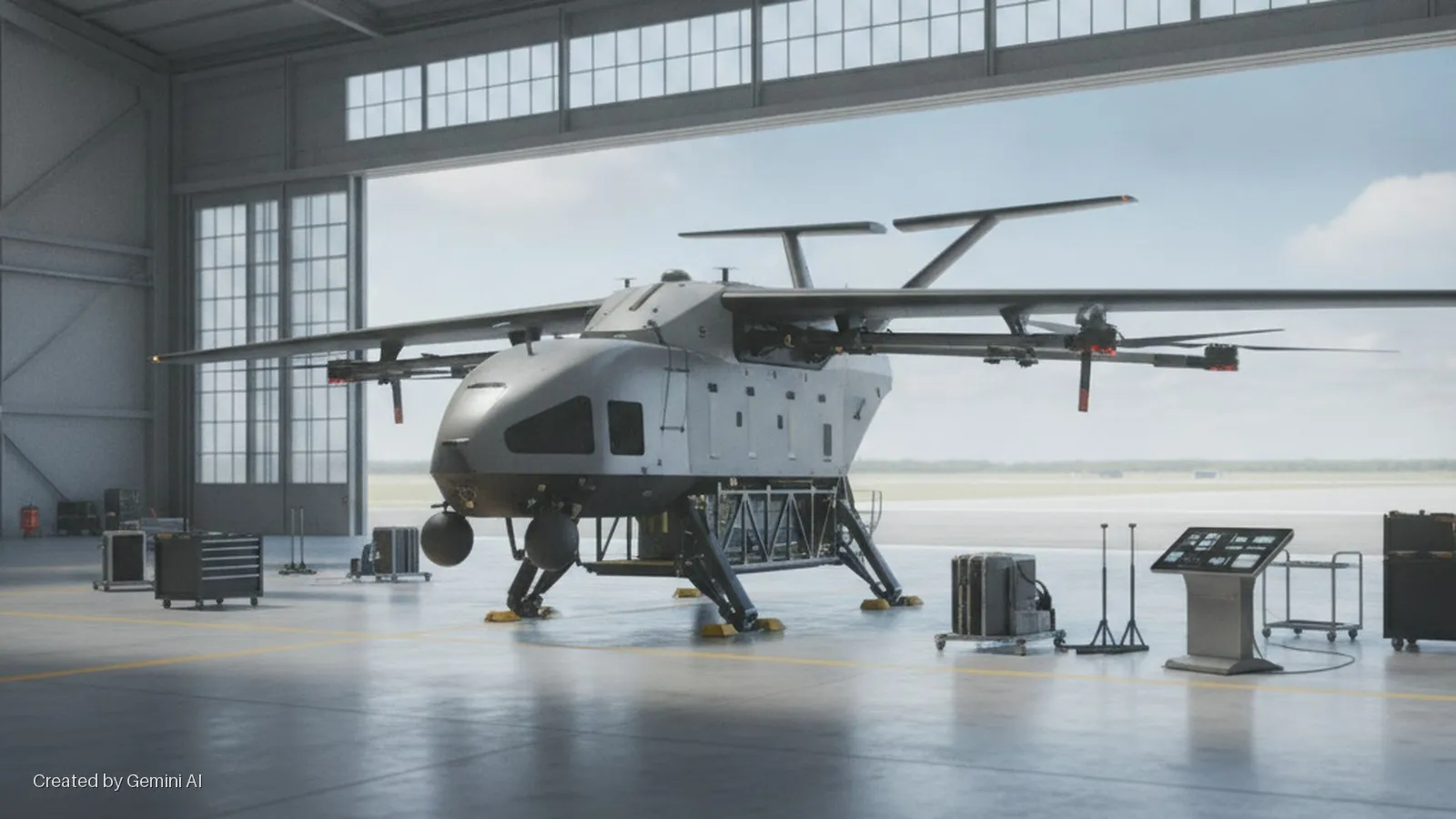
Volatus Aerospace, a Mirabel, Québec-listed defence and aerospace group, has secured a five-year contract from the Government of Canada to supply tactical Intelligence, Surveillance and Reconnaissance (ISR) Uncrewed Aircraft Systems (UAS) to the Canadian Armed Forces. The initial tranche covers 100 systems, with options at Ottawa's discretion for up to a further 4,900, creating a procurement pathway for 5,000 systems under a maximum envelope of C$25 million, or C$5,000 per unit.
The award is the first conversion of Volatus' qualification across all five work streams of Canada's Defence Drone Initiative (DDI) Marketplace into an actual CAF contract. It was selected via the first Request for Proposal under Stream 1 of the DDI, which covers uncrewed and autonomous systems and counter-UAS capabilities. Deliveries on the initial tranche are expected to begin in Q4 2026.
An end-to-end sovereign UAS model
The contract is not simply a hardware sale. Volatus is providing a complete tactical ISR stack: aircraft, payloads, ground control stations, data links, training, sustainment, spare parts, and software and firmware support. That integrated model reflects a deliberate strategic posture. "Canada is seeking sovereign, secure and supportable defence technologies that can be fielded efficiently and scaled as operational requirements evolve," said Glen Lynch, Volatus CEO. The company's Innovation and Manufacturing Hub in Mirabel and its Operations Control Centre in Vaughan, Ontario, are central to its pitch as a domestic industrial-base partner, not merely an equipment vendor.
The C$5,000-per-system ceiling is notably low by Western defence-procurement standards, underscoring the "low-cost tactical" framing in the DDI specification. It positions these systems as attritable assets, closer in doctrine to the expendable drone concepts being stress-tested in active conflicts than to the high-value persistent-ISR platforms that have dominated NATO procurement budgets for the past two decades.
The convergence angle: sovereign drone supply chains and NATO's procurement rethink
The Volatus award sits inside a fast-moving structural shift across NATO member states. The war in Ukraine demonstrated that uncrewed systems are consumed at logistics-scale volumes, not capital-equipment scale, and that dependence on foreign UAS supply chains is a strategic liability. Canada, like the UK, Australia and several European allies, is now constructing domestic drone industrial bases specifically to avoid that exposure. The DDI Marketplace architecture, with its five parallel work streams covering everything from counter-UAS to engineering integration, is designed to create a standing roster of pre-qualified suppliers that can be tasked rapidly as operational requirements emerge.
For investors tracking the defence-tech convergence space, the more significant number may not be the C$25 million contract ceiling, but the five-stream DDI qualification Volatus now holds. Each stream represents a separate future procurement pipeline, spanning communications systems, engineering and integration, testing and training, and innovation and experimentation. That breadth positions the company as a platform supplier to a defence programme that is, by design, intended to scale.
The cross-sector read-across extends to AI and autonomy. Tactical ISR UAS of this class increasingly incorporate on-board edge-inference for target classification and terrain mapping, pushing compute requirements onto the airframe. As allied defence ministries standardise on low-cost attritable drone fleets, the downstream demand signal for ruggedised edge-AI chipsets, sovereign data-link encryption, and rapid-iteration software sustainment pipelines becomes structurally larger. Volatus' software and firmware support obligation under this contract places it inside that value chain for the duration of the five-year term, with options to extend as the CAF's UAS fleet grows.