
Simplesense and DFT win $3.4m Air Force counter-drone contract
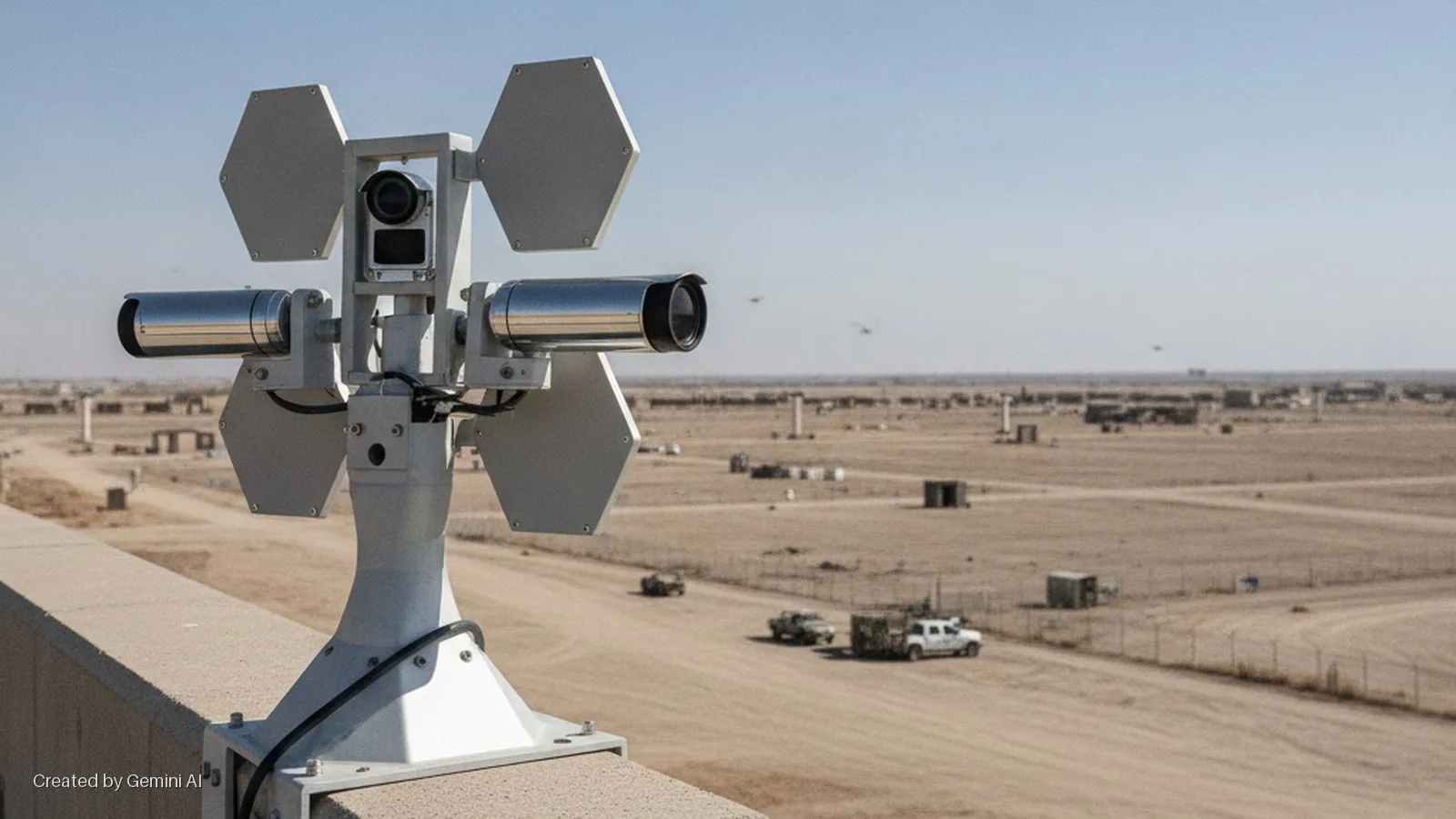
Simplesense and Digital Force Technologies (DFT) have secured a $3.4m US Department of Defence award to embed DFT's SeraphimOS sensor fusion platform into the Installation Resilience Operations Command and Control (IROC) prototype at an undisclosed Air Force installation. The deal marks the first Air Force deployment of a counter-drone system integrated directly into installation-wide resilience operations, and signals a broader push to collapse fragmented military base-monitoring infrastructure into unified, machine-speed decision architectures.
The core problem the contract addresses is a familiar one in large-scale infrastructure management: data abundance without data coherence. Military installations generate continuous feeds from video cameras, ground sensors, radar arrays, and intrusion-detection systems, each historically siloed within separate operational pictures. When a threat emerges across multiple domains simultaneously, operators must reconcile those feeds manually, stretching the observe-orient-decide-act (OODA) loop at precisely the moment speed matters most.
Sensor fusion as a force multiplier
SeraphimOS fuses those heterogeneous data streams, autonomously assesses threat signatures, and pushes localised alerts to operators even in disconnected or degraded network conditions. Simplesense's Resilience Core layer sits above it, giving installation commanders a single dashboard view of critical mission-support conditions. Together, the two platforms are designed to surface emerging risks before they escalate to mission-degrading events.
Justin MacLaurin, President and CEO of Digital Force Technologies, described the strategic intent as establishing a repeatable playbook: "By integrating SeraphimOS into military installations, we're proving how counter-UAS and other critical sensor data can be rapidly unified to give operators a clearer picture of threats and enable faster, more informed decisions. Just as importantly, we're establishing a repeatable approach that can scale across Air Force installations."
The contract is already generating momentum. Simplesense says a follow-on expansion is underway to roll out across five additional Air Force, Space Force, and Army installations, suggesting the IROC prototype is less a one-off trial and more the first node in a scalable network.
The convergence angle: autonomy meets base resilience
The strategic significance of this award extends beyond a single $3.4m contract. It illustrates a structural shift in how the US military is approaching base defence: moving away from human-intensive, stove-piped monitoring towards autonomous, fused sensor architectures that can operate at machine speed. This is the counter-UAS problem writ large. The proliferation of low-cost commercial drone technology has fundamentally altered the threat calculus at fixed military installations, and the DoD's answer is increasingly software-defined sensor integration rather than purely kinetic countermeasures.
For cross-sector investors tracking the defence-technology convergence, the Simplesense-DFT model is a useful archetype. Both companies occupy the non-traditional defence contractor space: small, software-forward firms accessing DoD procurement through innovation pathways such as prototype contracts and accelerator programmes, rather than through the legacy prime-contractor ecosystem. Simplesense itself traces a trajectory from accelerator graduate to Air Force prototype contract in 2020 to a production contract with the Air Force Installation and Mission Support Center in 2024. That pipeline, from innovation programme to operational deployment in under a decade, reflects the DoD's broader effort to compress its technology adoption cycle.
The capital landscape around counter-UAS and autonomous base defence remains fragmented but is attracting growing attention from defence-focused venture funds and strategic investors, particularly as NATO partners accelerate their own installation-hardening programmes in response to drone threats observed in the Ukraine theatre. The scalable, software-led approach demonstrated at this Air Force installation is precisely the kind of repeatable model that attracts follow-on institutional capital, and the five-installation expansion contract suggests the DoD itself is prepared to fund that scale-up directly.