
Novacium silicon-cell battery wins first drone defence order
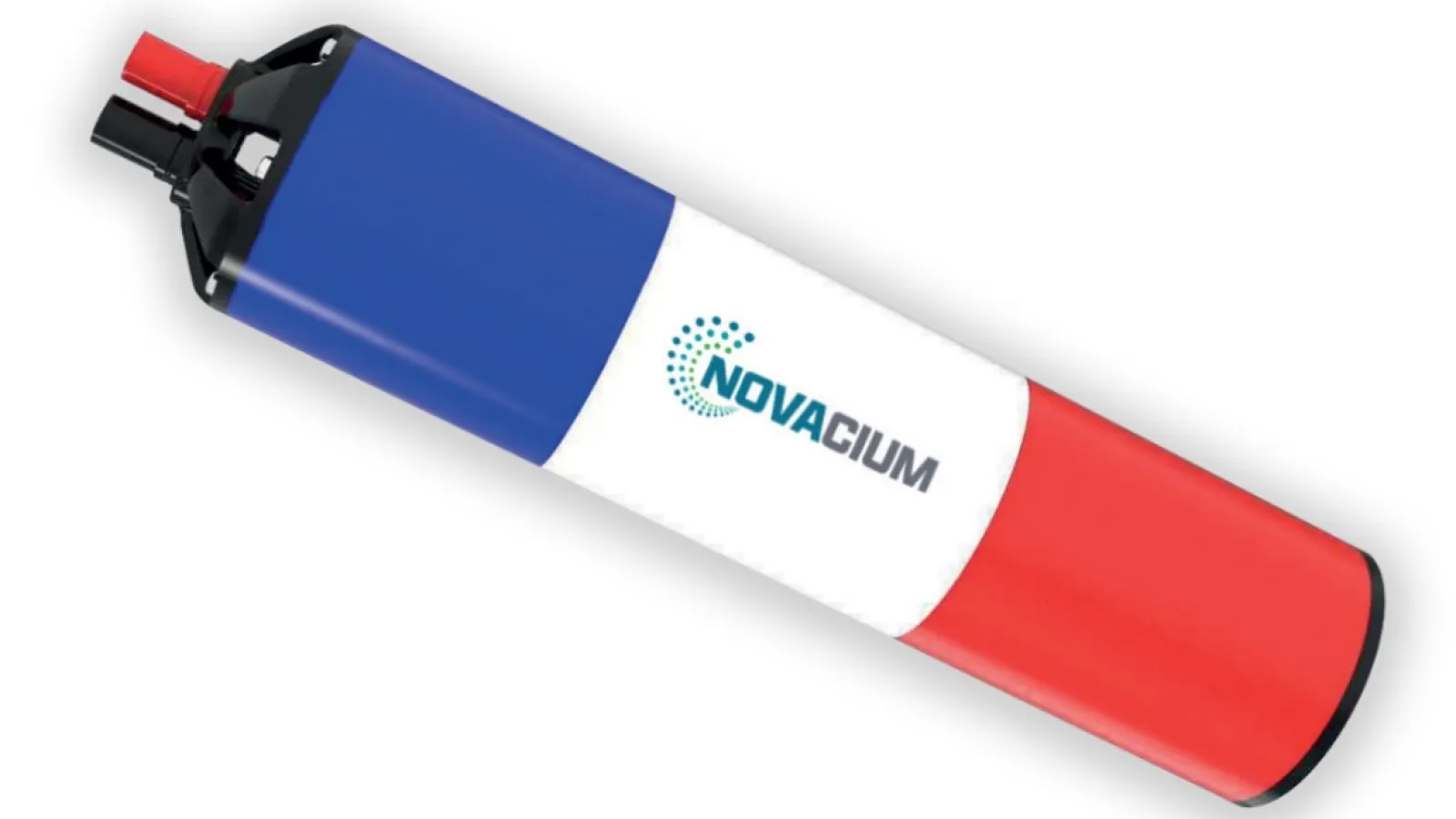
Novacium, a French deep-tech battery specialist backed by Quebec-listed HPQ Silicon, has secured its first commercial order from Alta Ares, a European counter-drone company, for more than 100 AA NOVA battery packs. The packs will power the X-Lock, Alta Ares' short-to-medium-range quadcopter interceptor, which is guided by the company's onboard AI software, Pixel Lock. The order represents the first commercial deployment of Novacium's silicon-based anode technology inside an interceptor drone system, and it arrives at a moment when European defence procurement is accelerating demand for sovereign, high-performance energy storage.
Alta Ares is not a peripheral player. The company was selected alongside MBDA under the ELISA innovation partnership launched by France's Directorate General of Armaments (DGA), and it won a NATO innovation challenge in 2025 focused on early aerial threat detection. Its Pixel Lock AI software has been validated in combat conditions with Ukrainian units since 2025, giving the X-Lock a live-fire pedigree that is increasingly rare among European counter-drone systems.
Silicon cells meet sovereign supply
The technical case for Novacium's battery rests on two factors that matter acutely in drone interception: power density and weight. The AA NOVA 6S3P 15,000 mAh pack incorporates 18 cylindrical 21700 cells, each rated at 5,000 mAh with a 25C discharge rate, enabling a peak current of 125 A per cell. During a test campaign on ten prototypes in July 2026, the pack proved lighter than Alta Ares' reference battery at equivalent or better performance levels. For an interceptor platform where every gram directly affects agility and response time, that margin is operationally significant.
"The packs developed with Novacium enabled us to reduce weight while maintaining at least equivalent performance, which translates very concretely in flight," said Julien Théodore, Design Authority Airborne at Alta Ares. "Being able to rely on French cell technology fully aligns with our sovereignty approach."
That sovereignty framing is deliberate and commercially loaded. A significant share of high-performance lithium-ion cells currently originates outside Europe, a dependency that European defence ministries and procurement agencies are actively working to reduce. Novacium is positioning itself at that fault line: its silicon-anode process offers higher energy density than conventional graphite-anode cells, which is precisely the performance profile that next-generation drone systems require.
Defence energy storage as a cross-sector inflection point
The broader strategic picture extends well beyond a single 100-unit order. Novacium has also received a separate order from LN Innov for battery packs destined for FPV drones serving a French Army regiment, and the company has entered preliminary discussions with the DGA regarding a potential submission under the RAPID dual-use innovation programme. Talks with NATO's Energy Security Centre of Excellence in Vilnius add a multilateral dimension to what is rapidly becoming a pan-European energy-autonomy agenda for armed forces.
For cross-sector investors, the read-across is clear. Advanced battery chemistry has long been treated as an electric-vehicle and grid-storage story, with capital flowing predominantly into those verticals. The drone-defence channel represents a structurally different demand curve: specifications are tighter, volumes are smaller, and the willingness to pay a sovereignty premium is higher. Companies that can satisfy DGA and NATO qualification requirements build a reference base that is difficult for offshore suppliers to replicate, regardless of cost. Novacium's parent HPQ Silicon holds a 36.8% equity stake and retains exclusive North American commercialisation rights, creating a transatlantic capital structure that straddles both the European defence supply chain and the North American battery-materials ecosystem.
The current order is for GEN3 cells. Novacium and Alta Ares are already working on a GEN4 variant rated at 6,000 mAh, with the objective of increasing pack capacity and endurance for future X-Lock configurations. Whether that roadmap attracts broader defence-procurement frameworks, or draws the attention of European battery sovereignty funds currently coalescing around initiatives such as the European Battery Alliance, will be the story to watch over the next 12 months.