
Northrop Grumman stacks first Sentinel ICBM, targeting 2027 flight test
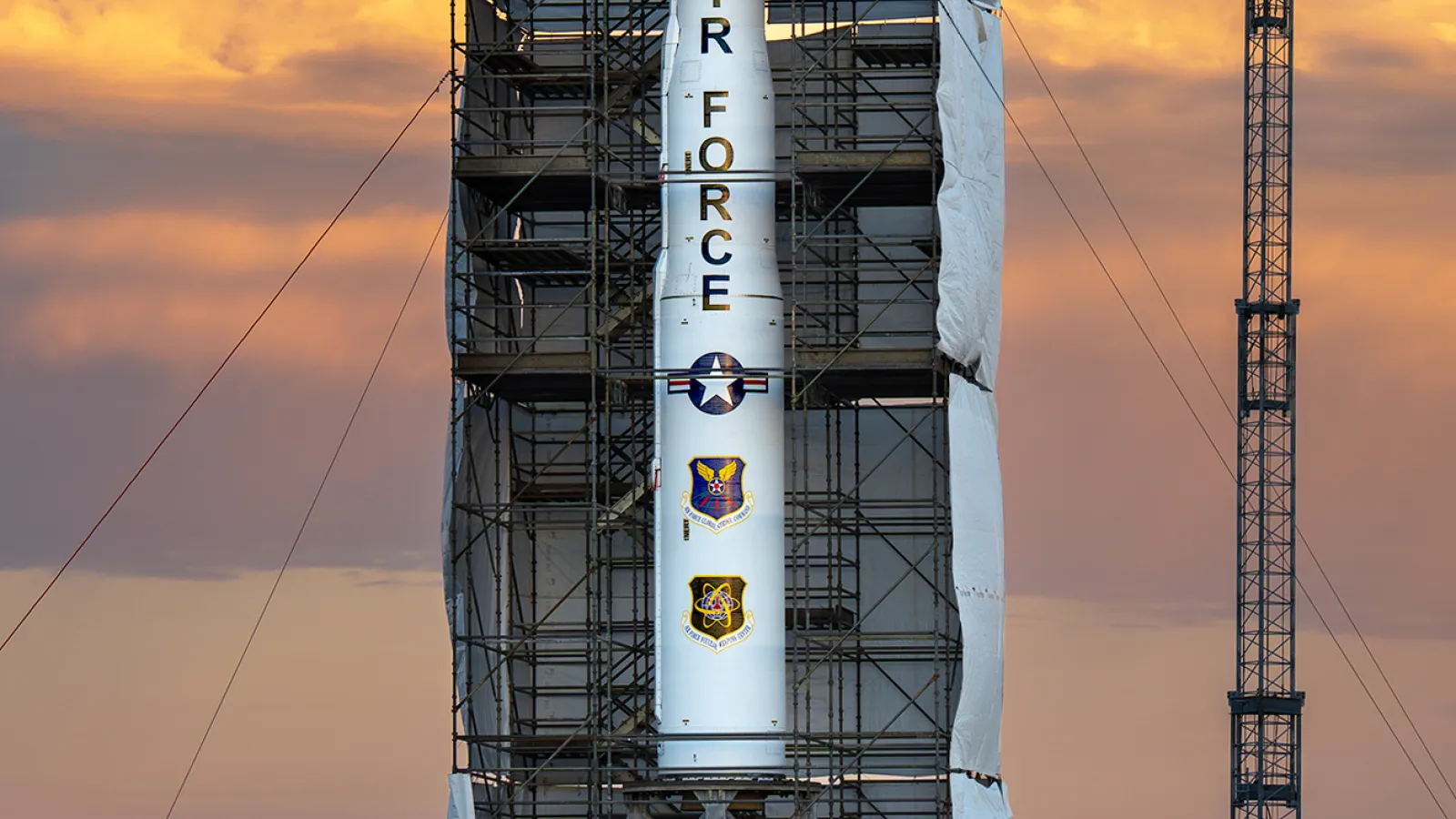
Northrop Grumman and the US Air Force have completed the first full vertical assembly of an inert Sentinel intercontinental ballistic missile at Vandenberg Space Force Base, California, marking the most tangible sign yet that America's next-generation ICBM is transitioning from engineering blueprints to a deployable weapons system. The so-called Pathfinder exercise validated every stage of the complex logistics chain: specialist transport vehicles moved components from facilities across the continental United States, mobile cranes lifted them into position, and engineers confirmed all mechanical interfaces before the inert missile was stacked and subsequently de-stacked on the test pad.
Simultaneously, Northrop Grumman and the Air Force's 719th Test Squadron completed the first flight test Critical Design Review, confirming that design maturity and hardware testing meet Air Force requirements on performance, safety, and schedule. The company says a live flight test is targeted for 2027, with initial operational capability anticipated in the early 2030s and a planned service life extending to 2075. The Sentinel programme involves more than 500 supply-chain partners and a workforce exceeding 10,000 people.
From design to deterrence
Amanda Davis, Northrop Grumman's vice president and general manager for strategic deterrent systems, described the milestone as proof of "momentum toward test launching Sentinel in 2027 and having missiles on alert by the early 2030s, ensuring the United States' ground-based nuclear capabilities remain strong and reliable for decades to come."
Sentinel is the ground-based leg of the US strategic nuclear triad, replacing the ageing Minuteman III ICBM, which has been in service since the early 1970s. The programme is structured as an engineering and manufacturing development contract, a procurement model that integrates design and production phases more tightly than traditional milestone-gate approaches. The Critical Design Review clearance signals that the programme has passed a formal threshold at which design changes become structurally costlier to absorb, reducing schedule risk ahead of the 2027 flight test window.
The wider strategic and industrial read-across
The Sentinel milestone arrives at a moment of intensifying strategic competition across multiple domains. Russia's continued deployment of hypersonic delivery systems and China's rapid expansion of its silo-based ICBM force have raised the political salience of modernising the US triad's land-based component, giving the programme insulation from the budget pressures that have periodically threatened it. For defence investors and capital allocators, the completion of the Pathfinder exercise is a programme de-risking signal: a major technical integration milestone met on schedule reduces the probability of the cost overruns that have historically triggered congressional scrutiny on large defence-development contracts.
The broader industrial implications extend into supply-chain geography and advanced manufacturing. Sentinel's 500-partner supply chain spans dozens of US states, making it structurally similar to the distributed manufacturing model used in major aerospace platforms such as the F-35. That geographic spread is a deliberate political hedge, but it also reflects a genuine industrial policy: the programme is rebuilding US capacity in solid-rocket propulsion and precision guidance manufacturing that had atrophied after Minuteman III production ended decades ago. As geopolitical risk analysts assess the durability of Western deterrence postures, the pace of Sentinel's development will be a concrete data point alongside NATO's conventional force commitments, European defence spending trajectories, and the ongoing debate over extended nuclear deterrence in the Indo-Pacific.
For cross-sector investors tracking defence-prime balance sheets, Northrop Grumman's role as Sentinel lead contractor locks in a long-duration revenue stream at a time when the company is simultaneously competing for next-generation naval and space programmes. The convergence of nuclear modernisation, advanced manufacturing, and sovereign defence-industrial strategy makes Sentinel a benchmark programme for how Western governments are re-onshoring strategic capabilities after decades of distributed globalisation.