
Northrop Grumman signs $3bn deals to surge PAC-3 and THAAD output
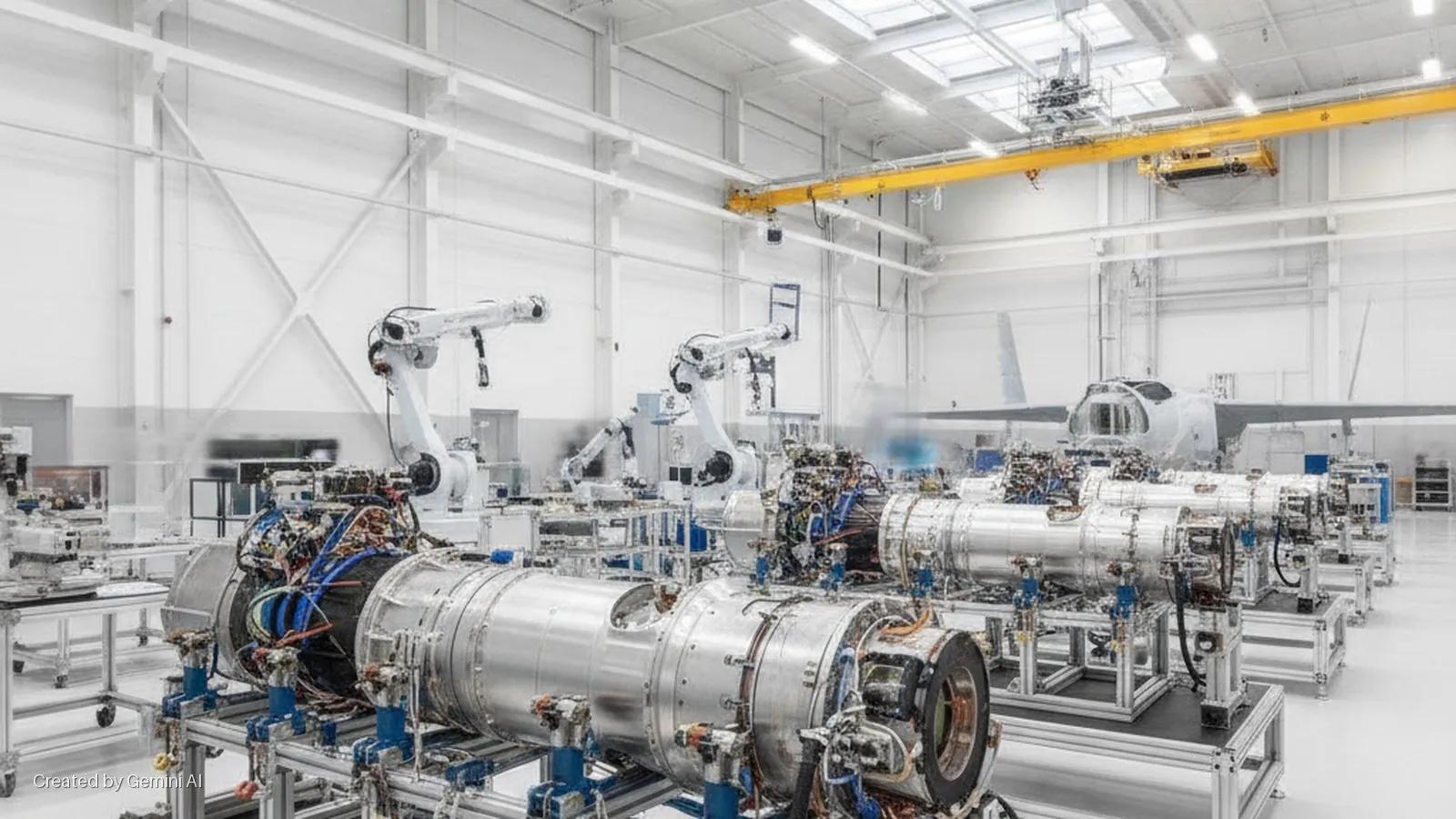
Northrop Grumman has signed two multi-year framework agreements worth more than $3 billion with the US Department of War and Lockheed Martin to accelerate production of two of the West's most operationally critical missile-defence systems: the Patriot Advanced Capability-3 Missile Segment Enhancement (PAC-3 MSE) and the Terminal High Altitude Area Defense (THAAD) interceptor. The scale and duration of the deals signal that the US defence-industrial base is moving from a posture of managed supply to one of deliberate industrial surge, a shift with consequences well beyond the Pentagon procurement cycle.
The larger of the two agreements, valued at $2 billion, covers solid rocket motors and ignition safety devices for the PAC-3 MSE programme. Northrop says the deal will support growth in US Army annual PAC-3 MSE production from roughly 600 units today to thousands in the near term, serving both US forces and allied partners. The second agreement, worth $1 billion over seven years, covers THAAD structural components, interceptor shell cores, aft bulkheads and heat shield assemblies, quadrupling monthly delivery volumes from Northrop's San Diego facility, which has a 50-year history of high-rate aerospace components manufacturing.
Industrial investment underpins the surge
The production uplift rests on more than $2 billion in munitions-related capital expenditure that Northrop has deployed since 2019, of which over $1 billion has gone specifically into solid rocket motor production. The practical output: doubled capacity for tactical solid rocket motors at the Allegany Ballistics Laboratory in West Virginia, a planned tripling of that facility's capability by 2027, and a 25% capacity increase at its Elkton, Maryland plant. The Utah facilities are also doubling throughput.
Ben Davies, corporate vice president at Northrop Grumman, said: "Our long-term investments in breakthrough manufacturing technologies and resilient supply chains let us pivot from steady production to a production surge in record time."
The phrase "record time" carries weight in a sector where lead times for precision munitions components have historically stretched across years. The investments in design-to-production digitisation and in-house propulsion R&D, including Northrop's Solid Motor Annual Rocket Technology Demonstrator programme, are the mechanisms intended to compress that curve.
The convergence read: reshaping allied defence supply chains
The strategic significance here extends beyond a single contractor's order book. PAC-3 MSE and THAAD are not niche US-only systems; they are the backbone of integrated air and missile defence architecture across NATO Europe, the Gulf Cooperation Council and the Indo-Pacific. Germany, Romania, Poland, Saudi Arabia, the UAE, Japan and South Korea all operate or are procuring these platforms. A structural increase in US production capacity therefore directly affects allied force posture, interoperability, and the pace at which front-line partners can reconstitute depleted stockpiles.
This is also a supply-chain restructuring story. The release notes that Northrop is scaling "resilient supply chains" alongside its own facilities, language that reflects broader US policy pressure on prime contractors to onshore or near-shore critical components, reduce single points of failure in propulsion supply lines, and reduce exposure to materials or sub-tiers concentrated in strategically contested geographies. For defence investors, the seven-year framework structure is notable: it provides the kind of revenue visibility that supports further capital expenditure and workforce expansion, and it reduces the stop-start production economics that have historically limited solid rocket motor industrial scale.
The broader capital picture reinforces the momentum. US and European defence primes have seen a sustained re-rating by institutional investors since 2022, with sovereign wealth funds and long-duration institutional allocators increasingly treating defence-industrial capacity as a form of geopolitical infrastructure. Northrop's agreements sit within that trend, representing committed government offtake that de-risks the infrastructure investment thesis. Whether allied governments accelerate their own procurement timelines to absorb the additional capacity, or whether the surge primarily serves US force requirements, will be the defining variable for the programme's second-order economic impact.