
HII expands UUV plant 25% as NATO demand lifts autonomous maritime
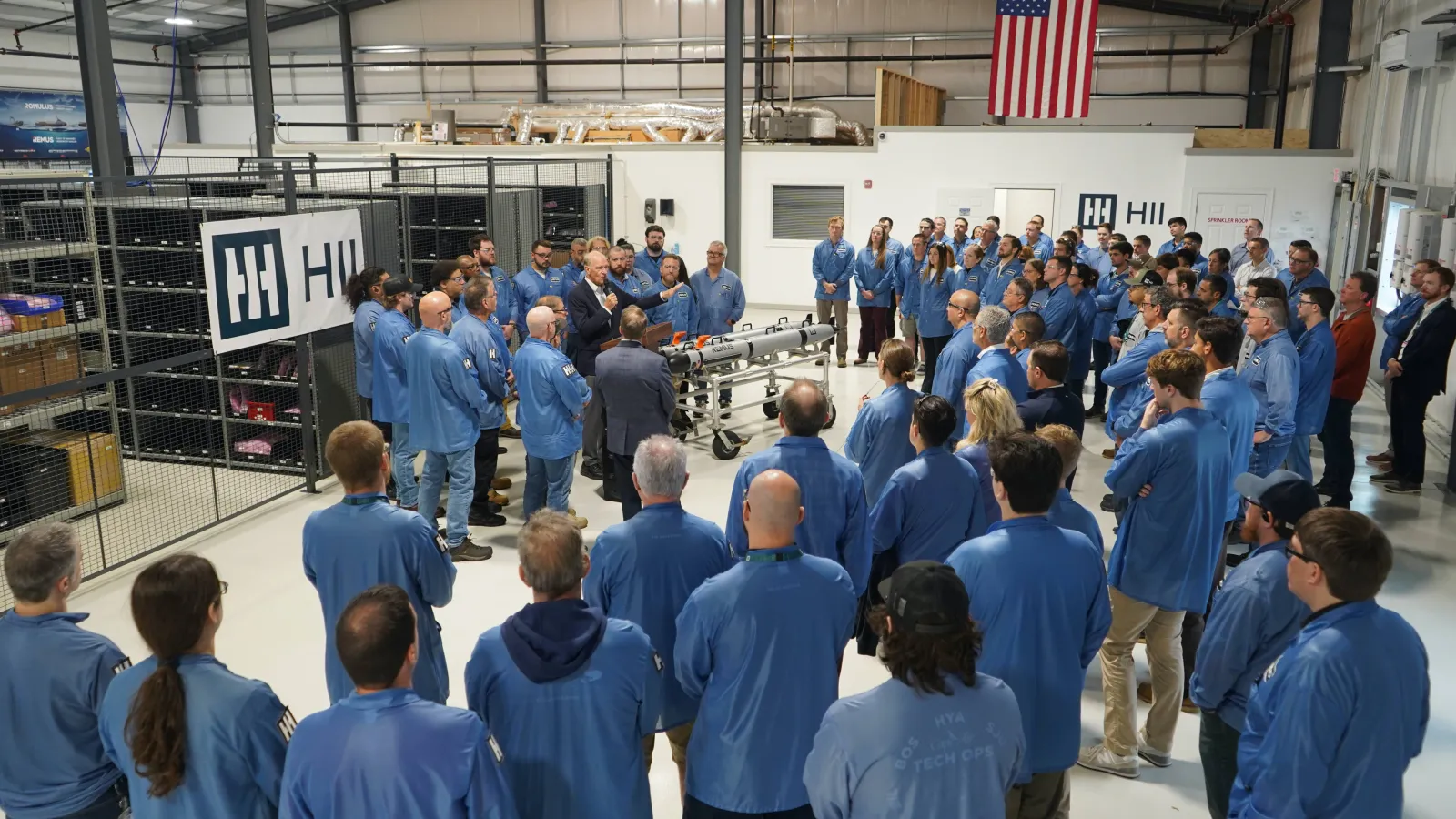
HII, America's largest shipbuilder, has expanded its unmanned systems production campus in Pocasset, Massachusetts, by 25%, adding 10,000 square feet to a facility that now stretches across 50,000 square feet of manufacturing floor. The move is designed to absorb accelerating orders for autonomous underwater vehicles (UUVs) and unmanned surface vessels (USVs), with the US Navy's Lionfish small UUV programme already in production at the site.
The expansion is not purely a capacity story. It marks an inflection in how a legacy defence prime is repositioning around autonomous maritime platforms as a distinct, high-growth product line, rather than an adjunct to its core shipbuilding business.
From hulls to autonomy software
The Pocasset facility produces the REMUS family of UUVs and the ROMULUS USV range, and will now also scale production of the REMUS 620. Alongside hardware, HII is integrating its Odyssey Autonomous Control Solutions (ACS) software stack into the facility's output, supporting simulation, modelling, and multi-domain autonomy across vehicle types. The move towards software-defined maritime autonomy mirrors a broader shift visible across the defence sector: platforms are increasingly valued not for their physical specification alone but for the autonomy layer that governs them.
HII's heritage in this space is substantial. The REMUS family, which marked its 25th anniversary this year, has logged more than 750 deliveries to customers across more than 30 countries, including 14 NATO members. The company reports that over 90% of those systems remain in active service, a retention figure that strengthens its position in follow-on contracts and allied procurement conversations.
The NATO and Blue Economy convergence
The strategic read-across here extends well beyond a Massachusetts ribbon-cutting. NATO's collective pivot toward uncrewed maritime systems, accelerated by lessons from the Black Sea and the renewed focus on undersea infrastructure protection after the Nord Stream incidents, is driving allied procurement timelines faster than traditional shipbuilding cycles allow. HII's ability to ship field-proven UUVs at scale, with an established supply chain and an active Navy production contract, positions it favourably against European and Asian competitors entering the autonomous maritime market.
There is also a civilian convergence angle that deserves attention. The Pocasset facility supports oceanographic research, environmental monitoring and commercial maritime operations alongside its defence output, reflecting a dual-use dynamic that is increasingly attractive to sovereign and institutional capital. The "Blue Economy," a term covering ocean-based economic activity from fisheries to offshore energy and seabed mining, is drawing growing interest from infrastructure investors who see autonomous maritime systems as enabling infrastructure, much as satellite constellations became enabling infrastructure for a range of non-defence applications.
HII's long-standing research partnership with the Woods Hole Oceanographic Institution (WHOI) reinforces this civilian-scientific credibility, giving the company a route into non-defence procurement conversations that pure defence primes cannot easily replicate.
The workforce dimension adds a geopolitical layer. With approximately 300 employees in Pocasset and 50 hires added in 2026 alone, HII is cementing Cape Cod as a concentration point for maritime autonomy engineering talent, at a moment when Western governments are treating skilled advanced-manufacturing employment as a strategic asset in its own right.
The next test for the autonomous maritime sector will be whether allied navies accelerate multi-year procurement frameworks, or continue to fund UUV programmes through slower option-year contracts of the kind awarded to HII by the Navy in July. The pace of that procurement shift will determine how quickly producers like HII can justify further capacity expansion, and whether the Blue Economy's civilian investment thesis catches up with its defence-driven counterpart.