
CSG takes 9.5% stake in MDA Space in defence-to-orbit pivot
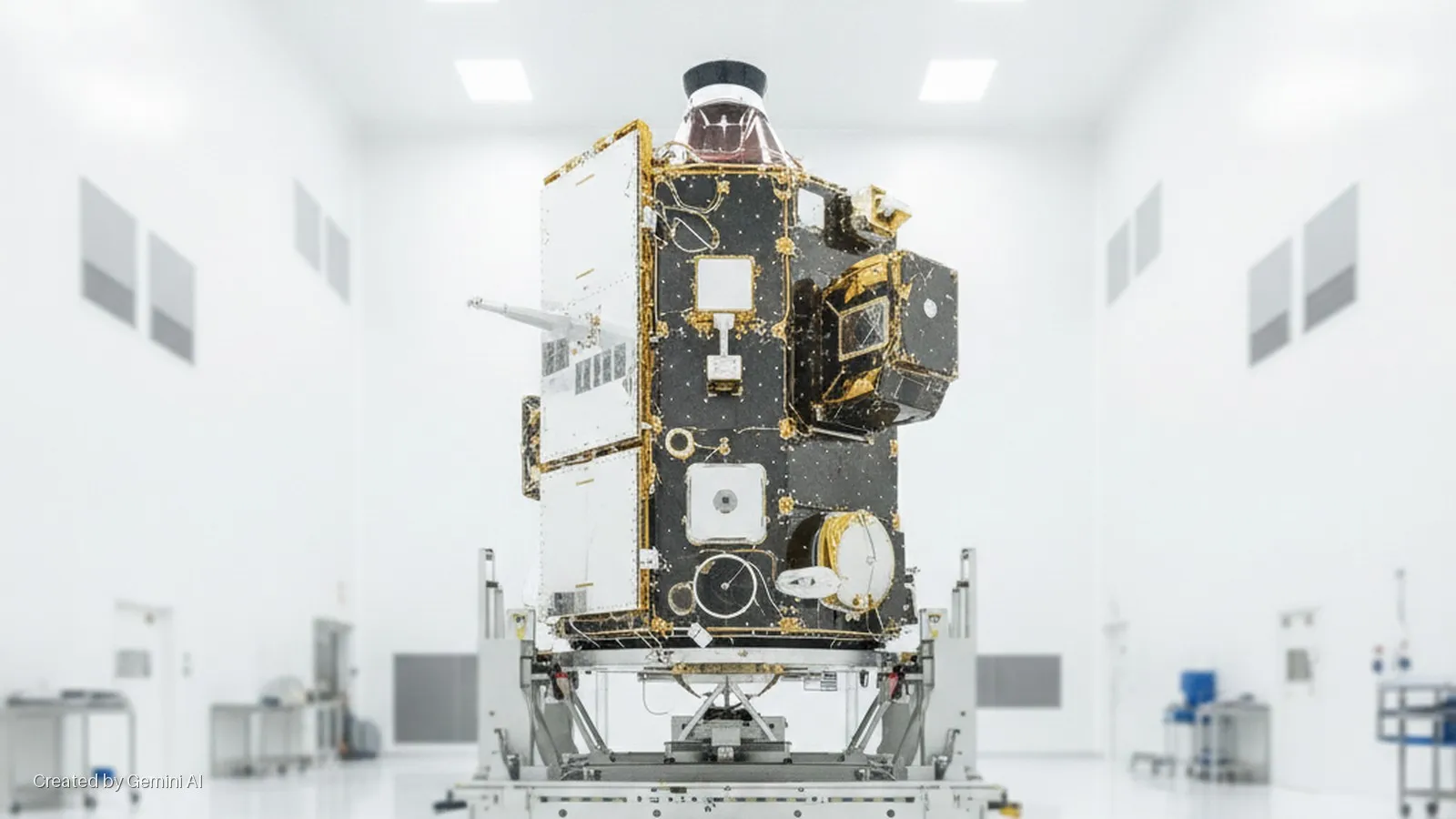
CSG, the global industrial and defence group, has acquired a 9.5% equity position in MDA Space Ltd., the Toronto and New York-listed advanced space technologies firm, making it the Canadian company's largest shareholder. The move marks CSG's formal entry into the space sector and reflects a pattern now visible across European and NATO-aligned defence primes: the systematic extension of terrestrial defence capital into orbital infrastructure and services.
The acquisition follows smaller venture bets CSG had already placed through its Tech Horizons VC fund, including stakes in UK Earth observation startup SatVu and German re-entry logistics firm Atmos Space Cargo. The MDA Space position, held through a dedicated CSG subsidiary, is a materially different commitment in both scale and strategic intent.
From defence industrial base to space economy
MDA Space operates across satellite systems, robotics and space operations, geointelligence, and defence-related applications, a diversification that makes it a rare publicly listed proxy for the full space-economy stack. CSG's chairman, Michal Strnad, was direct about the commercial logic: "We expect that CSG's customers will be able to benefit from a much wider and more complex product offering in an era of rapidly increasing dependency of our security on space applications."
The release cites a World Economic Forum projection that the global space economy will triple to $1.8 trillion by 2035, alongside roughly $74 billion in government space-defence spending recorded in 2025. Those figures, while company-cited, sit within a range corroborated by multiple industry trackers and reflect a genuine structural shift: governments that historically separated civil space budgets from defence procurement are now collapsing the two into sovereign space-capability programmes. NATO's own space policy, accelerated after Russia's 2022 invasion of Ukraine, formalised space as an operational domain, a framing that maps directly onto CSG's hire of Ladislav Stahl, formerly NATO Headquarters' Space Intelligence and Space Security Adviser, as its new Head of Space Strategy and Technology.
Capital, sovereignty and the European angle
The cross-sector read-across here runs beyond aerospace. For investors allocating across deep-tech and defence verticals, CSG's move illustrates how the capital stack for the space economy is maturing: early-stage VC (SatVu, Atmos) is being complemented by strategic anchor stakes in listed mid-caps, a pattern already visible in the US through defence prime involvement in companies such as Planet Labs and Rocket Lab. European capital has lagged the US in this transition; CSG's entry signals that lag may be closing.
The geopolitical framing is equally significant. MDA Space CEO Mike Greenley specifically called out sovereign defence and space investment as the lens through which CSG's capital is welcomed: "As countries around the world look to increase their sovereign defence and space investments, the expansion of MDA Space's global investor network is a strategic tool for continued expansion." The subtext is that a European strategic shareholder strengthens MDA Space's positioning for NATO-allied government contracts that carry implicit or explicit preferences for allied-nation ownership structures.
CSG also announced potential co-investment in European manufacturing or assembly facilities alongside MDA Space, a commitment that, if realised, would extend the orbital supply chain further into continental Europe and deepen the industrial sovereignty argument for allied governments procuring space systems.
The appointment of Cameron McKenzie, a former senior executive at L3Harris's WESCAM business and CAE, as Senior Adviser for Canada underscores that CSG sees the bilateral Canada-Europe defence-industrial corridor as a near-term priority, particularly as Canada expands its own sovereign space-awareness capabilities under NORAD modernisation commitments.
For capital allocators watching the defence-space convergence, the question now is whether CSG's 9.5% stake is a stable anchor position or an opening move toward a deeper industrial merger. The creation of a dedicated internal space team, rather than outsourcing deal-flow to Tech Horizons alone, suggests the latter.