
Dragonfly Energy wins European patent for solvent-free battery tech
Dragonfly Energy Holdings (Nasdaq: DFLI), the Nevada-based lithium battery company best known for its Battle Born Batteries brand, has received a notice of allowance from the European Patent Office covering its dry powder coating process for electrochemical cells. The patent strengthens the company's intellectual property position in solvent-free battery manufacturing and all-solid-state cell development, extending protection that already exists in the United States into one of the world's largest automotive and industrial energy-storage markets.
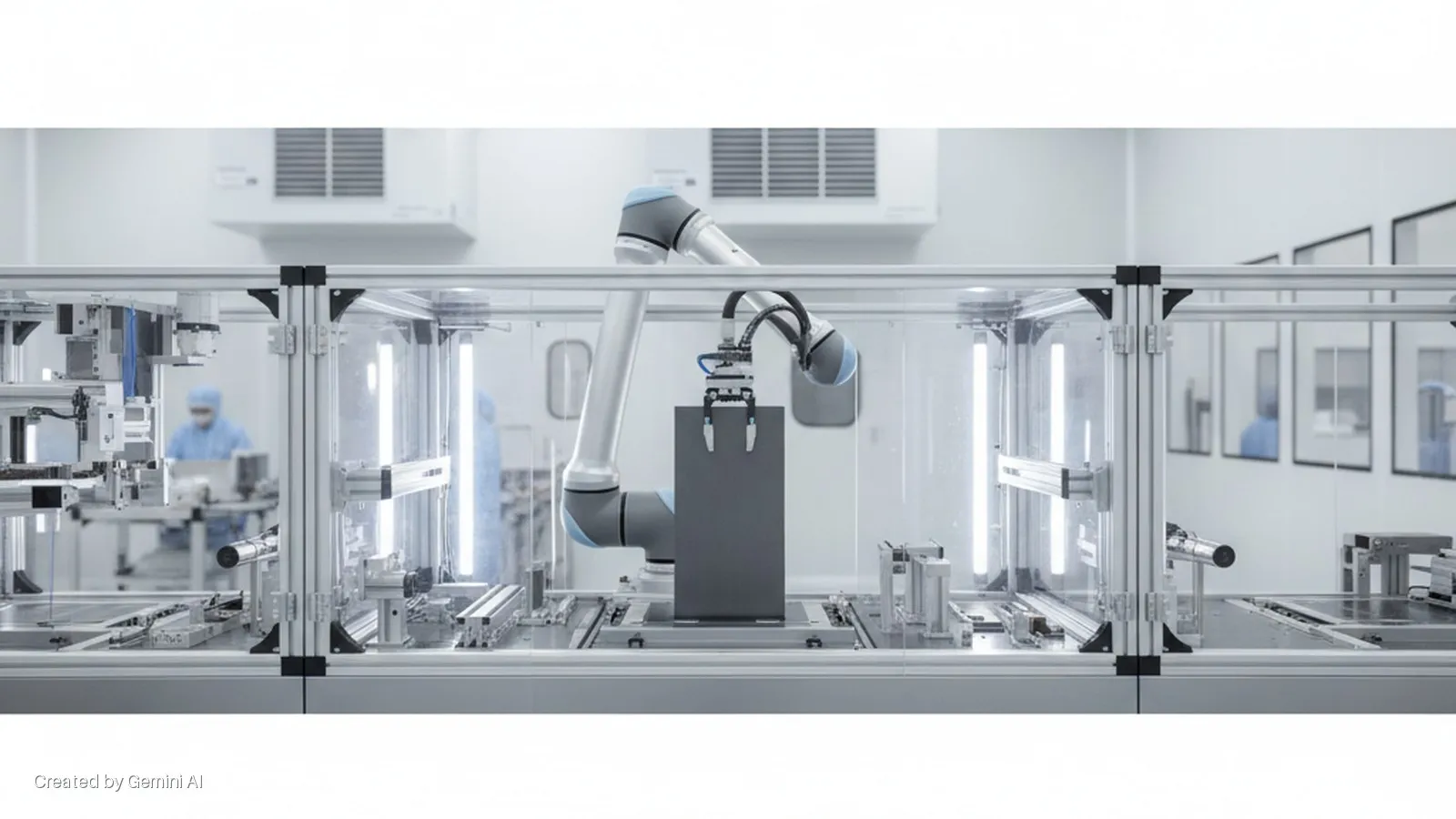
The core process replaces wet-solvent electrode coating, the dominant method in today's lithium-ion gigafactories, with a dry powder technique capable of forming electrode, separator, and solid-state electrolyte layers within a single cell. The company says the platform is chemistry-agnostic, meaning it can support multiple battery formulations rather than locking manufacturing into a single chemistry. The ultimate commercial target is a nonflammable, all-solid-state cell suitable for applications spanning electric vehicles, grid-scale storage, and consumer electronics.
IP as a commercialisation bridgehead
In an industry where manufacturing process IP is as strategically valuable as cell chemistry itself, the European allowance matters beyond a line item in a patent portfolio. Dragonfly's Chief Executive, Dr Denis Phares, framed the move explicitly in commercialisation terms: "As we advance our all-solid-state battery development, we believe securing such patent rights in key markets will strengthen our position for future commercialisation opportunities worldwide."
The timing sits inside a broader race among Western battery developers to establish IP moats before Asian incumbents, led by CATL, Samsung SDI, and Panasonic, scale their own solid-state programmes. Toyota has publicised a 2027–2028 target for solid-state EV cells; QuantumScape and Solid Power have pursued similar dry or quasi-solid processes in the United States. A granted European patent gives Dragonfly a potential licensing lever and a barrier to replication in a jurisdiction where EV battery procurement is increasingly subject to local-content and supply-chain-provenance rules under the EU Battery Regulation.
Where this intersects with the wider energy transition
The macro significance of solvent-free manufacturing extends beyond the cell itself. Conventional wet-electrode processes require large quantities of N-methyl-2-pyrrolidone (NMP), a solvent that demands energy-intensive drying ovens and solvent-recovery systems, adding both capital cost and emissions to the gigafactory footprint. Eliminating that step does not just reduce manufacturing complexity; it materially changes the economics of building new cell capacity outside China, where integrated solvent-supply chains currently favour incumbents.
For cross-sector capital allocators, that is a meaningful signal. Sovereign wealth funds and infrastructure investors that have been directing capital into European battery gigafactories, including the cluster of projects in Germany, Sweden, and the UK supported by state-aid frameworks, are increasingly scrutinising process-technology differentiation as a proxy for long-term cost competitiveness. A company holding enforceable dry-electrode IP in Europe is better positioned to attract licensing partnerships or joint-venture structures with tier-one automotive OEMs seeking to de-risk their cell supply away from Asia.
Dragonfly remains a small-cap player (market capitalisation in the low hundreds of millions of dollars) relative to the capital intensity of gigafactory-scale manufacturing. The patent allowance does not resolve that gap. What it does is establish a defensible IP foundation ahead of any future capital raise, strategic partnership, or licensing negotiation, precisely the sequence that larger deep-tech battery developers have followed before attracting institutional backing. Investors watching the solid-state space should note that the European allowance converts what was previously a geographically limited IP position into a transatlantic one, just as European OEM procurement cycles for post-2030 EV platforms begin to firm up.