
CCC adds Azimuth ADAS calibration data to its repair platform
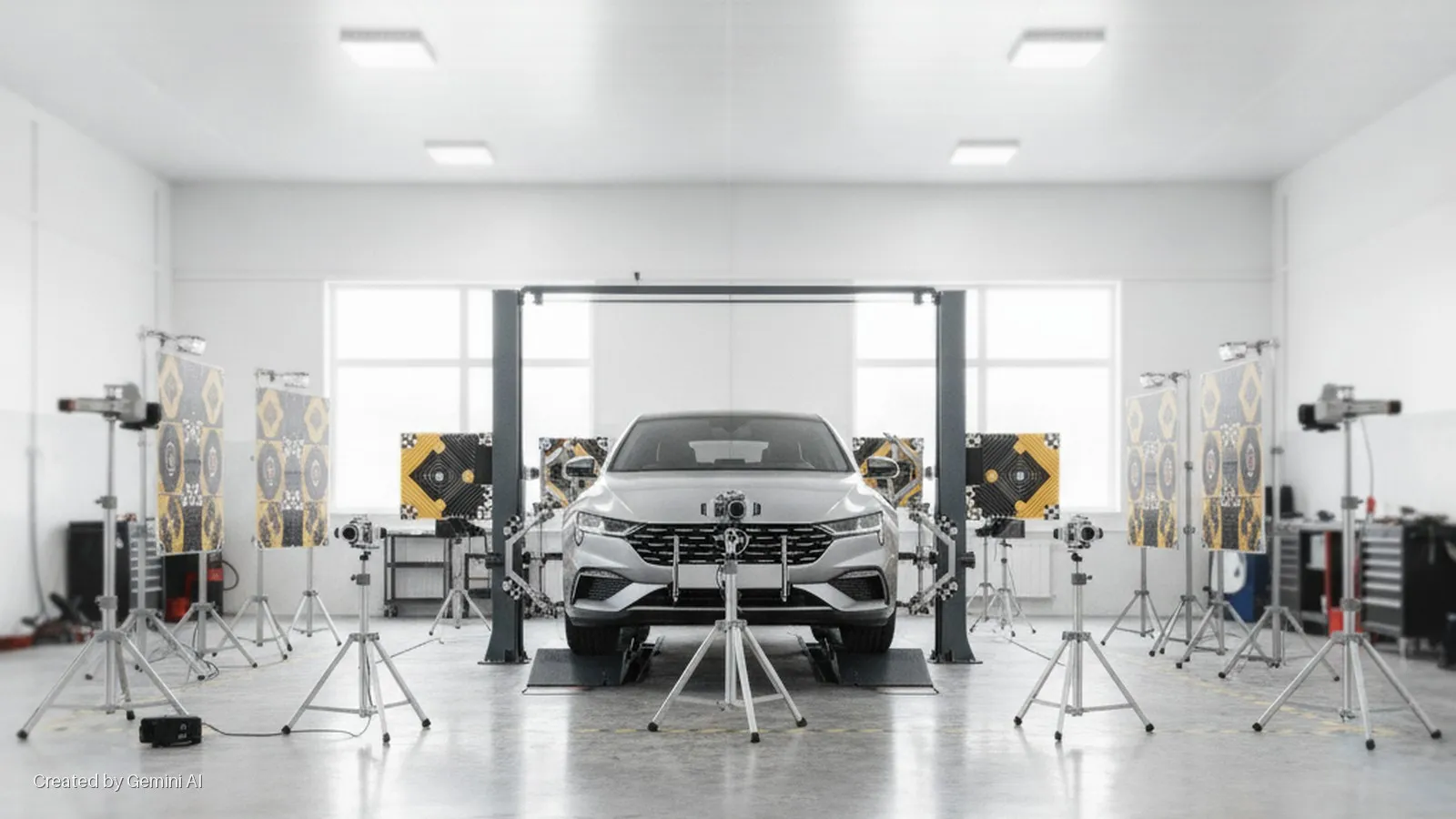
CCC Intelligent Solutions, the NASDAQ-listed SaaS and AI platform connecting more than 35,000 insurers, repairers, and automakers across the US claims economy, has integrated Azimuth Claims Solutions into its CCC ONE repair workflow. The move brings Azimuth's advanced driver assistance system (ADAS) calibration identification and labour-time intelligence directly into the estimating process, removing the need for repairers to switch between separate systems when determining what OEM calibration procedures a vehicle requires.
The integration surfaces Azimuth's recommendations, drawn from OEM procedure databases, vehicle build data, and real-world time studies, at the point where repair estimates are constructed. Repairers can add calibration line items to an estimate without leaving CCC ONE, a step the companies say reduces manual intervention and supports more consistent repair planning across body shops and multi-shop operators (MSOs).
ADAS complexity is rewriting the repair economics
The driver is straightforward: ADAS fitment rates have risen sharply across the passenger-car fleet, and calibration after a collision is now mandatory for systems involving cameras, radar, and lidar. Yet the procedures required vary by make, model, trim level, and even production date. What was once a marginal cost in a collision claim has become a significant and frequently disputed line item, with insurers and repairers often working from incomplete or inconsistent guidance.
"ADAS calibration has become one of the most critical and least standardised components of modern collision repair," said Charles Rich, chief executive of Azimuth Claims Solutions. "By bringing Azimuth's calibration identification engine and labour time intelligence into the CCC ONE platform, CCC is helping deliver the level of transparency, consistency, and workflow support that repairers and insurers expect from a modern, data-driven ecosystem."
CCC's network scale matters here. With claims and repair decisions flowing through CCC ONE at volume across tens of thousands of connected businesses, embedding calibration guidance at that chokepoint gives the integration immediate practical reach, rather than requiring shops to adopt a standalone tool through a separate procurement cycle.
The software-defined vehicle reshaping insurance infrastructure
The broader convergence story sits at the intersection of automotive technology and insurance-technology infrastructure. As vehicles accumulate more software-defined systems, the information asymmetry between OEM engineering data and the collision repair industry widens. Platforms such as CCC ONE are increasingly acting as the middleware layer that translates vehicle-level complexity into insurer-legible, repairer-actionable data.
This dynamic has capital implications beyond the collision sector. Automotive OEMs are investing heavily in over-the-air update architectures and proprietary calibration tooling, creating a structural dependency for insurers on third-party data aggregators who can interpret that complexity at scale. For insurtechs and the broader property-casualty market, the cost of ADAS calibration is already a live variable in claims severity modelling; better data at the point of estimate reduces both cycle time and supplement frequency, two metrics that insurers and their reinsurers watch closely.
CCC describes the Azimuth addition as an expansion of its diagnostics network, signalling that further integrations of this type are part of its platform strategy rather than a one-off. For investors tracking the insurtechs, the more significant question is whether SaaS platforms embedded deeply in claims workflows can convert data network effects into pricing power as vehicle software complexity continues to compound.