
HII delivers REMUS 130 UUV as autonomous undersea systems go allied
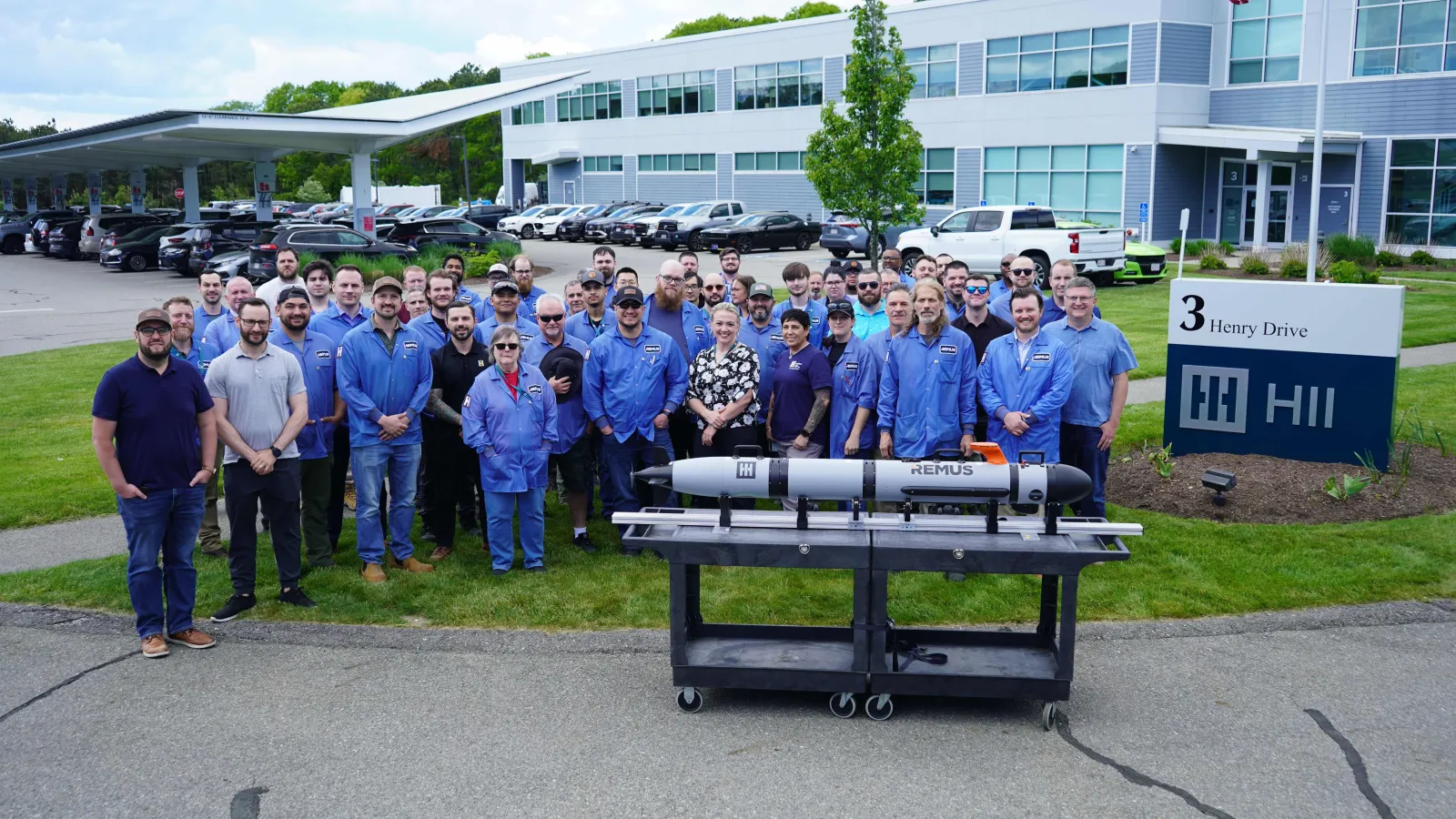
HII, America's largest military shipbuilder, has delivered the first unit of its new REMUS 130 unmanned underwater vehicle (UUV) to an unnamed US ally, marking the commercial debut of a platform the company says is the third generation of the world's most widely deployed autonomous underwater vehicle series. The announcement, made on 16 June 2026, signals a deepening of the transatlantic and Indo-Pacific market for AI-enabled autonomous maritime systems at a moment when allied navies are accelerating investment in undersea robotics to offset crew and cost constraints.
The REMUS 130 is compact enough to be carried and deployed by two people, operates to depths of 100 metres, and carries up to ten hours of endurance per sortie. Field-swappable batteries are designed to maximise operational availability in forward-deployed settings. Crucially, it runs on HII's Odyssey Autonomous Control System, an open-architecture platform already active across more than 30 countries and capable of collaborative autonomy, sensor fusion, and enhanced perception. That software layer is the real strategic asset: it allows navies and commercial operators to integrate third-party payloads rapidly, reducing the proprietary lock-in that has historically inflated lifecycle costs for undersea programmes.
From fleet to franchise
HII has now delivered more than 750 REMUS vehicles worldwide, and 14 NATO navies currently operate the platform. That installed base matters as much as any single hardware spec. Common architecture across the REMUS 130, 300, and 620 means that a nation already operating the larger variants can train operators, share software updates, and swap payloads across the family without rebuilding a logistics chain from scratch. For allied procurement offices wrestling with interoperability mandates under NATO's emerging undersea-domain initiatives, a proven multi-country platform with an open software interface is a structural advantage over newer entrants.
The REMUS 130's listed mission profiles span mine countermeasures, search and rescue, offshore infrastructure inspection, oceanographic research, and environmental monitoring. That breadth is deliberate. Defence budgets are increasingly scrutinised for dual-use credibility: a vehicle that can map a seabed for a government energy regulator on Tuesday and assist a naval mine-hunting exercise on Thursday is easier to justify politically and financially across multiple budget lines.
The convergence angle: autonomy, AI and the undersea economy
The wider story here sits at the intersection of defence autonomy, AI-enabled maritime systems, and the emerging subsea infrastructure economy. The same UUV platforms clearing mines or mapping seabeds for navies are increasingly the tools of choice for offshore wind farm operators inspecting cable arrays, for energy majors monitoring pipeline integrity, and for sovereign hydrographic agencies charting exclusive economic zones. The commercial and defence demand curves are converging on the same hardware and software stack.
That convergence is drawing capital from directions that would have seemed incongruous a decade ago. Private equity and infrastructure funds with energy-transition mandates are backing subsea robotics companies precisely because the inspection and monitoring use case is driven as much by offshore renewables growth as by military procurement cycles. HII's positioning as both the US Navy's largest UUV supplier and a provider to commercial and scientific operators places it at the centre of this dual-demand dynamic.
Geopolitically, the unnamed ally recipient of the first REMUS 130 is itself a signal. Allied UUV procurement has accelerated since 2022, with European NATO members in particular expanding undersea ISR (intelligence, surveillance, and reconnaissance) capability in response to heightened activity in the Baltic and North Sea. The open-architecture Odyssey platform means future software upgrades developed anywhere in the REMUS ecosystem can be distributed fleet-wide, giving allied navies a rolling capability refresh without the traditional hardware replacement cycle.
For cross-sector investors, the most durable read-across is this: the autonomy software layer being refined in undersea defence applications will migrate into the broader ocean economy, just as GPS and satellite imagery migrated from military origins to reshape logistics, agriculture, and financial-market data. The companies that own the operating systems for autonomous maritime platforms today are positioning for a much larger addressable market than the current defence procurement cycle suggests.