
Woodward shifts military flight controls east in US manufacturing pivot
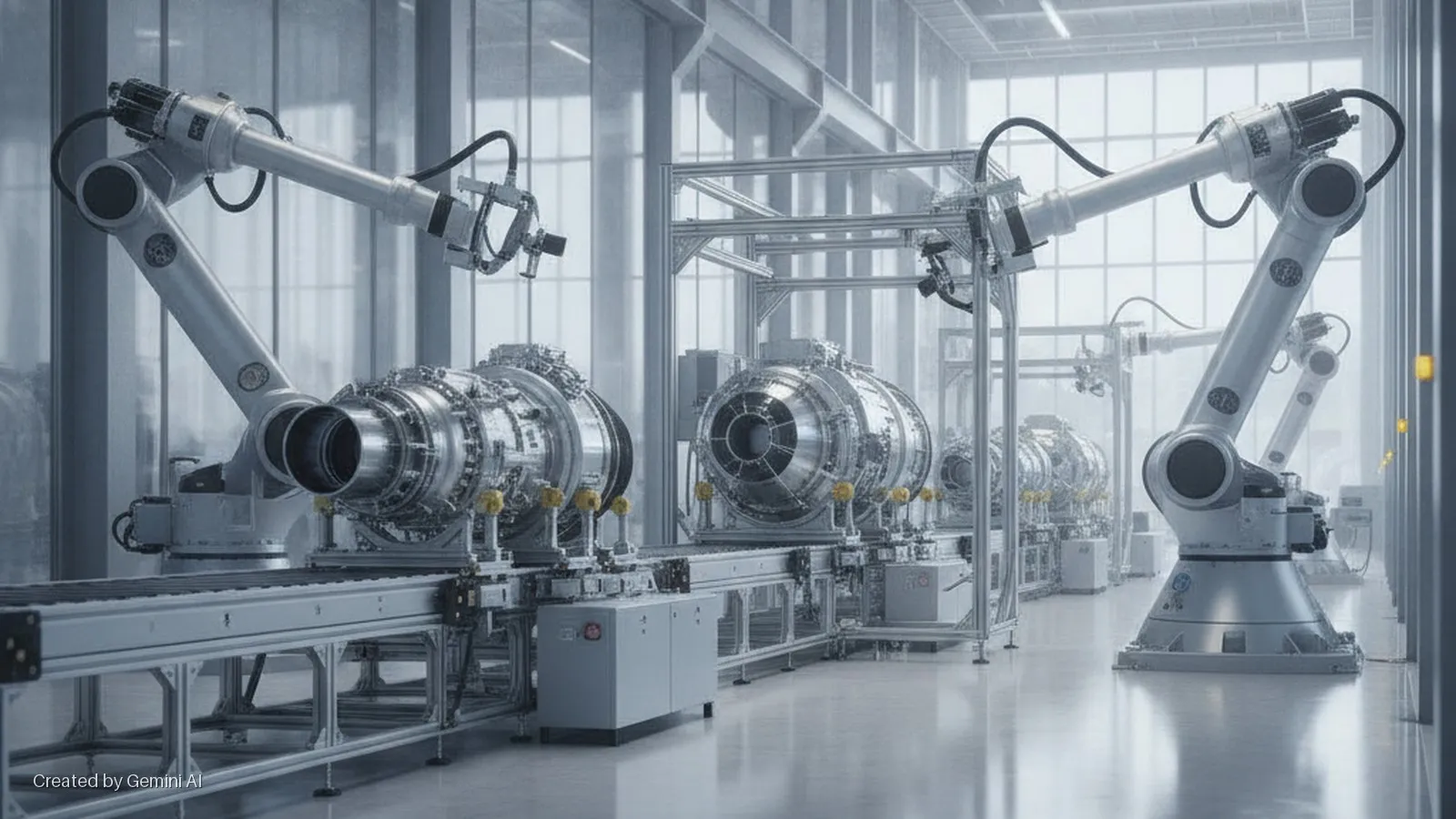
Woodward, Inc. (NASDAQ: WWD), a Fort Collins-based maker of aerospace and industrial control systems, has announced plans to relocate its military fixed-wing and rotorcraft flight control actuation production from Santa Clarita, California, to a new campus under construction in Spartanburg, South Carolina. The transition, expected to conclude by December 2027, will affect around 400 roles at the California site and consolidate a significant portion of the company's military controls output into a single purpose-built facility on the US East Coast.
Separately, Woodward has agreed to sell a legacy portfolio of commercial rotorcraft, land systems, and business jet products that were also manufactured in Santa Clarita, along with the physical campus itself. That divestiture is targeted to close in fiscal year 2027, tidying the company's product line at the same time as it reshapes its geographic footprint.
A strategic concentration in military and commercial aerospace
The Spartanburg facility, described by Woodward as a "world-class aerospace manufacturing campus," is already in advanced construction and is expected to become operational in the summer of 2027. Alongside the transferred military lines, it will produce Airbus A350 spoiler actuation systems, a contract previously disclosed. The concentration of both military and commercial-tier work at a single, new-build site points to a deliberate move toward operational simplification rather than geographic diversification.
Shawn McLevige, President of Woodward's Aerospace segment, framed the decision in explicitly strategic terms: "Moving this production to Spartanburg will help refine our manufacturing footprint to best support our customers and improve our supply chain as we meet increasing demand for industry-leading controls on current and next-generation commercial and military aircraft."
The language around "increasing demand" is notable. Defence procurement across NATO member states has accelerated since 2022, and US-based tier-one aerospace suppliers have been responding to sustained backlogs in both military and commercial aviation. Airbus and Boeing each carry order books stretching beyond a decade, while the Pentagon's sustained investment in next-generation rotorcraft and fixed-wing platforms continues to draw forward production capacity.
The wider US aerospace manufacturing geography
Woodward's eastward shift fits a discernible pattern in US aerospace manufacturing. South Carolina has emerged as a significant hub: Boeing's 787 Dreamliner final assembly line operates in North Charleston, and a cluster of international tier-one suppliers, drawn partly by the state's labour environment and incentive structures, has built out around it. For Woodward, co-locating military and commercial aerospace production in that ecosystem carries supply-chain logic beyond simple cost arithmetic.
The California divestiture also signals a broader question about legacy industrial geography in high-cost US states. As defence and aerospace prime contractors press suppliers for leaner cost structures to absorb their own margin pressure, older multi-product facilities in expensive urban-adjacent locations become harder to justify. The Santa Clarita campus, operational for 17 years under Woodward, represents exactly the kind of inherited footprint that a consolidation cycle tends to rationalise.
For investors tracking the defence-industrial supply chain, Woodward's move is a read-across for other mid-cap aerospace component makers carrying fragmented manufacturing estates. The capital expenditure profile of building or expanding purpose-built facilities is significant in the near term, but the strategic logic of concentrating military-grade production in a modern, qualified facility ahead of expected demand growth is straightforward. The unresolved variable is execution risk: transferring institutional knowledge, tooling qualification, and customer approvals across sites on a compressed timeline is the consistent source of slippage in analogous transitions across the sector.