
Avincis and Bridger deploy Super Scoopers to Portugal
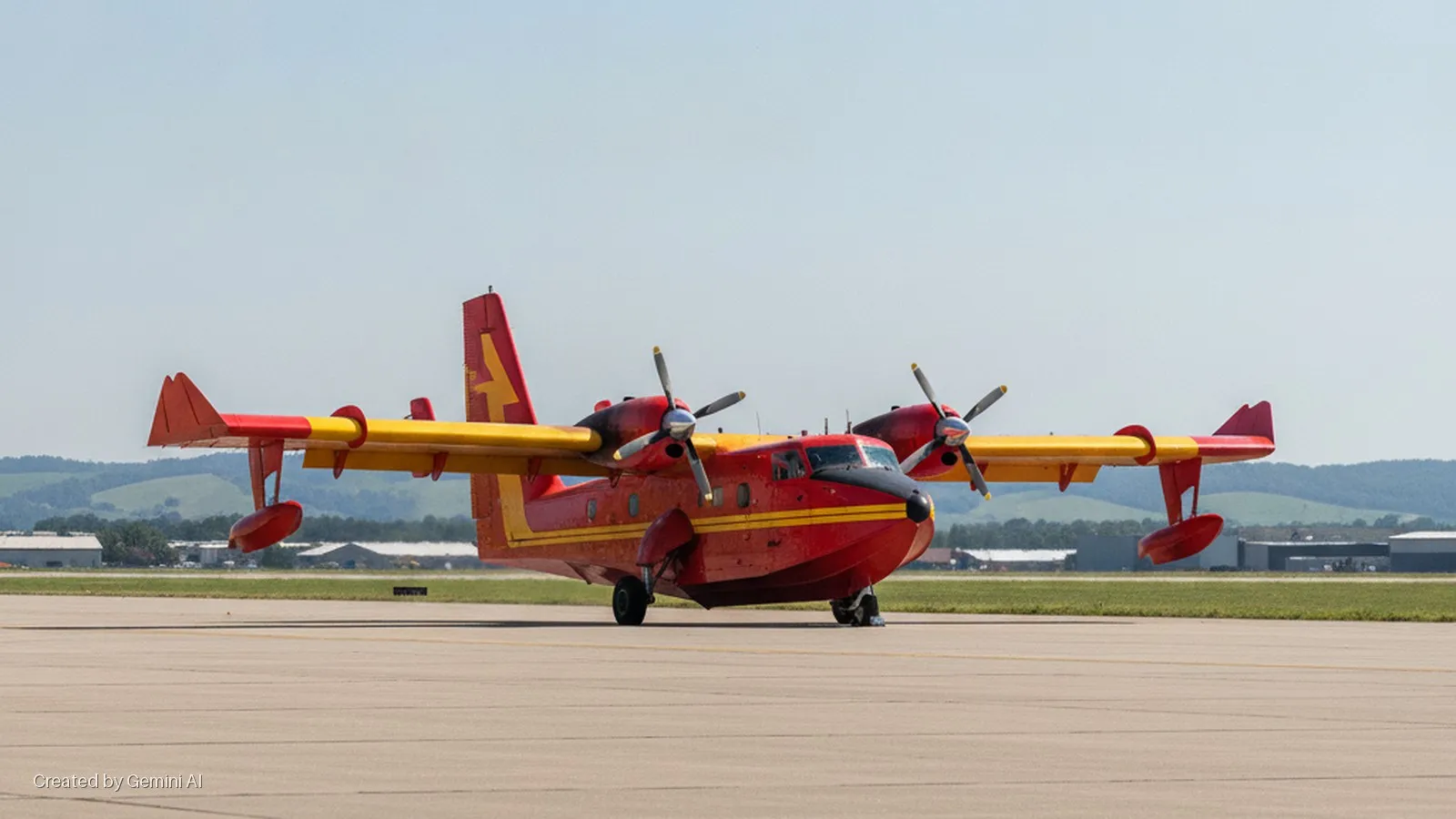
Avincis, Europe's largest emergency aerial services operator, has leased two Super Scooper aircraft from US-listed aerial firefighting company Bridger Aerospace, deploying them immediately to active wildfire suppression operations in Portugal. The agreement, which runs through mid-October, marks Bridger's first revenue-generating activity in Europe and signals a structural shift in how cross-border aviation capacity is being mobilised against an accelerating climate threat.
The aircraft in question are CL-215T amphibious tankers, a proven workhorse of large-scale aerial firefighting. Under the deal, Avincis will operate the Bridger-owned machines alongside its existing fleet of approximately 210 aircraft across Europe, Africa and South America. Portugal was chosen as the deployment zone in direct response to high levels of wildfire activity that Avincis Group CEO John Boag described as "exceptionally high" even by the standards of a season that has barely begun.
Capacity crunch meets climate reality
The operational context matters. Europe's wildfire seasons have been lengthening and intensifying for over a decade, but 2026 is shaping up as a particularly strained year for aerial suppression resources. Demand for specialised firefighting aircraft has consistently outpaced available capacity across Southern Europe, where Portugal, Spain, Italy and Greece each run national aerial fleets that are often committed simultaneously during peak fire conditions.
The Avincis-Bridger deal is a direct response to that supply constraint. Rather than waiting for new aircraft to be procured and certificated through standard national procurement channels, a process that can take years, Avincis has turned to a transatlantic lease to plug the gap within weeks. Bridger Aerospace President and CEO Sam Davis framed the logic simply: "Wildfires do not recognise borders, and neither should the capabilities needed to fight them."
A cross-sector convergence story in the making
For Disrupts readers, the more strategically significant signal is what this deal represents at the intersection of climate adaptation, aviation asset management and public-sector procurement. European governments have historically treated aerial firefighting as a nationally siloed capability, with each country managing its own fleet contracts. The Avincis-Bridger arrangement suggests a different model is emerging: a transnational, commercially operated capacity layer that governments can draw on flexibly, rather than owning and maintaining specialist aircraft year-round.
This has meaningful implications for capital allocation in the aerospace and defence-adjacent services space. As climate-driven demand for emergency aviation grows, investors are beginning to assess aerial firefighting operators less as niche contractors and more as critical infrastructure plays, comparable in their public-sector revenue characteristics to air ambulance or search-and-rescue services. Avincis itself spans all three of those categories, which gives it a natural hedge across different emergency aviation demand curves.
The Bridger side of the equation is also instructive. The company, listed on Nasdaq under the ticker BAER, has positioned itself as a fleet owner willing to deploy assets internationally rather than remaining a purely domestic US Forest Service contractor. Europe's structural capacity deficit, combined with longer fire seasons, gives it a credible growth runway beyond its home market. Whether this first Portuguese deployment converts into a broader European licensing and operating framework will be the metric to watch.
Longer term, the convergence of climate modelling data, real-time satellite fire-detection systems and aerial asset dispatch is creating the conditions for a genuinely integrated wildfire response network across the Atlantic. The aircraft are the visible element; the data infrastructure and cross-border regulatory frameworks needed to make transnational aerial firefighting routine are still being built. That gap, between operational urgency and structural readiness, is where the next round of public and private investment in this space is likely to flow.