
AerCap selects GEnx engines for 15 more Boeing 787s
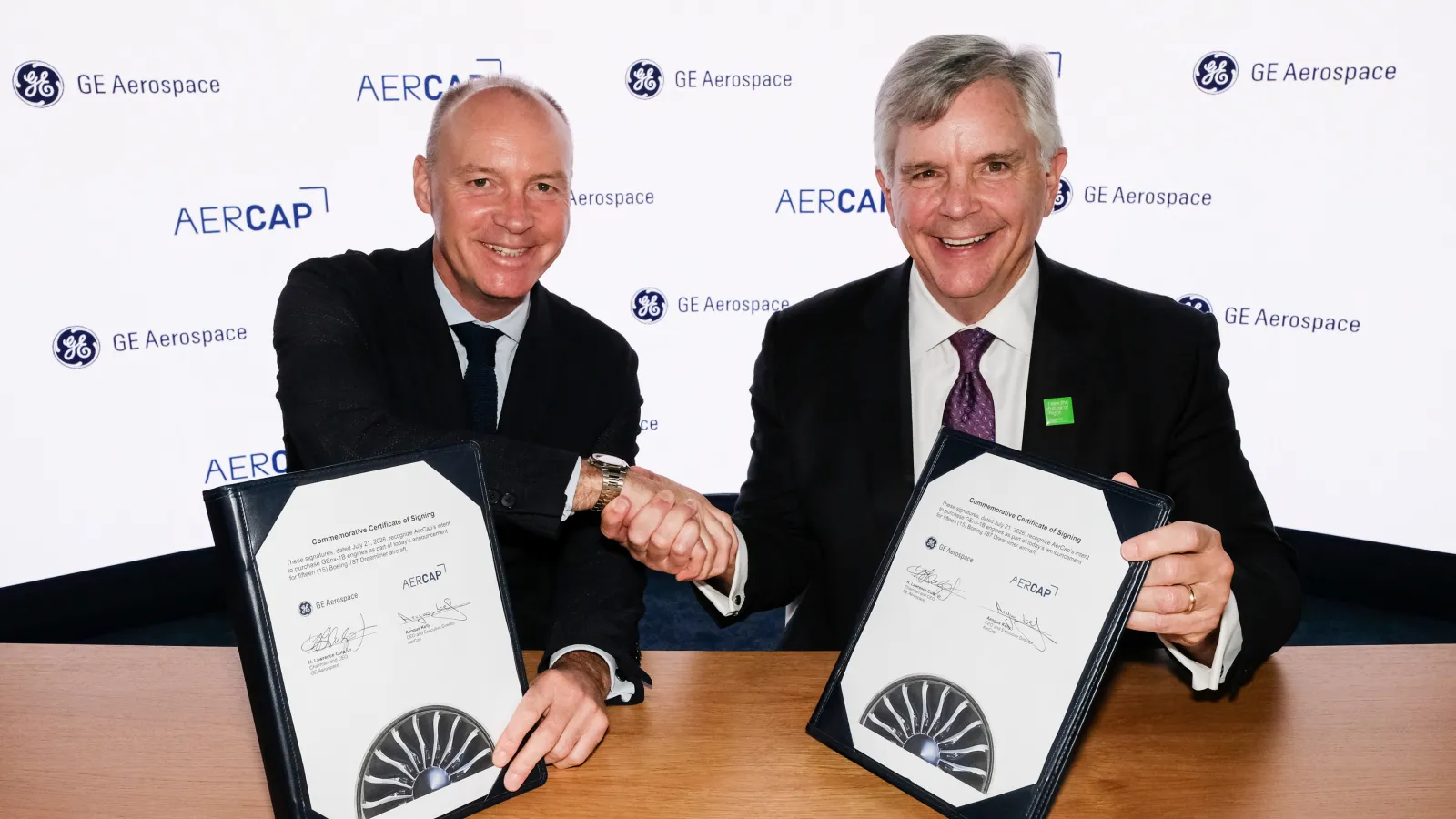
AerCap Holdings, the Dublin-headquartered aircraft leasing giant and the world's largest owner of Boeing 787 Dreamliners, has selected GE Aerospace's GEnx-1B engine to power an additional 15 widebody aircraft. The deal, announced at Farnborough, expands AerCap's GEnx portfolio to approximately 200 owned and on-order engines, consolidating a single-engine strategy across its 787 fleet and deepening one of the most significant lessor-OEM relationships in commercial aviation.
The GEnx-1B has now surpassed 50 million flight hours in just over 14 years, a milestone GE Aerospace says is the fastest accumulation rate for any of its commercial widebody engines. The company cites a 99.98% dispatch reliability rate and claims the engine remains on-wing at roughly three times the rate of competing products, though these figures are company-issued and should be read accordingly. Over the past decade, GE Aerospace has upgraded the engine's high-pressure turbine blades and combustor coating, more than doubling time-on-wing performance in the harsh environments traversed by long-haul 787 routes.
Manufacturing investment signals supply-chain intent
The commercial vote of confidence lands against a backdrop of substantial capital deployment. GE Aerospace is investing more than €110 million across its European manufacturing facilities in 2026 and committing $1 billion across US manufacturing sites and supply chain, with over $100 million specifically earmarked to enhance supplier capabilities for programmes including the GEnx. The stated focus is on expanding production capacity and modernising facilities to meet what the company describes as high and sustained demand.
AerCap's chief executive Aengus Kelly framed the selection in explicitly economic terms: "Our customers need aircraft and engine platforms that deliver reliable performance, compelling economics, and long-term value."
The lessor-OEM dynamic as a capital allocator signal
For cross-sector investors, the more telling signal in this deal is structural rather than technical. AerCap operates as a capital intermediary between aircraft manufacturers and airlines: it absorbs fleet risk, provides financing, and earns returns on long-duration assets. Its engine preferences are therefore a form of institutional capital allocation, not a procurement decision. When the world's largest 787 lessor standardises on a single engine platform and expands that commitment, it is effectively signalling confidence in the residual value of that asset class over a 20-plus year horizon.
That framing connects directly to broader capital flows in aviation infrastructure. The commercial widebody market is experiencing constrained supply from both Boeing and Airbus, creating a secondary dynamic in which lessors with existing fleets and order books hold outsized pricing power. AerCap's 787 concentration, and its continued investment in GEnx standardisation, reinforces its leverage in that environment. For investors tracking aerospace as an asset class rather than just an industry, lessor order patterns carry as much signal as airline traffic forecasts.
GE Aerospace's parallel manufacturing commitment, spanning both European and US facilities, also reflects a broader post-pandemic recalibration of aerospace supply chains. After years in which single-source supplier failures created bottleneck risks across the industry, OEMs are investing upstream to guarantee throughput. The $1 billion US commitment and €110 million European outlay are as much supply-chain resilience plays as capacity expansions.
Convergence read-across: capital, durability and the long-haul economy
The deal sits within a wider convergence of infrastructure capital and long-cycle industrial assets. Sovereign wealth funds and institutional investors, increasingly attracted to physical infrastructure with predictable cash flows, have moved steadily into aviation leasing over the past decade. AerCap itself has attracted institutional ownership from that cohort. The strategic logic mirrors the data-centre and energy-infrastructure plays that dominate cross-sector capital allocation: long-duration assets, contracted revenues, and a structural demand tailwind. For the macro investor, a lessor standardising its engine base is a de-risking move that protects the residual values underwriting the entire financing stack.