
BlackVe lands $1.5m state backing to scale spacecraft plant in NM
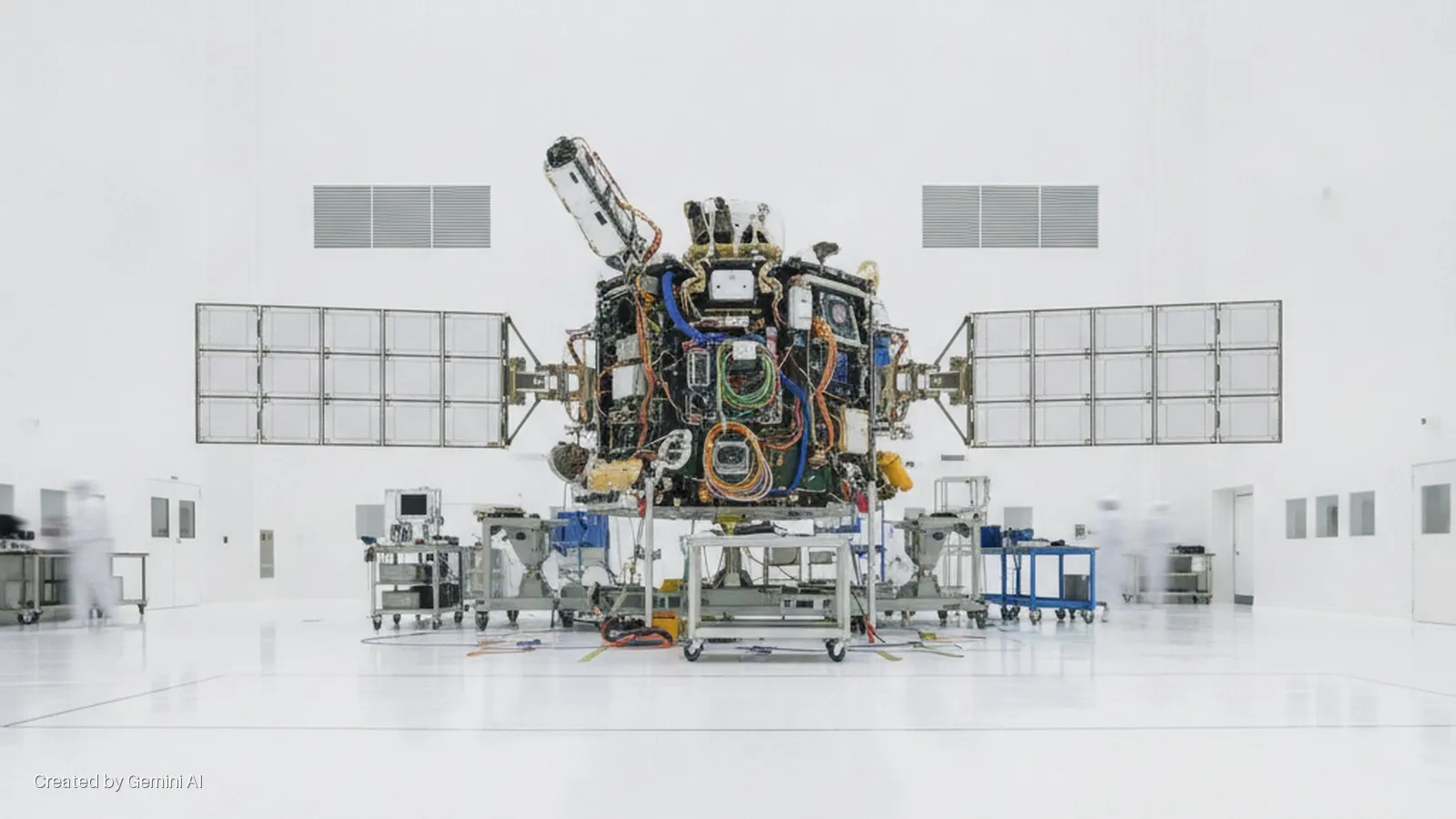
BlackVe Inc., a defence and space technology company founded in January 2024, has secured more than $1.5 million in combined state and city funding to expand its Albuquerque headquarters and build a 50,000-square-foot satellite manufacturing facility. The deal, structured through New Mexico's Local Economic Development Act fund and a 20-year Industrial Revenue Bond from the City of Albuquerque, is projected to create 152 high-paying jobs over a decade and generate more than $228 million in total economic impact for the state.
The investment is conditional and performance-linked: funds will be disbursed as BlackVe meets construction and hiring benchmarks, with the city acting as fiscal agent. The company has also been awarded up to $295,000 through New Mexico's Job Training Incentive Programme, which will immediately fund the hiring and training of nine employees at an average hourly wage of $57, with the state reimbursing at least 50% of wages during a training period of up to six months.
Spacecraft manufacturing as sovereign industrial strategy
BlackVe's pitch centres on applying advanced production technologies to shorten the design, build and operations cycle for multi-mission spacecraft. The company's CEO, Dr Peter Wegner, described the Albuquerque expansion as "not just about building advanced spacecraft" but about "creating high-quality STEM careers for New Mexicans and inspiring the next generation of home-grown innovators."
The state-backed structure of this deal reflects a broader pattern in US space-industrial policy. Rather than waiting for federal procurement contracts to trickle down, states are increasingly using economic development instruments, revenue bonds, wage-subsidy programmes, LEDA-style funds, to attract and anchor sovereign-adjacent manufacturing capacity. New Mexico has a particularly explicit rationale: the state hosts Kirtland Air Force Base, Sandia National Laboratories and Spaceport America, giving it infrastructure that defence-space crossover companies like BlackVe can plug into immediately.
Convergence: defence, space and the talent race
The cross-sector dimension here is less about technology convergence and more about capital and talent competition. The CHIPS Act and the broader US industrial-policy moment have conditioned state governments to treat advanced manufacturing, whether in semiconductors, batteries or spacecraft, as a strategic asset worth subsidising directly. New Mexico's approach to BlackVe mirrors the logic applied to semiconductor fab recruitment in Arizona and Ohio: use public-balance-sheet instruments to de-risk private capital commitments and lock in supply-chain geography.
For investors tracking the commercial space economy, the BlackVe deal is a small but pointed data point. The global satellite manufacturing and launch services market is expanding rapidly, driven by demand for low-Earth-orbit connectivity, defence resilience and Earth-observation analytics. The entry of well-capitalised primes alongside a new cohort of agile startups is compressing production timelines and forcing a rethink of where spacecraft get built. States that can offer a combination of defence-adjacent infrastructure, trained STEM workforces and flexible public financing are positioning themselves as the de facto home of next-generation spacecraft production.
The talent angle is arguably the sharpest convergence signal in this announcement. The JTIP wage-subsidy mechanism is explicitly designed to close the gap between available local labour and the specialist skills required for satellite manufacturing. As competition for aerospace and defence engineering talent intensifies across the US Sun Belt, driven simultaneously by SpaceX's Texas operations, Boeing's ongoing restructuring and the rapid growth of defence-space primes, states willing to co-fund training pipelines gain a structural advantage. New Mexico is betting that early-stage investment in a company like BlackVe, while headcount is still in double digits, yields a far higher return on talent-infrastructure spend than competing for already-scaled operations.
Whether BlackVe can grow into the $228 million economic-impact projection over ten years will depend on its ability to win programme contracts, scale production and navigate a competitive multi-mission spacecraft market that includes established names and well-funded new entrants. For now, the Albuquerque deal illustrates how the space economy's growth is increasingly being shaped not just by venture capital or federal procurement, but by the quieter, performance-linked instruments of US state industrial policy.