
Forge Nano hits NASDAQ as ALD tech targets chips and defence
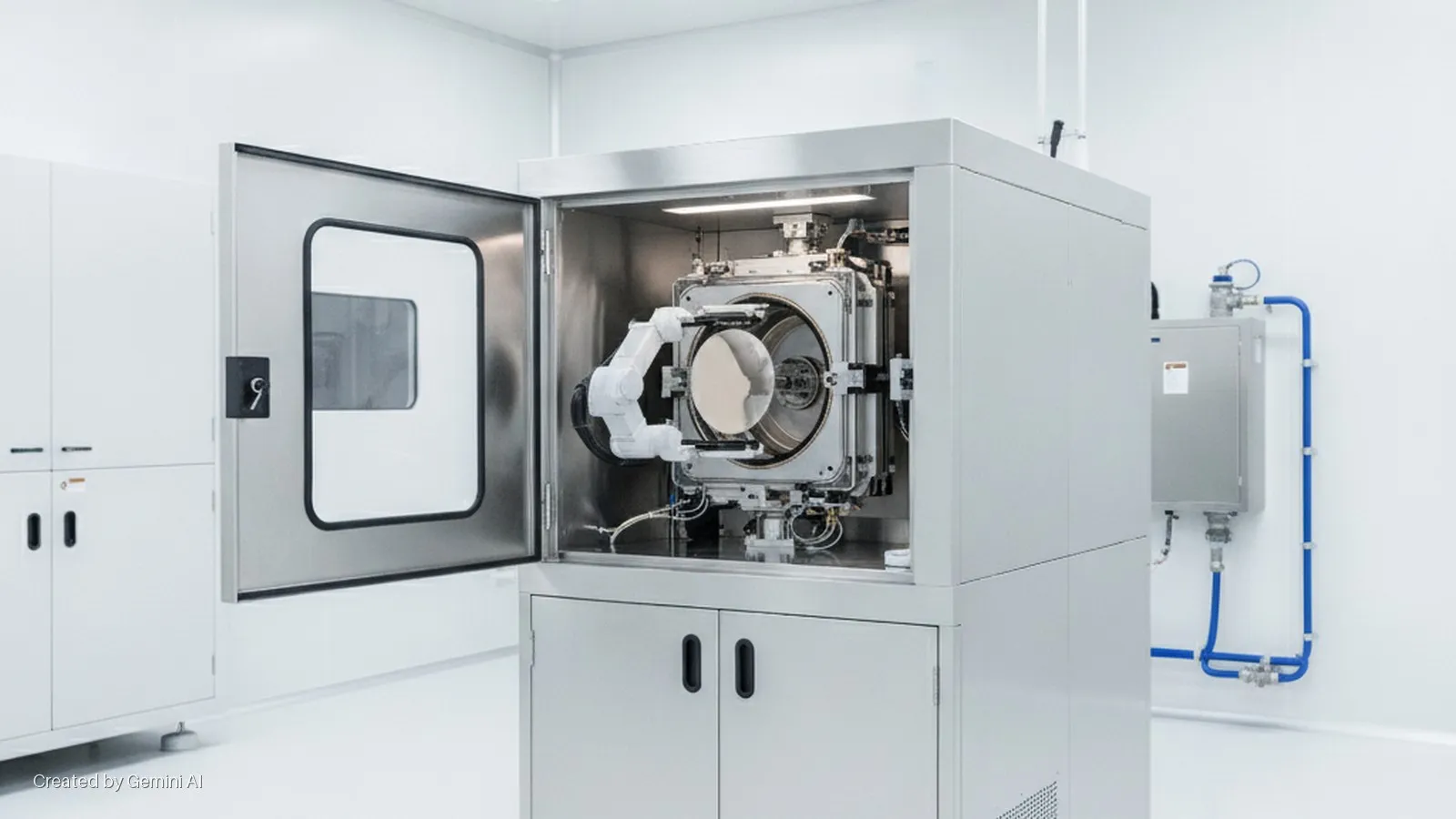
Forge Nano, a Denver-based advanced materials company, began trading on NASDAQ under the ticker "NANO" on 22 October 2026, completing a business combination with Archimedes Tech SPAC Partners II. The listing is notable not just as a capital event but as a signal that atomic-layer deposition (ALD), a precision nanoscale coating process long confined to research and niche manufacturing, is now positioned as infrastructure for two of the most strategically contested technology stacks of the decade: AI-era semiconductor fabrication and defence-grade energy storage.
Forge Nano's core product, Atomic Armor, applies nanometre-thin coatings to materials surfaces, improving durability, conductivity, and performance at a level conventional manufacturing cannot replicate. The company says it has demonstrated 1,000:1 high-aspect-ratio coatings on customer wafers, a benchmark relevant to the most advanced chip architectures now in production or development. Separately, it has broken ground on a battery gigafactory in North Carolina and has expanded a strategic relationship with Samsung SDI, the South Korean battery materials giant, alongside a joint development agreement with Swedish pharmaceutical firm Nanexa.
Semiconductor and defence: two supply chains, one coating platform
The dual-market positioning is what elevates this listing beyond a routine SPAC exit. On the semiconductor side, Forge Nano has expanded its manufacturing footprint in Taiwan, situating itself within the dense ecosystem around TSMC and its tier-one suppliers at precisely the moment that next-generation chip architectures demand ever-finer materials control. On the defence side, the North Carolina gigafactory targets battery applications for military platforms, a segment that has attracted significant US government attention as electrification of defence logistics becomes a procurement priority.
Chief executive Paul Lichty framed the listing in explicitly industrial terms: "Today, that technology is moving into commercial semiconductor manufacturing, advanced batteries and other critical applications. Access to the public markets gives us an opportunity to accelerate that work and continue scaling an American advanced manufacturing company built for the industries that will define the next generation."
Convergence capital and the re-shoring angle
The broader context matters for cross-sector investors. ALD technology sits at a convergence point that few public companies currently occupy: it is simultaneously a semiconductor equipment play, a defence supply-chain asset, and, via the Nanexa partnership, a potential input into pharmaceutical drug-delivery coatings. That range of addressable markets makes Forge Nano an unusual listing at a moment when capital allocators are actively seeking assets that straddle the AI infrastructure build-out and the physical re-shoring of advanced manufacturing in the US and allied nations.
The SPAC route, via Archimedes II, reflects the continued utility of blank-cheque vehicles for deep-tech companies whose revenue timelines do not fit the traditional IPO window. BTIG and Cohen and Company Capital Markets served as lead capital markets advisors, with PIPE (private investment in public equity) placements supplementing the transaction.
The second-order question for investors is whether Forge Nano's Taiwan presence becomes a geopolitical liability or an asset. As the US tightens export controls on advanced chip-manufacturing equipment and allies negotiate access frameworks, a US-headquartered ALD supplier with a Taiwan footprint is positioned both to benefit from friend-shoring demand and to face compliance scrutiny. How the company navigates dual-use classification of its coating technology for defence battery versus commercial semiconductor customers may be the most consequential regulatory question it faces as a public company.