
Signature Aviation and UrbanV formalise US vertiport network JV
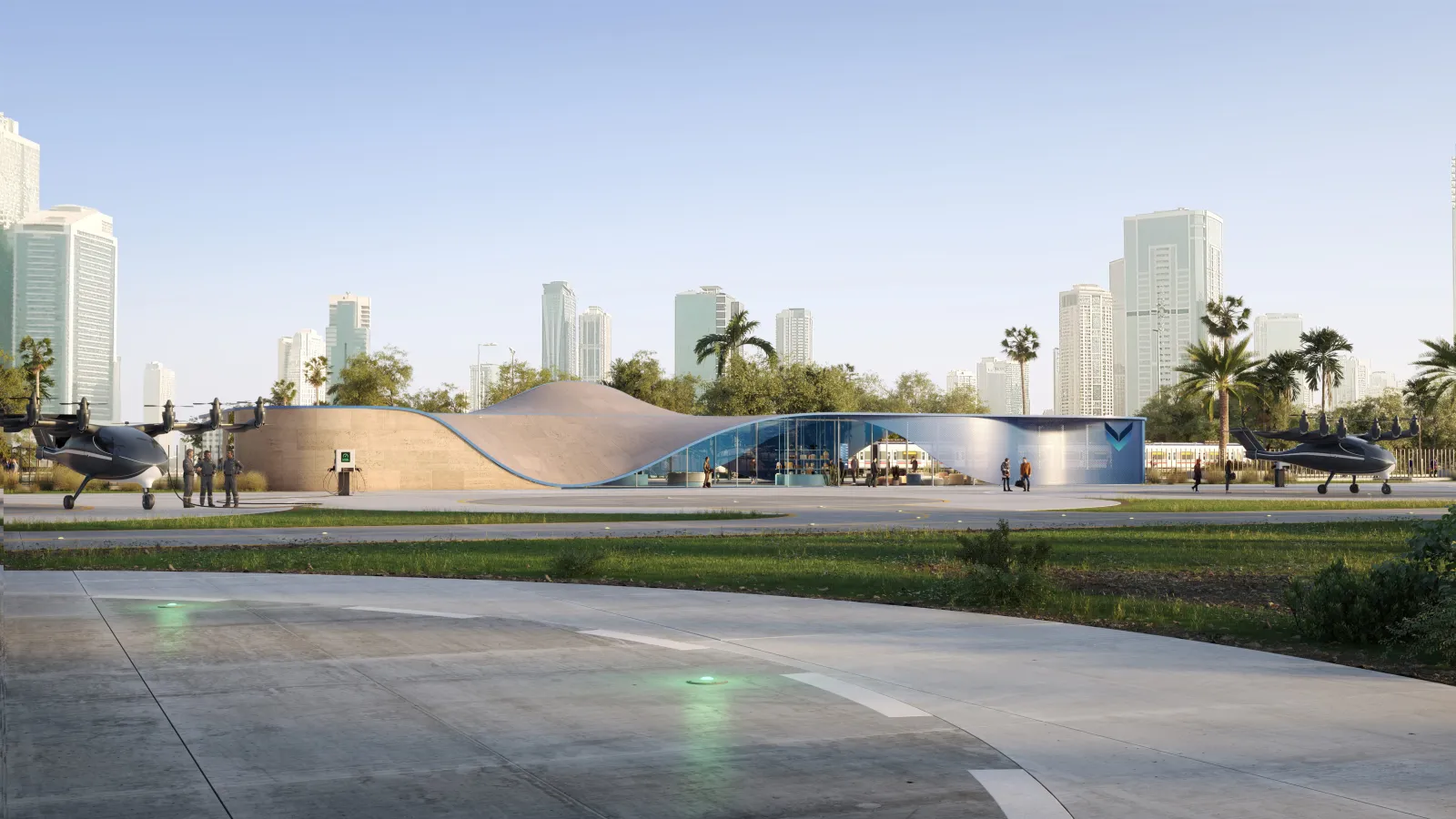
Signature Aviation and Italian AAM specialist UrbanV have formally launched Signature UrbanV Alliance (SUVA), a US joint venture first flagged in June 2025 and unveiled at NBAA-BACE 2026 in Orlando. The venture will develop and operate a connected network of Advanced Air Mobility infrastructure across the United States, using Signature's existing private aviation terminals as anchor nodes before expanding into purpose-built vertiports in urban and regional locations.
The timing is deliberate. SUVA is positioning itself ahead of large-scale commercial eVTOL operations rather than reacting to demand, a capital discipline that distinguishes network-first infrastructure plays from the single-site vertiport projects that have struggled to attract consistent aircraft operators. By plugging into Signature's more than 200 fixed-base operator (FBO) terminals in 27 countries, SUVA gains immediate access to established charging, handling, and guest-services infrastructure, lowering the marginal cost of early deployments.
A platform model, not a single-operator bet
Critically, SUVA is being structured as a multi-operator, multi-aircraft platform rather than an exclusive infrastructure partner to any single eVTOL manufacturer. That positioning mirrors the logic of the mobile telecoms tower model: own the infrastructure, remain agnostic to which handsets run on it, and collect utilisation fees across the whole ecosystem. For aircraft makers such as Joby Aviation, Archer, or Lilium's successor entities, a common infrastructure standard removes one significant barrier to route expansion without requiring each to build proprietary ground networks.
"Advanced Air Mobility will not be enabled by individual sites alone," said Massimiliano Pane, Executive Director at UrbanV. "It will require connected infrastructure that is ready ahead of large-scale commercial operations and links airports with the places people want to reach."
SUVA will engage airports, municipalities, real-estate owners, and regulatory bodies to identify priority deployment corridors, assess demand density, and develop the technical and commercial frameworks required for each market. The involvement of real-estate partners is significant: vertiports in dense urban cores require either rooftop integration or ground-level plots, both of which sit at the intersection of property development economics and aviation regulation, a combination that has slowed competing projects in London, Dubai, and New York.
Convergence capital and the infrastructure gap
The broader AAM infrastructure market has attracted significant attention but uneven capital. Dedicated vertiport developers including Skyports and Ferrovial's Vertiport have raised project finance in Europe, while US-side build-out has lagged behind the pace of aircraft certification progress at the FAA. SUVA's formation signals that conventional aviation incumbents, rather than pure-play startups, may ultimately anchor the US ground network, using existing balance sheets and real-estate footprints to de-risk early deployment.
For cross-sector investors tracking both aviation and property, the SUVA structure is notable. Signature's existing 16 million square feet of hangar and office real estate, all reportedly powered by green energy, provides a ready-made sustainability credential that could prove relevant as ESG-aligned infrastructure funds assess exposure to AAM. The sustainable aviation fuel (SAF) distribution operation Signature already runs adds a further energy-transition dimension: a vertiport network built on existing SAF-capable terminals positions SUVA to serve both battery-electric and hydrogen-electric aircraft architectures as the technology matures.
The immediate test will be whether SUVA can secure binding commitments from aircraft operators and municipalities before rival infrastructure consortia lock up the highest-demand corridors. With FAA eVTOL type certifications for leading manufacturers expected to crystallise across 2027 and 2028, the window for infrastructure pre-positioning is narrowing. SUVA's network-first, platform-agnostic model gives it structural advantages, but execution pace in US real-estate permitting and airport authority negotiations will determine whether the joint venture converts its early-mover positioning into durable market share.