
Embraer's 2,000th E-Jet marks regional aviation's global reach
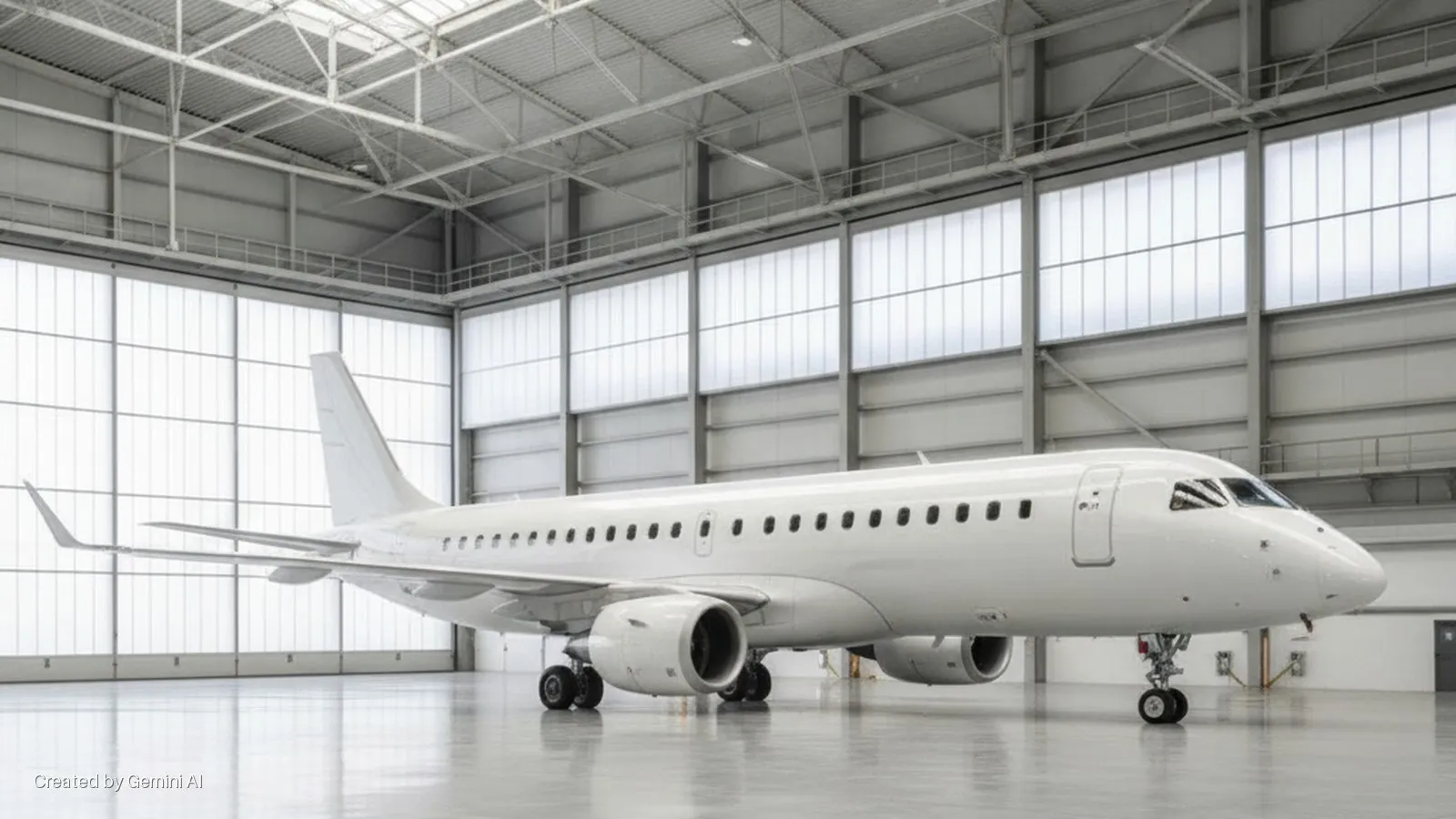
Embraer has delivered its 2,000th E-Jet, handing an E195-E2 to Brazilian carrier Azul Linhas Aéreas on 2 September 2026 at a ceremony in São José dos Campos. The milestone places the E-Jets family alongside the world's two other dominant commercial jet programmes and marks the culmination of more than two decades of production that began with the E170's entry into service in 2004. For a manufacturer headquartered in an emerging market, the achievement is a significant data point in the ongoing redistribution of aerospace industrial capacity away from its traditional North Atlantic axis.
The E-Jets fleet now serves more than 90 airlines across over 60 countries, has accumulated approximately 48 million flight hours and has carried more than 2.85 billion passengers worldwide. Azul itself has operated more than 140 E-Jets since launching services in December 2008 and received its 50th E2-generation aircraft as part of this delivery. The airline was the launch customer for the E195-E2, taking first delivery in 2019, making the relationship between the two Brazilian companies a case study in how domestic partnerships can underpin a global product line.
Regional aviation as a strategic asset
"As one of the world's three most successful commercial jet programmes, the E-Jets family has played a vital role in connecting communities, opening new markets, and creating sustainable growth opportunities for airlines," said Arjan Meijer, President and CEO of Embraer Commercial Aviation.
The strategic significance of the E-Jets programme extends well beyond unit counts. The aircraft occupies the 70-to-150-seat small narrowbody segment, a tier that sits below the volume duopoly of Airbus and Boeing but above the turboprop market. That positioning has allowed Embraer to carve out routes and frequency models that the A220 and 737-700 do not serve economically, particularly in Latin America, Africa and Southeast Asia, where thin-route network economics still dominate. The programme's durability across two generations of airframe suggests the segment is structurally resilient rather than a niche awaiting displacement.
Convergence context: aerospace, capital and the emerging-market industrial shift
For cross-sector investors, the milestone carries a subtler signal. Embraer is not merely an aircraft manufacturer; it is Brazil's largest exporter of high-value manufactured goods and a bellwether for South American industrial policy. Its continued success in commercial aviation sits alongside a growing defence and security portfolio, and the company has active programmes in urban air mobility and agricultural aviation. This breadth of segments means that capital flows into Embraer touch multiple verticals simultaneously, from commercial aerospace procurement cycles to sovereign defence budgets in Latin America and beyond.
More broadly, the E-Jets story illustrates a structural pattern that macro investors have begun tracking carefully: the gradual internationalisation of aerospace supply chains and the rise of non-Western original equipment manufacturers with genuine global market share. Embraer's trajectory mirrors, in a different industrial context, the kind of strategic industrial diversification that sovereign wealth funds in the Gulf and Asia have been funding through direct stakes in aerospace maintenance, repair and overhaul facilities and component manufacturing. As decarbonisation mandates tighten and next-generation propulsion architectures require fresh capital partnerships, Embraer's established global operator base and its relationships with carriers across the developing world position it as a potential convergence point between traditional aerospace procurement and the emerging sustainable aviation fuels and hybrid-electric propulsion investment landscape.
The next inflection point for the programme is likely to be Embraer's positioning on future propulsion. The E2 generation already offers meaningful fuel efficiency improvements over first-generation E-Jets, but the industry's trajectory toward net-zero targets by 2050 will require a further generational step. Whether Embraer pursues that through an independent next-generation programme, a joint venture with an engine manufacturer, or a deeper alignment with a sustainability-focused capital partner will be one of the more consequential strategic decisions in the small narrowbody segment over the next five years.