
Einride and Lidl deploy first cab-less Level 4 truck on German roads
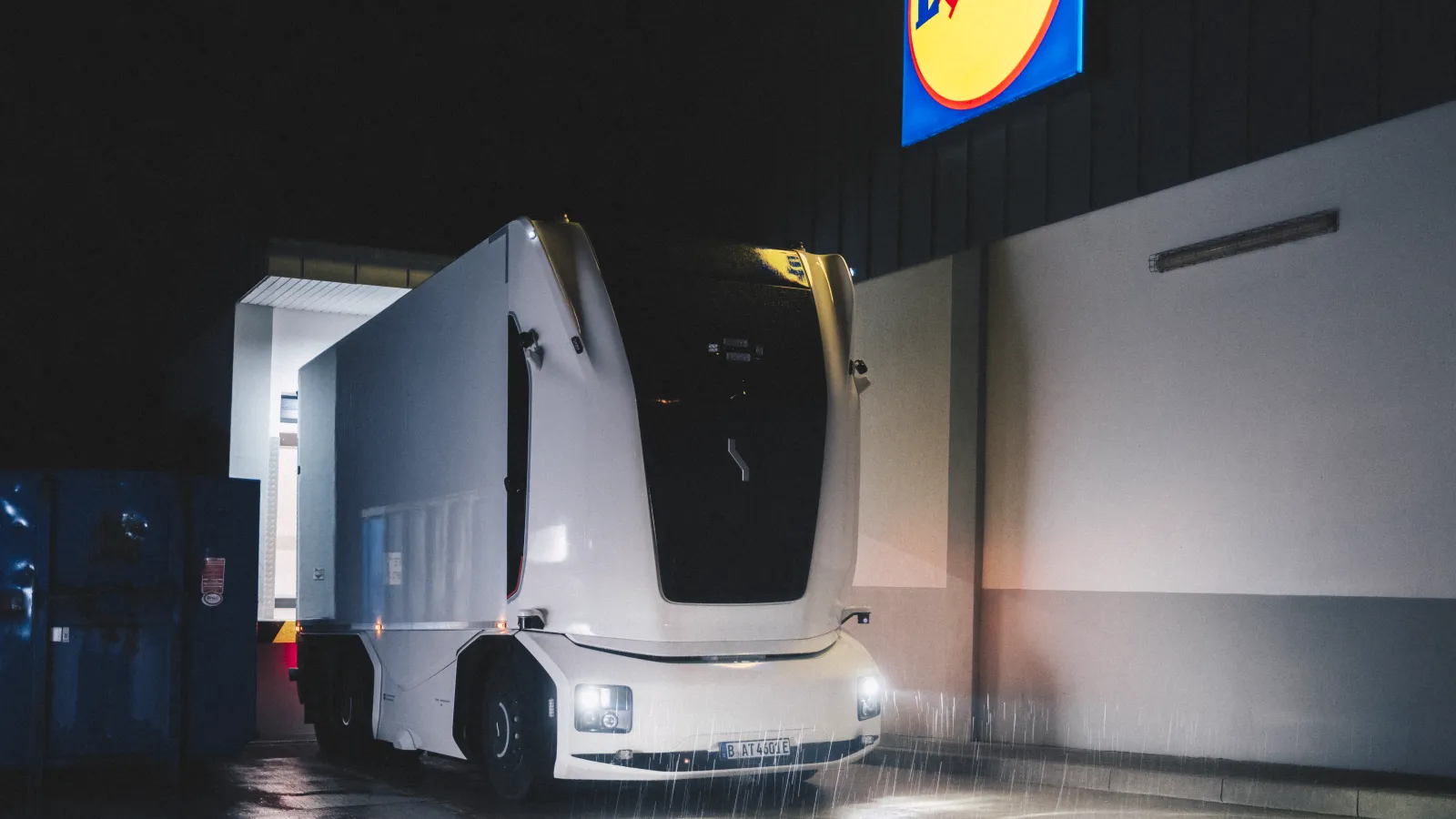
Einride and Lidl have deployed the first cab-less, SAE Level 4 autonomous truck in daily commercial operations on a public road in Germany, operating under a permit from the Federal Motor Transport Authority (KBA) that the companies say is the first of its kind granted anywhere in the country. The truck, which carries no driver or safety operator, connects a Lidl warehouse and distribution centre to a retail store, running on a live schedule with real volumes rather than a controlled pilot.
Germany is the world's third-largest economy and the largest road freight market in Europe, and its safety certification regime is widely regarded as among the most demanding globally. Clearing the KBA process therefore carries a different weight than comparable approvals in US states, where a patchwork of lighter-touch regulations has allowed autonomous trucking trials for several years. The deployment places Einride alongside a small group of robotrucks operators, including Kodiak Robotics and Aurora Innovation in the US, that have moved beyond proving-ground testing into scheduled commercial runs, while doing so under European regulatory conditions that most competitors have not yet attempted.
Regulatory gateway for European scale
The strategic significance of the KBA permit lies less in the single route and more in what it unlocks. Einride chief executive Roozbeh Charli described the German approval process as "among the toughest in the world," adding that clearing it "gives us a foundation to scale with confidence." The company has said it plans to extend the current single-stop run into a multi-stop milk-run model and is in discussion with other companies in the Schwarz Group ecosystem about further deployments. Schwarz Group, the privately held German retail conglomerate behind both Lidl and Kaufland, reported total sales of 185.6 billion euros in its 2025 fiscal year, giving Einride a potential logistics network of considerable scale as an expansion runway.
For Schwarz Group, the initiative is framed partly around supply-chain sovereignty. Serhan Yildirim, head of Schwarz Logistics Solutions, said the project combines "the scalability of our unique ecosystem with the pioneering spirit of Einride" as part of a broader push toward what the group calls sovereign supply chains. That language resonates in the current European policy environment, where dependence on external logistics providers and chronic professional driver shortages, estimated at more than 100,000 unfilled roles in Germany alone, according to industry bodies, have elevated autonomous freight from an efficiency play to a resilience imperative.
Cross-sector capital and the autonomy stack
The Einride-Lidl deployment is a convergence story in the most literal sense: it sits at the intersection of autonomous-vehicle software, heavy-duty electric powertrains, retail logistics infrastructure, and regulatory geopolitics. Einride's platform integrates AI-driven freight intelligence with proprietary autonomous hardware and what the company describes as one of the world's largest electric heavy-duty truck fleets. The Nasdaq-listed company (ticker: ENRD) structures its commercial offer as a dual model covering Freight-Capacity-as-a-Service and a SaaS logistics platform, a configuration that positions it less as a vehicle manufacturer and more as a managed-infrastructure provider, a distinction that matters to investors pricing the autonomous-trucking sector.
Capital flows in the space have been volatile. Aurora Innovation completed its commercial launch on US highways in 2024 but has faced persistent questions about the path to unit economics at scale. Einride's German milestone, secured through a regulatory process with clear international credibility, may offer a differentiated narrative: that the harder European approvals path is itself a moat. For investors with cross-sector freight, robotics, and retail-logistics exposure, the question now is whether KBA certification accelerates licence applications in other EU member states, and whether the Schwarz Group relationship provides the route density that autonomous trucking economics ultimately require. Parliamentary State Secretary Christian Hirte framed the deployment as evidence that Germany can "align climate action with economic competitiveness and technological sovereignty", a signal that Berlin views the autonomous-freight sector as a strategic industrial asset, not merely a traffic-safety question.