
FRIL awards £200k to four fintechs building explainable AI for finance
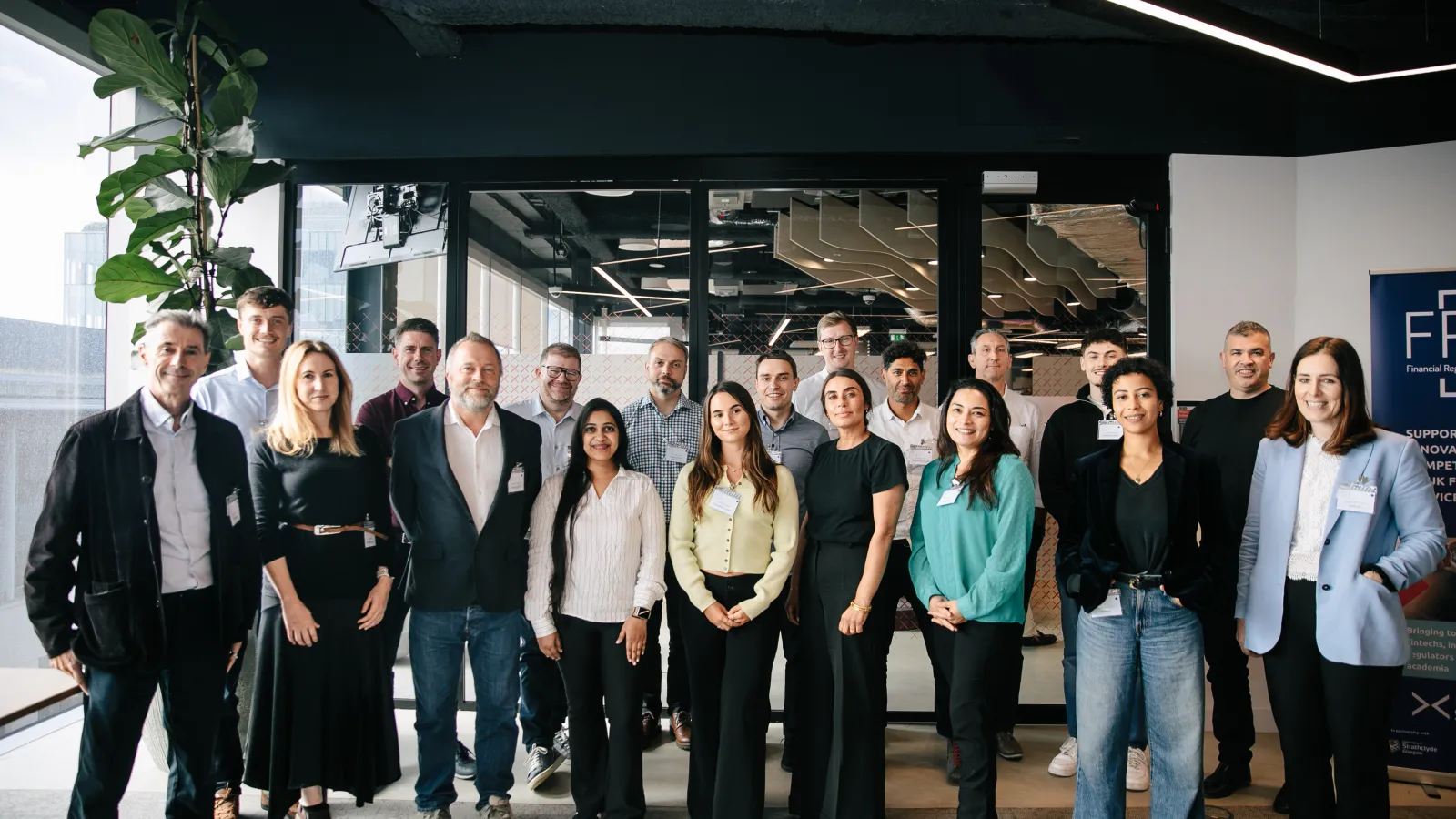
The Financial Regulation Innovation Lab (FRIL), a Glasgow-based programme run jointly by FinTech Scotland and the University of Strathclyde, has awarded £50,000 each to four early-stage companies developing responsible and explainable AI tools for financial and professional services. The grants bring FRIL's cumulative funding to £1.35 million across 27 companies since it launched in 2023, and signal a maturing institutional appetite for regulatory technology that can keep pace with the rapid deployment of AI across banking, asset management and lending.
The four recipients, Amplified Global, NestEgg, Verifoxx and Finspector, were selected through a six-week Innovation Challenge in which 14 fintech participants worked directly alongside 13 global firms, including Barclays, BlackRock, HSBC, Lloyds Banking Group, NatWest and M&G, as well as the Financial Conduct Authority. The FCA's direct participation throughout the programme, rather than as a retrospective reviewer, marks a notable shift in how UK regulators are engaging with innovation pipelines.
Four distinct bets on AI accountability
The awardees address different pressure points within the same structural challenge: proving to regulators that AI systems behave as intended and can be audited. Amplified Global scores the intelligibility of legal and regulatory documents against peer benchmarks; the FCA cited its methodology in a July 2026 review of pre-sale investment disclosures. NestEgg builds bias-testing infrastructure for AI-driven credit decisions at credit unions, targeting borrowers who fall outside traditional scoring models. Verifoxx constructs what it describes as trust infrastructure for data and AI systems, combining authorisation controls, privacy-preserving execution and independent behavioural auditing within a single architecture. Finspector automates compliance monitoring for financial promotions across text, image, video and social media, generating audit-ready evidence in real time.
Each company will use its grant to move from prototype towards commercial validation with industry partners, accelerating what is typically the most capital-intensive phase of a RegTech company's lifecycle.
The convergence stakes: regulation as infrastructure
For cross-sector strategists, the FRIL cohort illustrates a broader structural shift: AI explainability is ceasing to be a competitive differentiator and becoming mandatory infrastructure. The FCA's Consumer Duty framework and the EU AI Act's high-risk classification for credit and insurance systems are creating a compliance burden that legacy manual review processes cannot absorb at scale. Tools that automate audit trails, benchmark document clarity or stress-test lending algorithms for bias are, in effect, enabling the deployment of AI at the rest of the stack.
That dynamic is attracting capital well beyond the RegTech niche. Asset managers and banks are increasingly co-investing alongside grant bodies in explainability tooling, partly because the alternative, deploying AI that cannot be evidenced to a regulator, carries licence-to-operate risk. The FRIL model, which embeds firms such as BlackRock and EY alongside the FCA from the outset, is one emerging template for compressing the distance between innovation and regulatory clearance.
Scotland's ambition to position itself as a centre of gravity for this convergence deserves a measured reading. FRIL's track record across 27 companies and £1.35 million in grants is substantive for a university-anchored programme, but the commercial proof points, revenue, institutional contracts, follow-on funding rounds, for the broader cohort are not yet in the public domain. The next 12 to 18 months, as these four awardees move from pilot to commercial adoption, will indicate whether the Scottish cluster can translate regulatory proximity into durable fintech scale.
Clare Reid, Strategic Innovation Director at FinTech Scotland, said: "Bringing fintechs, leading firms and the FCA together to solve industry problems in meeting the requirements of regulation has proven a successful way to boost innovation."