
Aptus.AI moves RegTech from chatbot to compliance execution
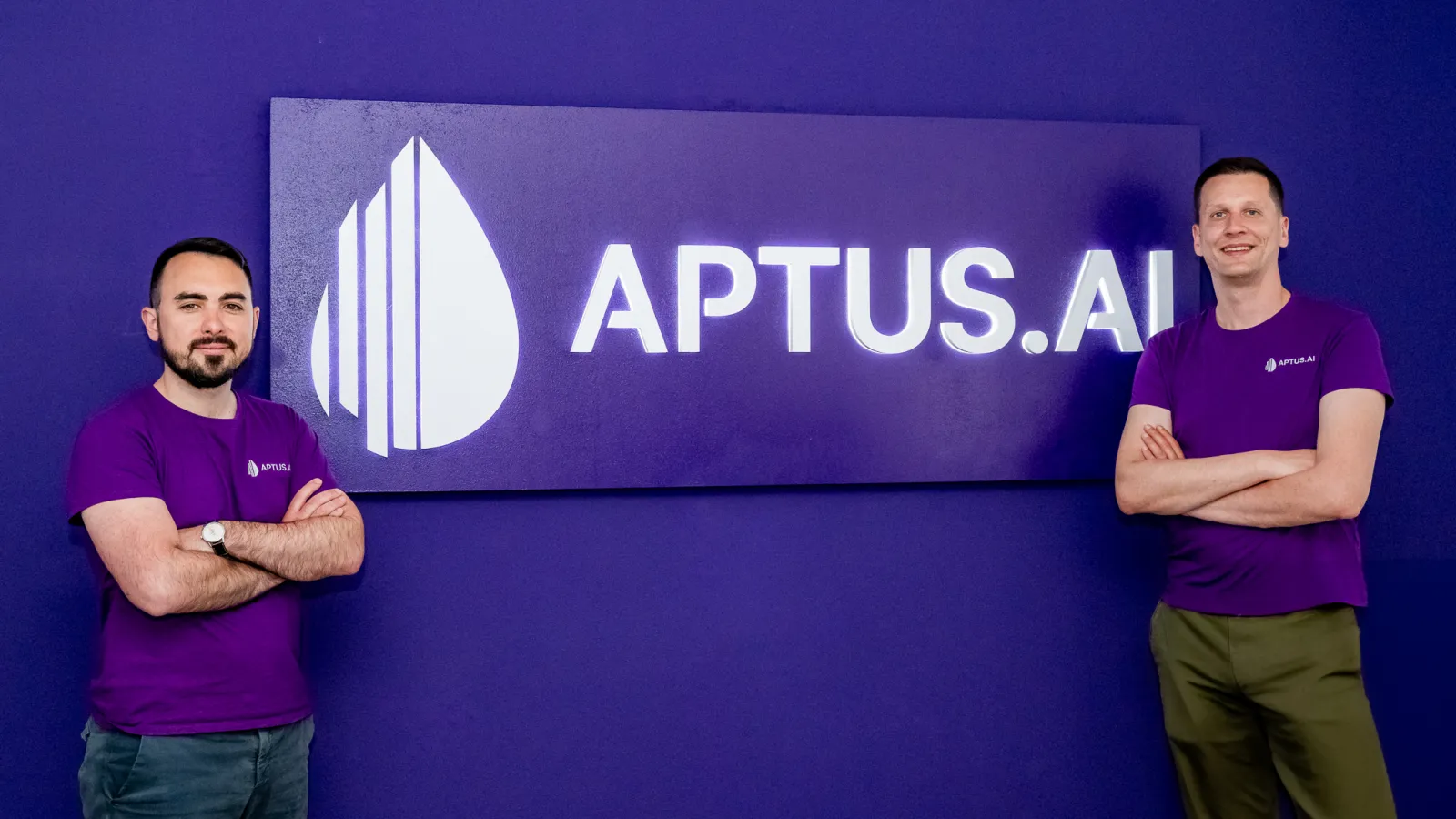
Italian RegTech company Aptus.AI is repositioning the role of artificial intelligence in heavily regulated industries, shifting from a conversational assistant model to one in which AI actively executes compliance and legal workflows. The Pisa-founded firm, which also operates in Luxembourg and counts Intesa Sanpaolo and Generali Investments among its clients, says its Next-OS platform can reduce the time required to prepare a legal opinion by 50–60%, freeing more than 1,300 working hours per year for large legal teams.
The announcement lands at a moment when regulators and boardrooms across banking, insurance, pharmaceuticals and energy are grappling with the same fundamental tension: AI is available, but AI that can be trusted to act inside a compliance framework is rare. Most enterprise deployments remain in retrieval or summarisation mode. Aptus.AI's claim is that it has cleared the bar for genuine delegation.
The knowledge-base argument
The company's pitch rests less on model capability than on regulatory data infrastructure. Its proprietary dataset monitors more than 200 national and international authorities across seven countries, covering legislation, supervisory decisions and case law. A patented machine-readable conversion layer translates legal texts into structured data that the system can interrogate, so that outputs carry traceable source references and can flag when a cited provision has been amended or repealed.
This architecture matters for a specific regulatory reason. Under frameworks such as DORA (the EU's Digital Operational Resilience Act), firms must demonstrate not just that a process was completed, but how and on what basis. A document-review task at one regulated fintech client that previously consumed three to four hours was reduced to roughly five minutes, the company says, while retaining a fully auditable output.
CEO and co-founder Andrea Tesei puts the differentiation plainly: "We believe the real differentiator is not the model itself, but the quality of the knowledge that feeds it. A reliable AI system is not one that always provides an answer, but one that can ground its output in verifiable sources and recognise when it does not have sufficient information."
Convergence implications: agentic AI meets the regulatory state
The Aptus.AI model illustrates a broader structural shift that cuts across fintech, legal services and enterprise software. As agentic AI, systems capable of completing multi-step tasks autonomously, becomes commercially viable, the bottleneck is moving from model quality to knowledge-base integrity. Regulated industries are the sharpest test of this: they cannot afford hallucinated citations or unverifiable output, making them both the hardest market and the most defensible once credibility is established.
For investors tracking the agentic AI wave, the RegTech vertical is an instructive case study. Capital has flowed heavily into foundation-model infrastructure and general-purpose productivity tooling, but the monetisation challenge is most acute in compliance-heavy verticals where output reliability is a legal requirement, not a preference. Aptus.AI is backed by CDP Venture Capital and P101, and is embedded in EU-level AI initiatives including the LLMs4EU programme, which positions it within the emerging European AI regulatory ecosystem at precisely the moment that ecosystem is being codified.
The wider read-across is to any industry in which AI execution must be auditable by design: pharmaceutical trial documentation, energy-sector licensing, and cross-border financial reporting are all candidate markets for the same architecture. As the EU AI Act's obligations on high-risk AI systems come into full effect, the demand for verifiable, source-grounded AI outputs in regulated workflows is likely to intensify. Companies that have built the knowledge infrastructure first will carry a structural advantage that is considerably harder to replicate than the underlying model.
Aptus.AI was founded in 2021 and selected for the Chat-EUR-Lex project under the NGI Search Open Call in 2023.