
PyroGenesis lands third titanium powder order for defence 3D printing
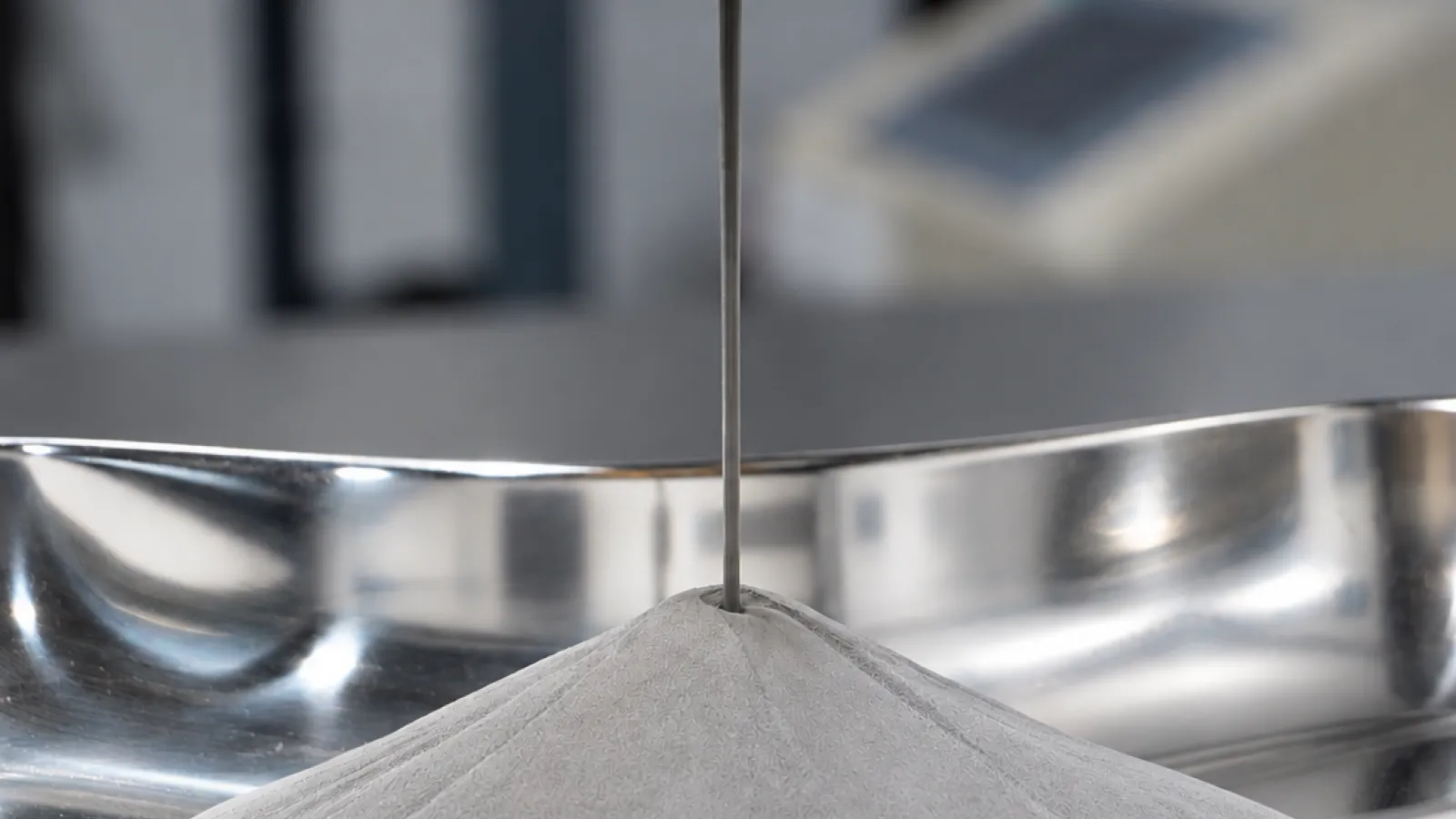
PyroGenesis, the Montreal-based plasma technology company listed on the TSX, has secured a third titanium powder contract in as many months from the same US original equipment manufacturer serving the defence and aerospace industries. The repeat order is for Ti64 "coarse cut" powder in a particle size range suited to directed energy deposition (DED), a metal 3D printing technique used to fabricate and repair structural components of up to five metres in size. The client's identity and order volume remain confidential, but the velocity of repeat purchasing points to something more strategically significant than routine procurement.
The order follows two previous contracts placed on 24 and 31 August 2026. Where a single order might be treated as a trial, three consecutive contracts from the same buyer within eight weeks represents the kind of supply-chain entrenchment that advanced-materials companies spend years building. PyroGenesis produces its titanium powder via a proprietary NexGen plasma atomisation system, a process it says it invented and patented, and which the additive manufacturing industry regards as the reference standard for producing spherical metal powder with consistent particle morphology.
Critical minerals, critical timing
The strategic context here extends well beyond one Canadian firm's order book. Titanium is classified as a critical mineral by both the Canadian and US governments, meaning it sits on the same supply-security watchlists as lithium, cobalt and rare earths. The US Department of Defense has been actively working to reduce dependence on non-allied sources for the feedstocks that go into its most sophisticated platforms. A domestic or near-allied plasma atomisation supplier capable of consistent tonne-scale output directly addresses that vulnerability.
The global market for titanium powder used in 3D printing was valued at $214 million in 2023 and is projected to reach $1.4 billion by 2032, according to figures cited in the release. That trajectory is being driven by adoption across aerospace, defence, space, medical devices, electric vehicles and hydrogen infrastructure: industries that share a common requirement for lightweight, high-strength, corrosion-resistant parts produced in small batches with tight tolerances. Additive manufacturing is the only production method that satisfies all those constraints simultaneously at acceptable cost, which is why the underlying powder market is expanding faster than the broader metals sector.
Convergence of supply chains and sovereign risk
For cross-sector strategists, the more interesting signal is structural. Western defence primes and aerospace OEMs are under sustained pressure to de-risk their supply chains at the materials level, not merely at the component or sub-system level. The Ukraine conflict accelerated titanium supply disruption after Russia, historically one of the world's largest titanium exporters, became a sanctioned source. That shock has yet to fully resolve, and it has pushed procurement teams toward qualified alternative suppliers with auditable, domestic-adjacent production.
PyroGenesis sits at the intersection of three converging forces: the friend-shoring of critical-mineral supply chains, the industrialisation of metal additive manufacturing for defence applications, and the broader push to bring advanced materials production back into NATO-aligned geographies. Montreal is not the Ruhr Valley, but it is within a treaty-ally jurisdiction with existing aerospace and defence industrial infrastructure. The company's AS9100D aerospace quality certification, maintained alongside ISO 9001, matters here: it is the minimum credentialling requirement for supplying into most tier-one aerospace and defence supply chains.
The immediate next question for investors watching this space is whether PyroGenesis can scale from repeat orders of undisclosed kilogramme quantities toward the multi-tonne annual supply agreements that would move the needle on revenues. The company has noted its first tonne-scale order dates to May 2023, suggesting the commercialisation ramp is measured in years rather than quarters. But the direction of travel, repeat business from a US defence-adjacent OEM in the context of a critical-mineral reclassification, makes the strategic logic clear even if the financial scale remains modest for now.